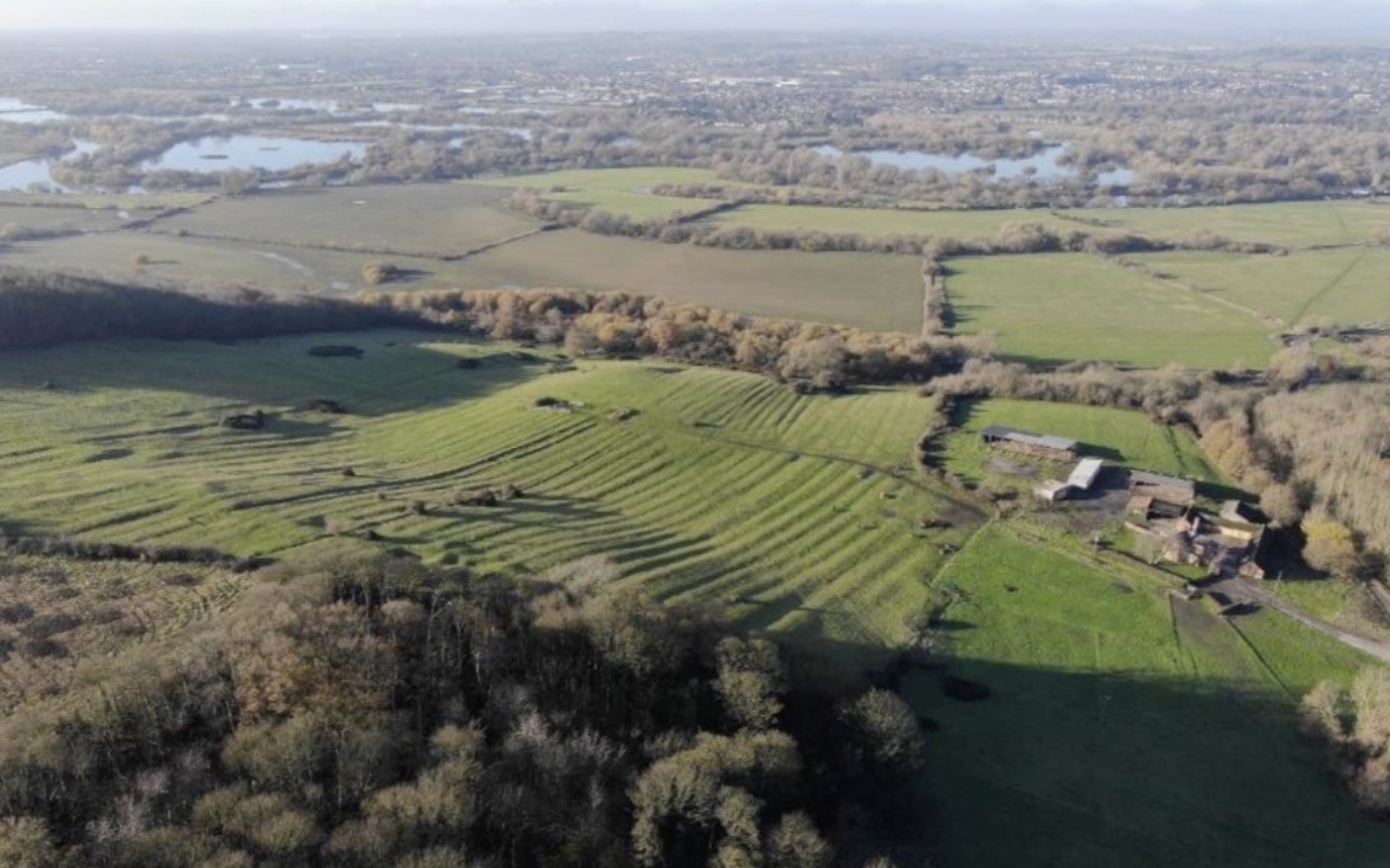
Nottinghamshire County Council is being advised not to defend its decision to refuse permission for a major sand and gravel quarry near Barton in Fabis after independent consultants concluded that the authority would struggle to justify its objections at a public inquiry.
A report to the council’s Planning and Rights of Way Committee on Tuesday 24 November recommends withdrawing both reasons for refusal, warning that continuing to defend them could expose the authority to substantial legal costs.


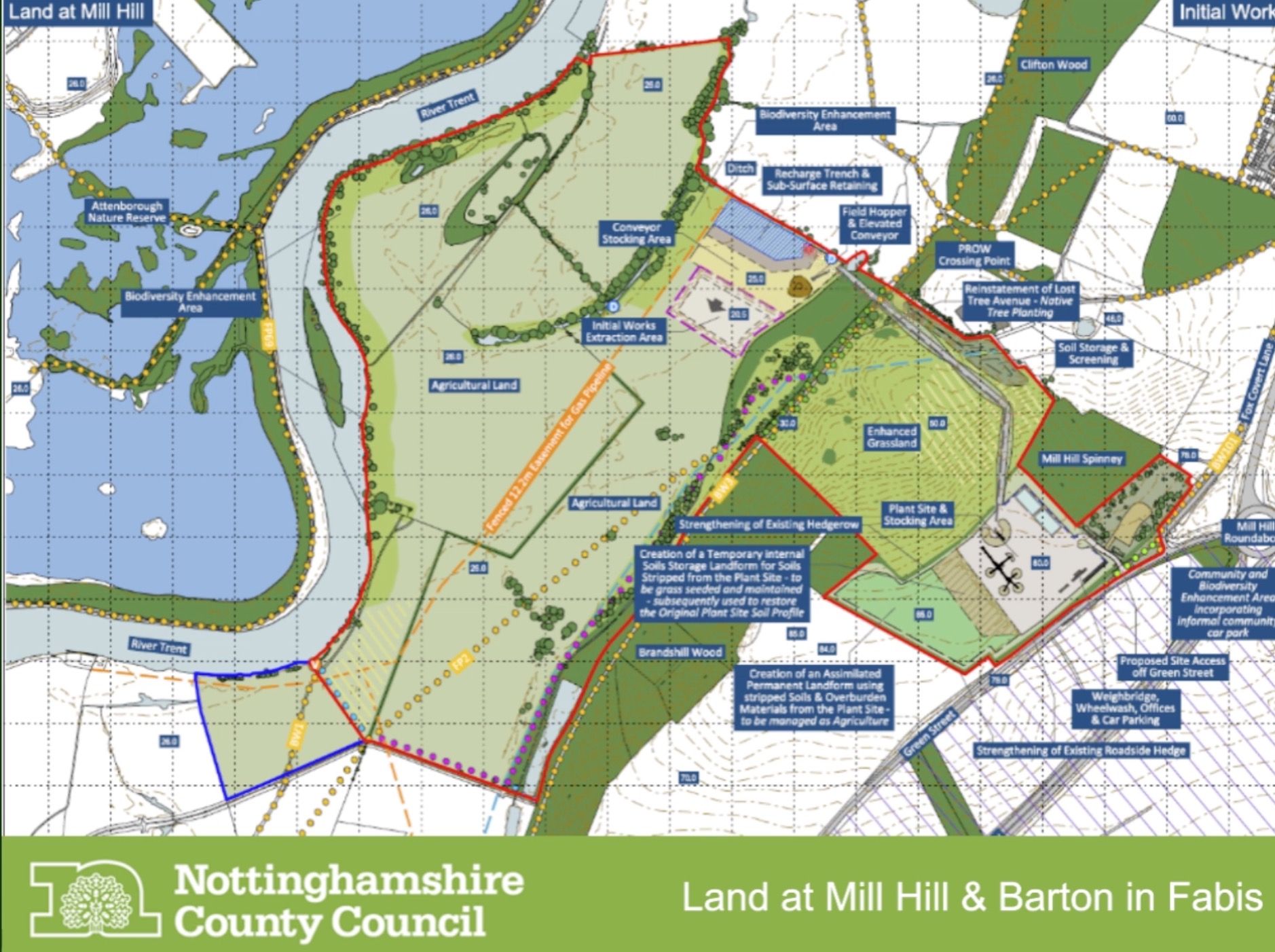
The recommendation follows the council’s decision in December 2025 to reject an application by Land Logical Limited for mineral extraction on land off Green Street at Mill Hill and Chestnut Lane, near Barton in Fabis.
Councillors refused permission against the recommendation of planning officers, citing concerns about landscape and visual impacts, local wildlife sites, protected species and the potential effects of flooding and sediment on Holme Pit Site of Special Scientific Interest (SSSI).
The formal refusal notice was issued on 9 January 2026, and Land Logical lodged an appeal on 8 July.
The development also extends into Nottingham City Council’s area, where a separate appeal has been submitted against the authority’s failure to determine the corresponding application. Both appeals will be considered together at a public inquiry scheduled to begin on 18 May 2027.
Following the county council’s refusal, officers commissioned independent planning consultancy Pegasus Group to review whether the two reasons for rejecting the development could be successfully defended.
The consultants examined landscape impacts, minerals planning policy, flooding, hydrology and ecology, including submissions from the Save the Ancient Valley Environment (SAVE) campaign group and Holme Pit Action Group (HPAG).
Pegasus has recommended withdrawing both reasons for refusal.
The first concerns the visual and landscape effects of the proposed haul road, mineral conveyor and associated bridge, particularly where they would cross Brandshill Grassland Local Wildlife Site and Bridleway 3.
However, the consultants concluded that the alleged harm would be difficult to substantiate, partly because the land is already allocated for mineral extraction in Nottinghamshire’s Minerals Local Plan.
The report states that some landscape impacts would be an inevitable consequence of developing an allocated mineral site and that the proposed infrastructure would cause limited and localised harm.
It also identifies weaknesses in the council’s argument that the quarry is unnecessary because of declining sand and gravel sales and existing mineral supplies.
According to the report, the Barton in Fabis site is the only new sand and gravel quarry identified in the Minerals Local Plan, while the existing operational quarry at East Leake has planning permission due to expire in 2029.
The consultants advised that planning policy does not require the developer to demonstrate a separate need for extraction at a site already allocated for that purpose.
The second reason for refusal concerns environmental protection, particularly the possibility that flooding could carry additional sediment from the quarry into Holme Pit SSSI.
The report acknowledges that a potential water-flow connection exists between the proposed extraction area and Holme Pit.
However, the consultants found that the available evidence does not establish whether the development would increase sediment levels or cause unacceptable ecological damage compared with existing conditions.
Officers subsequently consulted specialist firm JBA Consulting about whether additional hydraulic and sediment modelling could strengthen the council’s case.
Although potential shortcomings were identified in the developer’s modelling, the discussions concluded that further investigations would be unlikely to produce sufficiently useful evidence and that protective measures could instead be secured through planning conditions.
The consultants also concluded that impacts on protected species, including barn owls, and the loss of parts of local wildlife sites could be addressed through mitigation and longer-term habitat management.
The report therefore recommends that the council should not attempt to defend either of its original reasons for refusal.
It warns that pursuing objections which cannot be adequately supported by evidence could result in a substantial award of costs against the authority.
The county council has set aside a contingency budget of £500,000 for the appeal, covering potential expenditure on external advice, the inquiry and any costs award.
Officers say withdrawing the defence would reduce the requirement for further consultancy and legal support, while allowing the authority to concentrate on securing appropriate environmental safeguards if permission is eventually granted.
The report also warns that neither the council’s planning officers nor its appointed consultants would be able to defend the original refusal on the current evidence because of their professional obligations to provide independent and objective planning advice.
If councillors decide to continue defending the refusal, they would therefore have to present evidence themselves, without professional support from those officers or Pegasus Group.
However, withdrawing the council’s defence would not automatically result in the quarry receiving planning permission.
The appointed Planning Inspector, J Woolcock, would still be required to consider the application afresh, taking account of planning policy, environmental evidence, public representations and submissions made during the inquiry.
The Inspector could grant permission subject to conditions or refuse the development, including for reasons different from those originally given by councillors.
Local residents and campaign groups would also retain opportunities to participate.
The report identifies SAVE, HPAG and Barton in Fabis Parish Council as organisations that could seek formal Rule 6 party status, allowing them to participate fully in the inquiry and present evidence.
The parish council and Rushcliffe Borough Council, which previously objected to the development, would also have rights to appear, while members of the public would be able to request opportunities to speak.
If the county council accepts the recommendation, officers would continue helping to organise the inquiry and seek suitable planning conditions.
The original planning committee report contained approximately 72 draft conditions covering the proposed development.
These would provide a starting point for discussions about measures intended to protect the environment and nearby communities, although the Inspector could amend them.
The report says that securing effective safeguards would be particularly important because the council would retain responsibility for monitoring compliance with any permission granted.
The appeal also raises questions about future planning responsibilities because the proposed quarry crosses the existing boundary between Nottinghamshire County Council and Nottingham City Council.
The report notes that the Government’s previously announced local government reorganisation decision would have placed the entire site within a proposed Greater Nottingham Council, but that decision has since been withdrawn.
Any future reorganisation could affect which authority is responsible for monitoring the quarry, enforcing planning conditions and overseeing restoration and aftercare.
The council is also seeking to minimise the financial implications of the inquiry by using its own premises and facilities. Nottingham City Council will be expected to meet its own appeal costs and contribute appropriately towards the cost of hosting the proceedings.
The November committee meeting will determine whether Nottinghamshire County Council formally withdraws its defence.
If councillors agree, officers must prepare the authority’s statement of case and agree a statement of common ground with the developer by 18 December 2026.
The public inquiry is expected to sit from Tuesday to Thursday for up to four weeks, beginning at 10am on 18 May 2027.
The final decision on whether the quarry can proceed will rest with the Planning Inspector following consideration of the evidence.
- ‘We are not giving up’: Clifton pensioners prepare for quarry inquiry
- Nottingham City Council votes to oppose Barton-in-Fabis quarry plans ahead of public inquiry
- Plans for massive quarry in Rushcliffe green belt refused at planning meeting
- All you need to know: Barton in Fabis quarry plans, opposition and next steps
