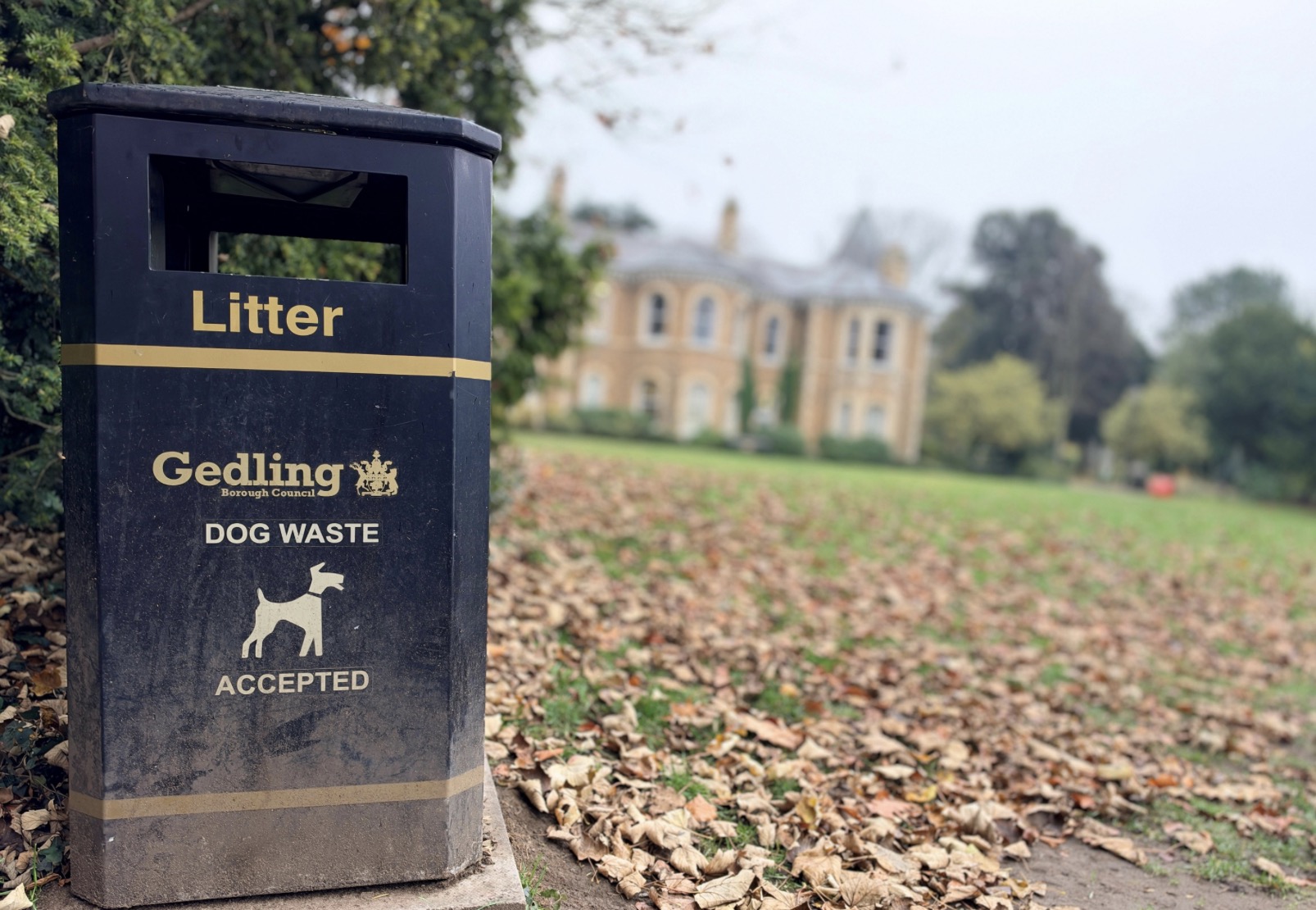
The measures were approved by Gedling Borough Council’s Cabinet on Thursday 26 November 2026 following a successful public consultation.
A new proposed borough-wide Dog Control Public Spaces Protection Order (PSPO) would introduce two requirements:


• Anyone in charge of a dog must carry an appropriate means of collecting and disposing of dog waste.
• A dog must be placed on a lead when directed to do so by an authorised officer.
The proposals received strong public support during a six-week public consultation held between 2 October and 13 November 2026, which attracted 977 responses.
Following consideration of the consultation results, Gedling Borough Council’s Cabinet approved the introduction of the Dog Control Public Spaces Protection Order (PSPO) at its meeting on Thursday 26 November 2026
Of those who took part:
95% supported the requirement for dog owners to carry a suitable means of collecting and disposing of dog waste.
82% supported the requirement for a dog to be placed on a lead when directed by an authorised officer.
The proposed measures are intended to encourage responsible dog ownership and responsible behaviour by those in charge of a dog, helping to keep public spaces safe, clean and enjoyable for everyone. They will also provide authorised officers with proportionate powers to address situations where a dog is causing, or is likely to cause, nuisance, alarm or concern.
Councillor John Clarke MBE, Leader of Gedling Borough Council and Portfolio Holder for Community Protection said:
“We know that the vast majority of dog owners and those in charge of a dog take their responsibilities seriously and care deeply about both their pets and the local environment.
“These proposed measures are designed to support responsible dog ownership, help tackle the ongoing issue of dog fouling and ensure our parks, open spaces and neighbourhoods remain clean, safe and welcoming for everyone. They will also provide authorised officers with proportionate powers to address situations where greater control of a dog may be needed to prevent nuisance, alarm or concern.
The high level of support received through the consultation demonstrates that residents recognise the importance of protecting shared public spaces and promoting responsible behaviour.”
