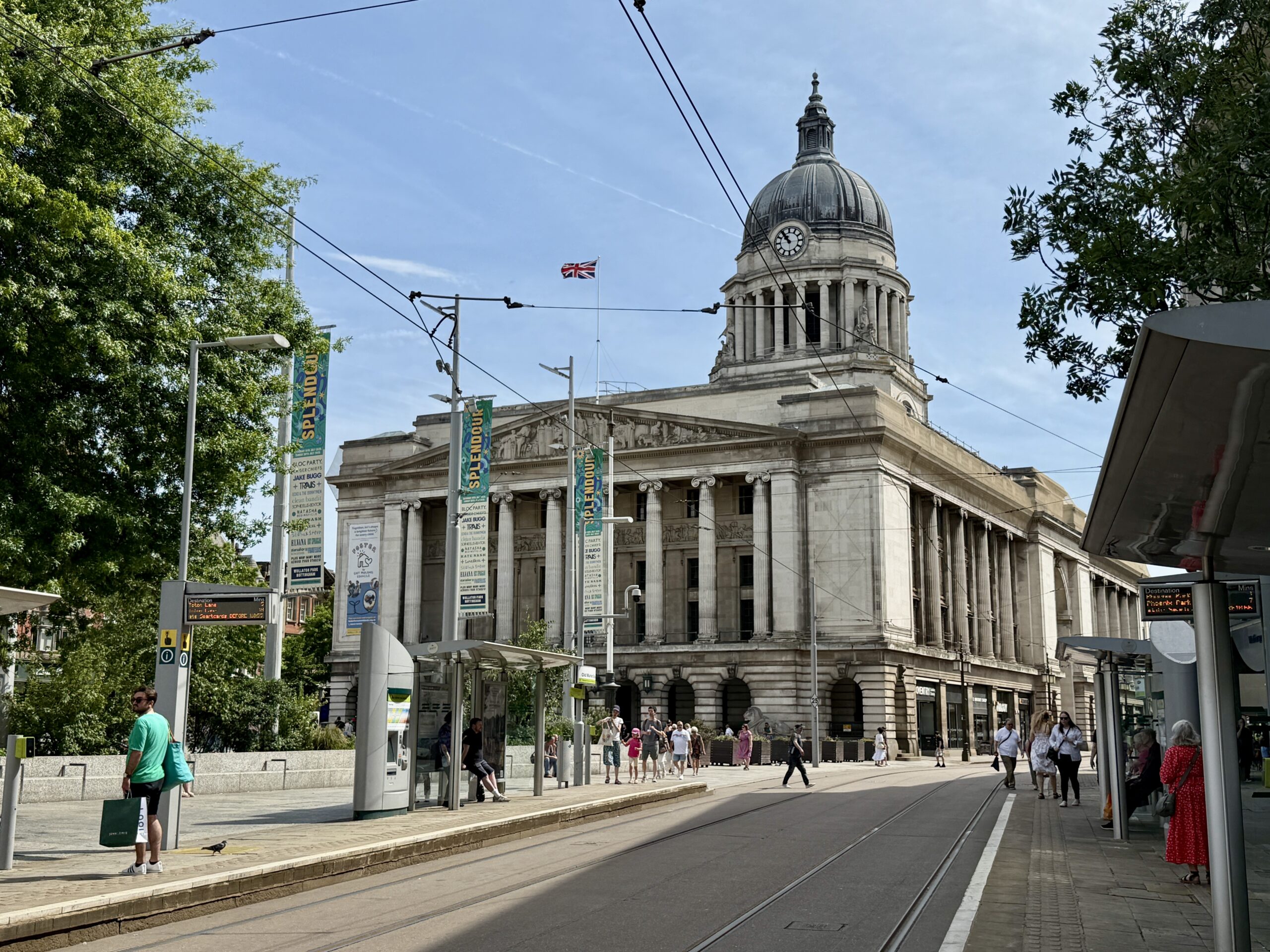
Nottingham City Council is to consult on proposals that would allow authorised officers to require some people to remove face coverings in the city centre.
The proposed change would add a new restriction to the Public Spaces Protection Order (PSPO) that came into force on 27 July 2026.


Under the draft wording, an authorised person could ask someone to remove a face covering if they reasonably believed it was being worn to conceal their identity for the purpose of causing intimidation, harassment, alarm or distress, committing a crime or engaging in anti-social behaviour.
Failing to comply without a reasonable excuse would be an offence. However, the proposal is not a blanket ban on face coverings, and the council says it would not apply to items worn for religious, health or work-related reasons.
Council documents say other legitimate reasons, including weather and safety, would also need to be recognised. The authority says enforcement would have to be proportionate and non-discriminatory.
Councillor Matt Shannon, Nottingham City Council’s executive member for community protection, neighbourhoods and equalities, approved a targeted two-week consultation on the proposal on 30 July. The decision is subject to the council’s call-in process until 6 August.
No date for the consultation has been set out in the decision. Once it has closed, responses will be reviewed and presented to a future meeting of the council’s Executive Board, which will decide whether the PSPO should be changed.

The existing city centre PSPO was approved on 17 July and replaced an earlier order introduced in 2019. The previous order was extended in 2022 but expired in March 2025 before it could be extended again, meaning a new order was required.
The latest PSPO covers parts of the Castle, St Ann’s, Arboretum and Meadows wards and includes restrictions intended to address anti-social behaviour in the city centre.
A four-week consultation on that order, held between 19 May and 23 June, received 1,378 responses. Face coverings were not included in the original proposals, but the council says masks and balaclavas became one of the most frequently raised concerns.
According to the council report, respondents associated groups wearing face coverings with intimidation, fear and attempts to conceal people’s identities.
Nottinghamshire Police recorded 145 city centre incidents between June 2025 and March 2026 in which face coverings, including balaclavas, were referenced. The council says this amounted to an average of more than one incident every two days.
The incidents ranged from lower-level anti-social behaviour to reports involving robberies, violence, public disorder and weapons. Council CCTV records separately identified 36 incidents involving people wearing balaclavas or other face coverings between 1 July 2025 and 14 June 2026.
Around 75 per cent of the incidents analysed by the council and police took place in Castle ward, which covers the main city centre, including Old Market Square, Clumber Street and the Victoria Centre.
The report refers to incidents including a masked person found with an eight-inch knife who injured another person in June 2025, an assault involving a large group in Milton Street in December, and an incident outside the Victoria Centre in March 2026 in which a person was reported to have threatened a member of the public with a knife.
It also cites masked young people accessing the roof of the former Debenhams building and throwing objects from height. Nottingham City Council secured a closure order in May to prevent further access to the building.
If the proposed change is introduced, an officer would first have to explain why they believed the order was being breached and tell the person that failing to remove the covering without a reasonable excuse would be an offence. A council officer would also have to show evidence of their authorisation if asked.
The council considered but rejected a blanket ban, saying it would probably be disproportionate and could affect people wearing face coverings for legitimate religious, cultural, health or weather-related reasons.
Legal advice included in the report warns that the proposal could disproportionately affect disabled people, young people and some minority ethnic groups. It says there is a recognised national risk of disproportionate enforcement against minority ethnic communities during stop-and-challenge interactions.
An equality impact assessment will be completed following the consultation, and the council says additional guidance would be used to support proportionate enforcement.
The report also acknowledges practical limitations. Council officers do not have a statutory power to compel someone to provide their identity, meaning police assistance could be required if a person refused or provided inaccurate details.
A breach of a PSPO can result in prosecution and a fine of up to £1,000. A fixed penalty notice can be offered instead. Nottingham City Council’s current fixed penalty for breaching a PSPO is £70, although the report says this may need to be reviewed following national legislative changes.
The council’s legal advice says the validity of any amended order could be challenged through the High Court or by judicial review. It also says clear expectations and measurable outcomes would be needed, noting that it is not yet clear how the impact of the proposed restriction would be assessed.
The council plans to consult Nottinghamshire Police, the Police and Crime Commissioner, businesses, residents, visitors, youth groups and the Youth Offending Team. Feedback would be gathered through an online survey, face-to-face engagement in the city centre and targeted outreach.
The decision to hold the consultation has no identified financial implications. However, if the restriction is ultimately introduced, signs throughout the PSPO area would have to be replaced to show the amended conditions.
