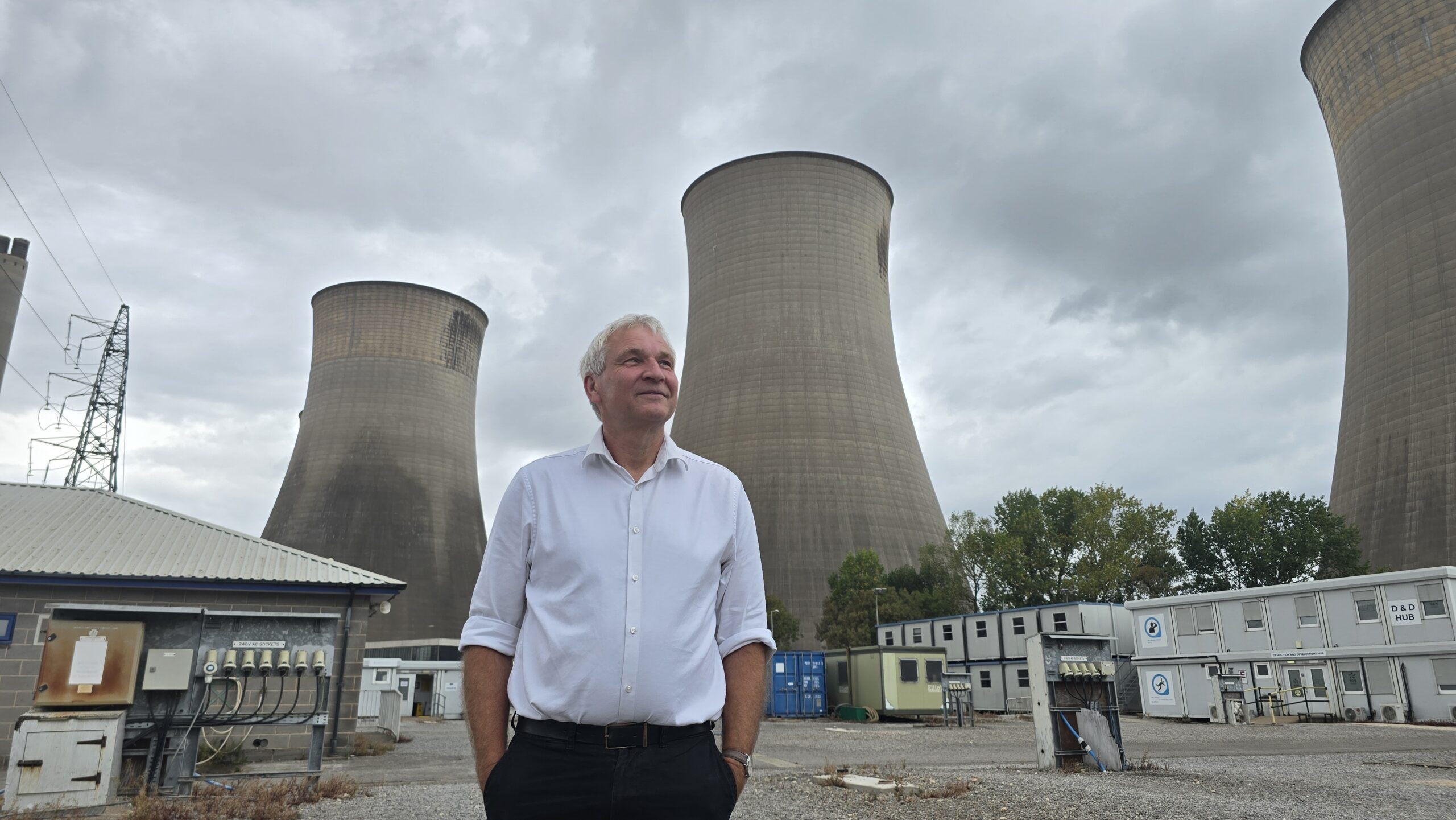
A small Nottinghamshire village could become the birthplace of a new form of energy if plans to build the UK’s first prototype fusion power station succeed.
The STEP project is being developed on the site of the former West Burton coal-fired power station, which closed in 2023 after 57 years of operation.


Scientists and engineers hope the plant will generate about 100 megawatts of electricity by 2040 — potentially enough to supply between 70,000 and 100,000 homes.
Professor Howard Wilson, director of science and technology at STEP Fusion, said the project could have global significance.
“If we are the first people to do fusion here in West Burton, it will go down in history for hundreds and thousands of years,” he said. “It is game-changing for the human race and, potentially, the planet we live on.”
Fusion is the process that powers the Sun and other stars. It produces energy by forcing together the nuclei at the centre of light atoms.
The STEP project — short for Spherical Tokamak for Energy Production — aims to recreate that reaction inside a specially designed reactor.
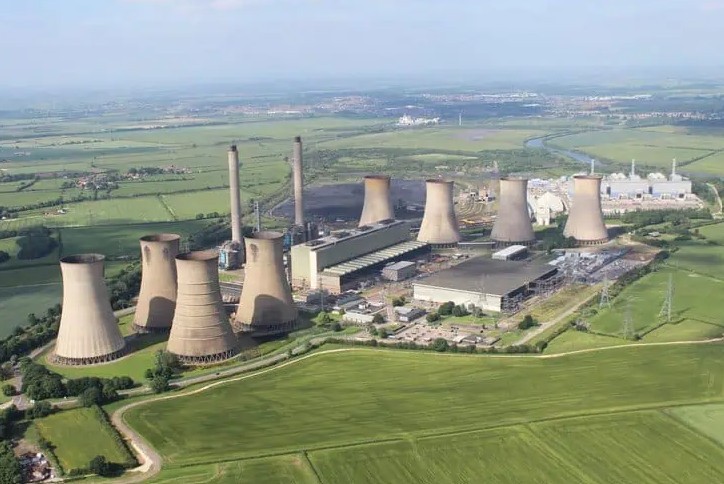
No commercial fusion power station has yet been built, making West Burton a prototype rather than a conventional energy development.
“We know it works, we know the Sun shines and we know we get energy from it,” Prof Wilson said. “The challenge is how we recreate those conditions here on Earth.”
The reactor will need to reach about 150 million degrees Celsius, roughly ten times the temperature at the centre of the Sun.
Prof Wilson said: “The Sun is producing fusion energy, but it is a really inefficient power plant. It is bubbling away and burning very slowly, which is good because it means it is still burning today.
“We need something that will create a much higher energy density here on Earth.”
Temperatures of 150 million degrees have already been achieved at the Joint European Torus, known as JET, in Oxfordshire.
The doughnut-shaped experimental reactor operated for around 40 years before it was decommissioned in 2023. Its research helped to establish the scientific basis for later fusion projects.

West Burton’s proposed reactor will have a more compact, spherical design, described as resembling a cored apple.
If STEP demonstrates that fusion electricity can be produced reliably, the aim is to use its design as the basis for commercial power stations from the 2050s.
Prof Wilson described the proposed plant as “a really fancy kettle”.
Heat from the reactor would be used to turn water into steam. That steam would drive turbines and generate electricity for the national grid, in much the same way as a conventional power station.
The difficult part is creating and maintaining the fusion reaction.
Unlike nuclear fission, which releases energy by splitting heavy atoms such as uranium, fusion joins lighter atoms together.

STEP will use deuterium and tritium, two heavier forms of hydrogen. They will be heated using up to 100 extremely powerful microwave systems.
Each microwave device, known as a gyrotron, will produce around one million watts. A typical kitchen microwave operates at about 800 watts.
At sufficiently high temperatures, deuterium and tritium nuclei can fuse to form helium, releasing large amounts of energy.
Prof Wilson said: “As they touch each other, they fuse to create helium and release a lot of energy in the process.
“It is that energy we are looking to harness.”
The reaction produces helium and a neutron. The neutron escapes from the centre of the reactor and is captured by a surrounding “blanket”, where its energy is converted into heat.
That heat can then be used to produce steam and drive the turbines.
Inside the reactor, the fuel becomes plasma — a highly energised state of matter. No physical container could withstand direct contact with material at 150 million degrees, so powerful magnetic fields will be used to hold the plasma away from the reactor walls.
Prof Wilson said producing the required temperature is not the project’s biggest problem. Several major engineering challenges remain unresolved.
One is the supply of gyrotrons. Only a small number of companies worldwide manufacture them, and individual systems can take years to produce. STEP hopes to develop UK expertise and manufacturing capacity for the technology.
Another challenge is designing the blanket surrounding the reactor.
Neutrons will leave the fusion reaction at between 51,000 and 52,000 kilometres per second — about 17 per cent of the speed of light. The blanket must absorb their energy while continuing to operate under intense conditions.
No blanket capable of doing everything required by a commercial fusion power station has yet been developed.
It must also help solve another problem: the limited supply of tritium.
Deuterium can be extracted from seawater, but tritium is extremely rare. STEP plans to produce it inside the reactor by placing lithium in the blanket.
Prof Wilson said: “The neutron comes out, reacts with the lithium in the blanket and creates tritium.
“You have to get the tritium out, make it into frozen pellets and fire those pellets back into the plasma to keep the reaction going. You get this closed loop.
“That blanket is one of the big engineering challenges we have.”
The reactor will also need a neutron multiplier to ensure it produces more tritium than it consumes.
According to Prof Wilson, the raw fuel required to meet one person’s lifetime energy needs could be obtained from a bathtub of seawater and the amount of lithium found in one or two laptop batteries.
Fusion also differs from nuclear fission in its response to faults.
“If anything goes wrong, it just goes out,” Prof Wilson said. “It is an inherently safe process. You cannot get a runaway reaction.”
Fusion still produces radioactive materials and waste that must be managed, but it does not rely on the same chain reaction used in existing nuclear power stations.
The project is supported by the UK Government and could place Nottinghamshire at the centre of a global industry estimated to be worth between £3 trillion and £12 trillion by the end of the century.
Prof Wilson said demand for electricity would continue to grow through the expansion of data centres, electric vehicles and developing economies.
“Emerging economies around the world are using more power,” he said. “They absolutely have the right to enjoy the same lifestyles we enjoy, but it will take energy.
“The question is where that energy comes from and how it can be produced sustainably without contributing to global warming and climate change.”
By Joe Locker, Local Democracy Reporter
