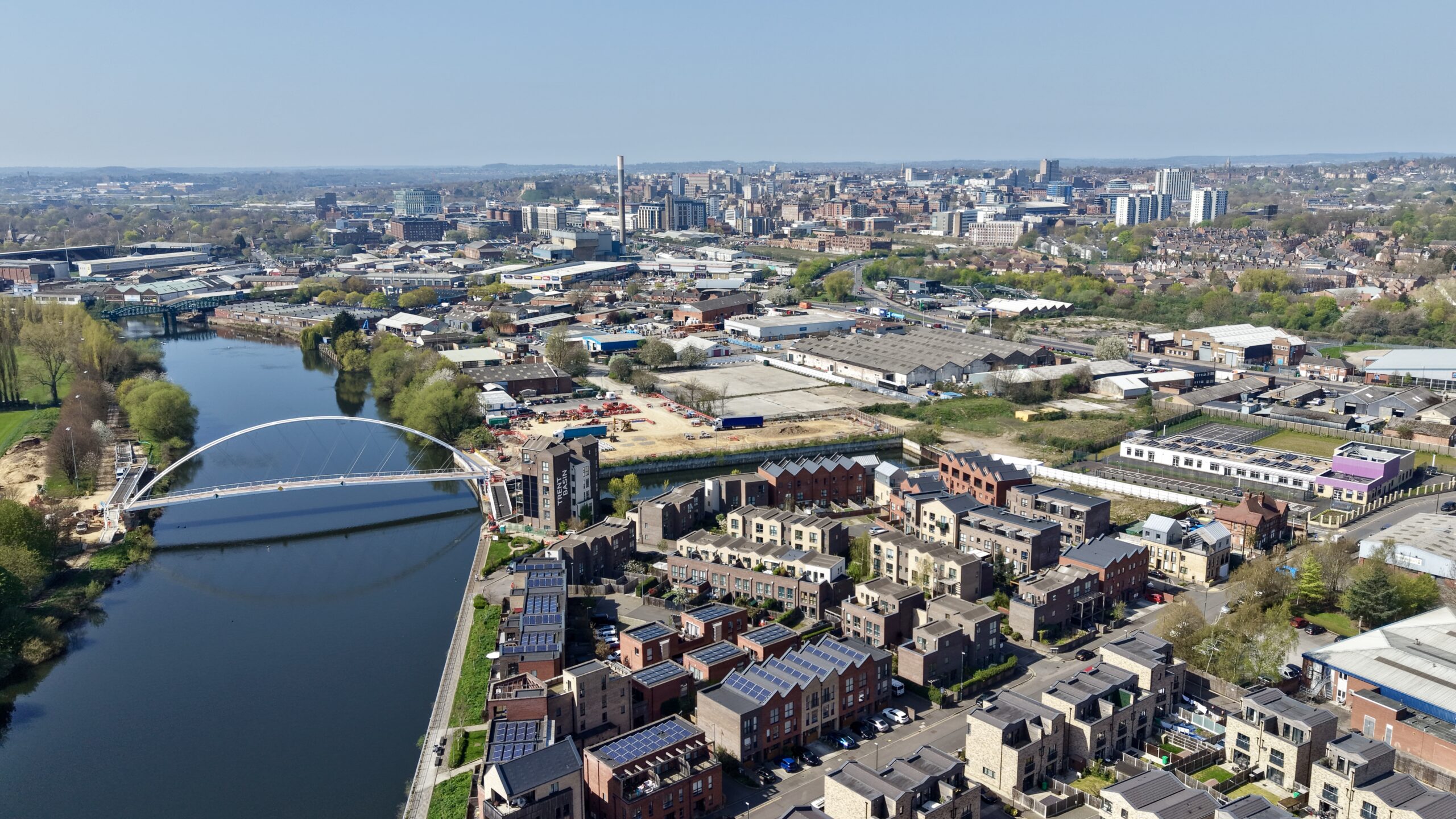
The Government has set out the proposed names, councillor numbers, transition funding and leadership arrangements for Nottinghamshire’s two new councils.
Under the plans, the new authorities will be legally known as Nottinghamshire Council and Greater Nottingham Council, with each represented by 99 councillors.


The details were confirmed in this letter dated July 28 from Beatrice Andrews, deputy director of local government reorganisation at the Ministry of Housing, Communities and Local Government, to the chief executives of Nottinghamshire’s councils.
The Government has selected the two-unitary-authority proposal submitted by Nottingham City Council, although the reorganisation remains subject to Parliamentary approval.
Greater Nottingham Council would cover the existing Nottingham city area, along with 15 wards from Broxtowe, 15 wards from Gedling and 17 wards from Rushcliffe.
Nottinghamshire Council would cover Ashfield, Bassetlaw, Mansfield and Newark and Sherwood, together with five wards from Broxtowe, four wards from Gedling and seven wards from Rushcliffe.
Despite its name, Nottinghamshire Council would be a new authority rather than a continuation of the existing Nottinghamshire County Council.

The Government will now prepare a Structural Changes Order, the secondary legislation needed to establish the two councils and abolish the existing city, county, district and borough councils.
A draft order is expected to be shared with council officers in September so that factual amendments can be considered. It would then undergo Parliamentary scrutiny and debates before approval motions in both Houses of Parliament.
The Government expects the order to be made and come into force during 2027.
Until the reorganisation is completed, the existing councils will remain responsible for providing services in their areas. They are due to be abolished on April 1, 2028, when the two new authorities would take over their functions and powers.
This means responsibility for services will remain with the current councils during the transition. Preparatory work will include bringing together services currently divided between county, city, district and borough authorities.
Elections to the new councils are planned for May 2027, replacing any local elections already scheduled in Nottinghamshire at that time.
The elected members would initially sit on “shadow” councils, which would prepare budgets, plans and governance arrangements before the new authorities formally take control on April 1, 2028.
The new councils would be required to operate a leader and cabinet system, appoint statutory officers and adopt codes of conduct and councillor allowance schemes.
The interim wards to be used for the first elections have not yet been decided. Councils have been asked to submit proposed warding arrangements by August 17, using existing county divisions, district wards or parish boundaries.
Ministers will make the final decision on the wards included in the Structural Changes Order. The Local Government Boundary Commission for England would subsequently conduct full electoral reviews before the next elections to the new authorities.
The Government has also asked councils to nominate returning officers for the inaugural elections and provide information about parish council election cycles. Parish elections are expected to be aligned with elections to the new unitary authorities, but the detailed arrangements have not yet been finalised.
Although ministers have selected Nottinghamshire Council and Greater Nottingham Council as the legal names, they will consider any further representations received unanimously from all affected councils within each new authority’s area by August 17.
Once established, either council could subsequently change its legal name if two-thirds of councillors voting at a specially convened meeting supported the change.
The letter says “City” has not been included in the legal name of Greater Nottingham Council because city status is conferred by the Monarch. Separate arrangements could be made to preserve Nottingham’s existing city status, potentially through Charter Trustees representing unparished parts of the current city.
The Government has allocated £900,000 to each new authority to help meet transition costs, providing a total of £1.8 million for the Nottinghamshire reorganisation.
The money is expected to be paid during the 2026/27 financial year through Section 31 grants.
It can be used for work including separating and combining services, improving data and digital infrastructure, cyber resilience, programme management and preparing IT and other support for the councillors and senior officers elected or appointed to the new authorities.
Funding may also support early preparations for transferring children’s services, adult social care and public health.
The Government intends to pay each £900,000 grant to the council employing the relevant deputy implementation team leader. Councils can unanimously agree that the money should be paid to a different authority and have been asked to confirm the recipient by August 17.
Ministers have separately announced up to £10 million nationally to support leadership capacity and continuity in children’s services, adult social care and public health. This is being drawn from an existing £63 million capacity fund.
Areas undergoing reorganisation could receive up to an additional £150,000 for each new unitary council. Further details about how that funding will be distributed are expected at a later date.
One implementation team will oversee preparations for both Nottinghamshire authorities and will include officers from all the councils being replaced.
The team will be led by Nottinghamshire County Council’s head of paid service. There will be two deputies: one selected locally from a district or borough council within the new Nottinghamshire Council area and the other from Nottingham City Council.
Separate joint committees will also be created for the two new authorities.
The Nottinghamshire Council joint committee would have 14 members, split equally between Nottinghamshire County Council and the district and borough councils.
The Greater Nottingham Council joint committee would have 12 members. Nottingham City Council would appoint six, with three representing the county council and three representing the affected district and borough councils.
Its chair would be a Nottingham City Council member, while the deputy chair would come from another authority. The Nottinghamshire committee would determine its own chair and deputy chair.
The Government has encouraged councils to begin establishing voluntary implementation arrangements before the Structural Changes Order comes into force. It envisages the formal joint committees meeting regularly for up to six months before the May 2027 elections.
Once the order is in force, the Government also expects to issue a legal direction requiring the existing councils to obtain consent from the shadow authorities before entering certain contracts or disposing of certain assets.
The stated purpose of the restriction is to prevent decisions being taken during the transition that could damage the financial position of the new councils or reduce the anticipated benefits and savings from reorganisation.
Further legislation is expected to deal with local government pensions, housing revenue accounts, ceremonial arrangements and councils’ membership of outside organisations.
The Government intends to meet council representatives during August to discuss the next stages of the process.
