


East Midlands Mayor Claire Ward has told how she understands the challenges people are facing in a rural Derbyshire village that has lost a much-needed vital service as she prepares to launch a major consultation that will form the foundation of a new groundbreaking Transport Plan for the region.
The Mayor’s Transport Plan aims to recognise the needs of different communities and demographics and the nature of the region including its urban, suburban and rural areas such as Morton, in Derbyshire, where a commercially-run bus used to stop before it was rerouted leaving villagers feeling ‘isolated’.
Labour Mayor Ms Ward, of the East Midlands Combined County Authority, said: “I completely understand the challenges that people are facing and my sympathies are with the people of Morton.
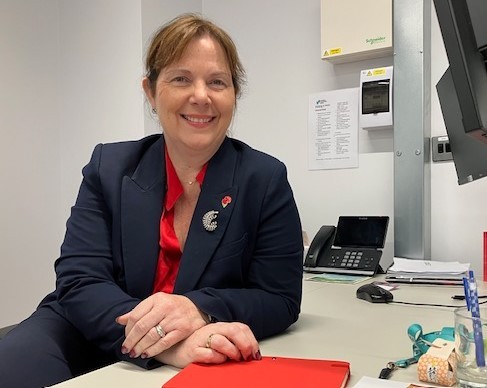
“I do recognise people feel they cannot rely on the bus at the moment. Again, we are looking at the Transport Plan for the region and we are doing a consultation for the region and that will start shortly and we want to hear from residents in our communities in places like Morton to let us know what would work.”
Derbyshire County Council’s highways chief Cllr Charlotte Hill confirmed in September that the council has been unable to find an operator to ‘replicate’ the lost and much-needed vital Morton bus service which now bypasses the rural Derbyshire village and has left residents feeling stranded for around seven months.

The commercially-run number 55 bus used to stop in Morton – three miles from Alfreton, in Derbyshire – before it was rerouted after Hulleys of Baslow ceased trading in late March and Notts & Derby Buses took over the service soon afterwards and removed the village stop.

Since then campaigners who described the number 55 bus service as a ‘vital lifeline’ for Morton have been appealing for help because the only alternative villagers now have is a ‘dial-a-bus’ with bookings on demand which they feel is ‘inadequate’.
Ms Ward added: “At the moment we are not responsible for the services and Derbyshire County Council remains responsible for the transfer or commissioning of services if it is not a commercial route.”
However, EMCCA’s Transport and Digital Connectivity Committee agreed at a meeting on October 30 at Derbyshire’s County Hall to approve material and consider suggestions from councillors as it prepares to launch a 12-week consultation to help shape the Mayor’s Transport Plan.

EMCCA aims to produce a Local Transport Plan to set direction and guide investment decisions and after considerable engagement, including a detailed workshop with it Transport and Digital Connectivity Committee, its Stage 1 public consultation is set to be launched in a few weeks’ time.
Discussions with Derbyshire and Nottinghamshire County and Derby and Nottingham City councils have helped to ensure the plan balances priorities such as inclusive growth, and the environmental impacts of transport and that it recognises the nature of the EMCCA region and its urban, suburban and rural areas, and the needs of different communities and demographics.
The consultation questionnaire also includes a detailed section on buses because of the work being prepared on the Bus Service Improvement Plan for the region.
Ms Ward told the meeting: “It’s your plan as much as it will be mine because we cannot deliver this without everyone’s engagement and we cannot get it right without everybody’s engagement.”
EMCCA has already held an informal workshop with members of the Transport and Digital Connectivity Committee, has developed consultation material and engagement plan for consideration by the committee.
It has also considered Government carbon emissions guidance and a full transport model is in the process of being commissioned to help support the development of the Transport Plan.
Four documents aim to be published as part of the consultation including a Discussion Document setting out the key challenges and opportunities, an Executive Summary of the Discussion Document, separate Questionnaires for the public and for organisations on key challenges, and an Evidence Base Summary explaining how challenges and opportunities are to be addressed by the Transport Plan.
Committee members’ thoughts have already helped inform a linked Engagement Plan with plans for a Mayoral launch event, community engagement through formats such as public exhibitions, partner and stakeholder workshops, and focus groups with under-represented groups.
Councillors at the recent meeting raised elements that they would like to see included in the consultation including better transport for social well-being and health, and consideration of greenhouse gases, air quality and congestion.
Nottingham City Cllr Michael Edwards who also wants to see more done with railways said: “Greenhouse gases and air quality should be included. People in high traffic areas are going to be concerned about air quality and it’s going to be a big need to do more about that.”
Ms Ward told the meeting people will need buses not just for work but to get to appointments which can be a ‘massive challenge’ in rural areas.
She also recognised that travel is not limited to within the East Midlands county regions with some people in north Derbyshire choosing to go to hospital in Sheffield, Rotherham or Chesterfield so she stressed that it is important EMCCA understands where people are accessing services.
Following the meeting, Ms Ward said: “It’s a really good plan. It shows the region, all our parts of it, constituent councils and priorities are all focussed on understanding the region.
“The Mayor’s consultation plan starts in the next few weeks and we want to hear from our residents and as we develop the plan it needs to be not my plan but our plan which is why it is important people take part in it.”
EMCCA, which is due to take over responsibility for transport from the Derbyshire and Nottinghamshire authorities, only launched its first Transport and Digital Connectivity Committee meeting in September with plans to begin allocating £2bn of transport funding for the Mayor’s Transport Plan which aims to address challenges faced by rural communities like Morton.
Notts and Derby Buses argued its 55 service was rerouted away from Morton because only a small number of villagers was using the service despite claims by residents to the contrary and that the bus was a lifeline for everyone including the elderly, disabled and students.
Resident Becky Spackman said since Hulleys of Baslow ceased trading a new route was announced leaving the village completely ‘isolated’ with the worst affected including pensioners, the disabled and partially-sighted who have been struggling to shop and meet family and friends.
Morton Parish Council Chairperson John Funnell wrote to the county council urging the authority to help reinstate the 55 route back into Morton and to consider the significant social, economic and environmental costs of reduced public transport provision.
And Pilsley Parish Council described the situation as a ‘crisis’ after the new route bypassed Morton entirely cutting off what it described as a ‘vital lifeline’ for nearby Pilsley residents who have to travel to and work in Morton.
Derbyshire County Council’s former Conservative administration and the newly-elected Reform UK-led administration both sought a solution to reinstate and possibly subsidise the Morton route service.
But the council’s Cabinet Member for Potholes, Highways and Transport, Cllr Charlotte Hill, confirmed in September that the authority has been unable to find an operator to replace the previous scheduled commercial service.
EMCCA’s transport committee has been discussing reimagining public transport services, the transport transition programme and setting out a bold pipeline of investment-ready projects that the authority claims will make a real difference to daily life, from smoother roads and modern bus fleets to greener rail links and safer cycling routes
