Nottingham City Council has approved 19 projects covering road repairs, community safety, leisure, energy bills, social care and improvements to streets and public spaces.
The £20.4 million package was approved by the authority’s Executive Board today, 22 September, after the money became available through an underspend in the council’s 2025/26 budget.


Although the full £20.4 million has been allocated to the programme, detailed council papers show that £15.406 million has initially been assigned to the 19 projects.
The remaining £4.994 million will be held as a contingency, with the council’s chief finance officer authorised to allocate funding within the overall spending limit.
The plans include 56.5 additional full-time equivalent posts or funded roles, including 20 Community Protection Officers, 20 litter pickers and staff needed to deliver the leisure and energy schemes.
Some programmes will not begin immediately, while others will run into 2027/28. All spending must be completed before local government reorganisation in Nottinghamshire is concluded.
Here is what has been approved.
£4m for pothole repairs
The largest individual allocation is £4 million for planned highway patching across Nottingham.
Rather than being limited to emergency repairs, the programme is intended to improve the general condition of roads and provide additional work alongside the council’s existing highway safety regime.
It will be delivered over 12 months and is expected to continue into the first or second quarter of 2027/28 because of its mid-year start.
The council says the availability of contractors and access to the road network could affect how quickly the money is spent.
£2.5m for solar panels, batteries and energy improvements
A £2.5 million energy programme will offer grants and match-funded support for solar photovoltaic panels, battery storage and other eligible improvements.
Around £2.25 million will be used for physical energy measures, with £250,000 paying for programme management, energy advice, resident engagement and delivery support.
The council says the initial target groups could include low-income owner-occupiers and people living in privately rented or social housing.
Residents in every Nottingham ward will be able to qualify if they meet the scheme’s criteria. The eligibility and application rules have not yet been published.
Five posts, including partner roles, are included in the programme, which is intended to be delivered within 12 months.
The council acknowledges that demand could exceed the available funding.
£1.5m to turn ‘grey to green’ in the city centre
The Grey to Green programme will introduce more trees, planting, sustainable drainage systems and other nature-based features into city centre public spaces.
The council intends to remove impermeable surfaces where appropriate, improve water management and make city centre areas more attractive and resilient to climate change.
No individual locations have yet been named in the report. Schemes will be developed through a phased programme, with consultation intended to ensure existing users and businesses are considered.
Of the £1.5 million allocation, £1 million is revenue funding and £500,000 is capital funding.
Free leisure membership for older residents
Nottingham residents of pensionable age will be offered free membership of council leisure facilities under an 18-month pilot.
The £1.2 million Active Older Lives and Social Wellbeing Programme is scheduled to begin on 1 November 2026 and run until the end of March 2028.
The council hopes the scheme will increase physical activity, reduce isolation and help older people remain independent.
It will work with organisations including Public Health, Age Concern and social-prescribing services, with 6.5 full-time equivalent posts included in the plans.
However, council officers have identified a risk that existing paying members could cancel their memberships once free access becomes available. Leisure-centre capacity, staffing and the future of the scheme after March 2028 will also be monitored.
£1.05m for festivals, sporting events and civic projects
The council will establish a year-round cultural and events programme, including work on a flagship Robin Hood-themed festival.
The £1.05 million package will also support other festivals, efforts to attract major sporting events, memorial projects and the development of a Nottingham Events Strategy covering 2028 to 2035.
Some of the money will improve access to power, water and drainage at event sites, reducing the need for external generators and lowering future event-delivery costs.
The council says its funding will focus on free or low-cost events which are not already provided commercially.
The allocation comprises £700,000 in revenue funding and £350,000 for capital works, as well as one additional post.
£1m business rates relief scheme
More than 250 small businesses are expected to benefit from a locally funded business rates relief scheme in 2027/28.
The one-year programme will extend support for businesses affected by the 2026 rates revaluation after national relief and transitional arrangements have been applied.
The proposed scheme would cap increases for qualifying businesses at either five per cent or £800, whichever is higher.
It will only apply to businesses which received the relevant support during 2026/27. New businesses taking on premises would not qualify under the current proposal.
Final arrangements could be affected by any changes announced by the Government.
20 additional Community Protection Officers
The council will spend £934,000 on a pilot increasing its Community Protection Officer establishment by 20 posts.
The officers will respond to antisocial behaviour, environmental crime and regulatory issues in neighbourhoods and the city centre.
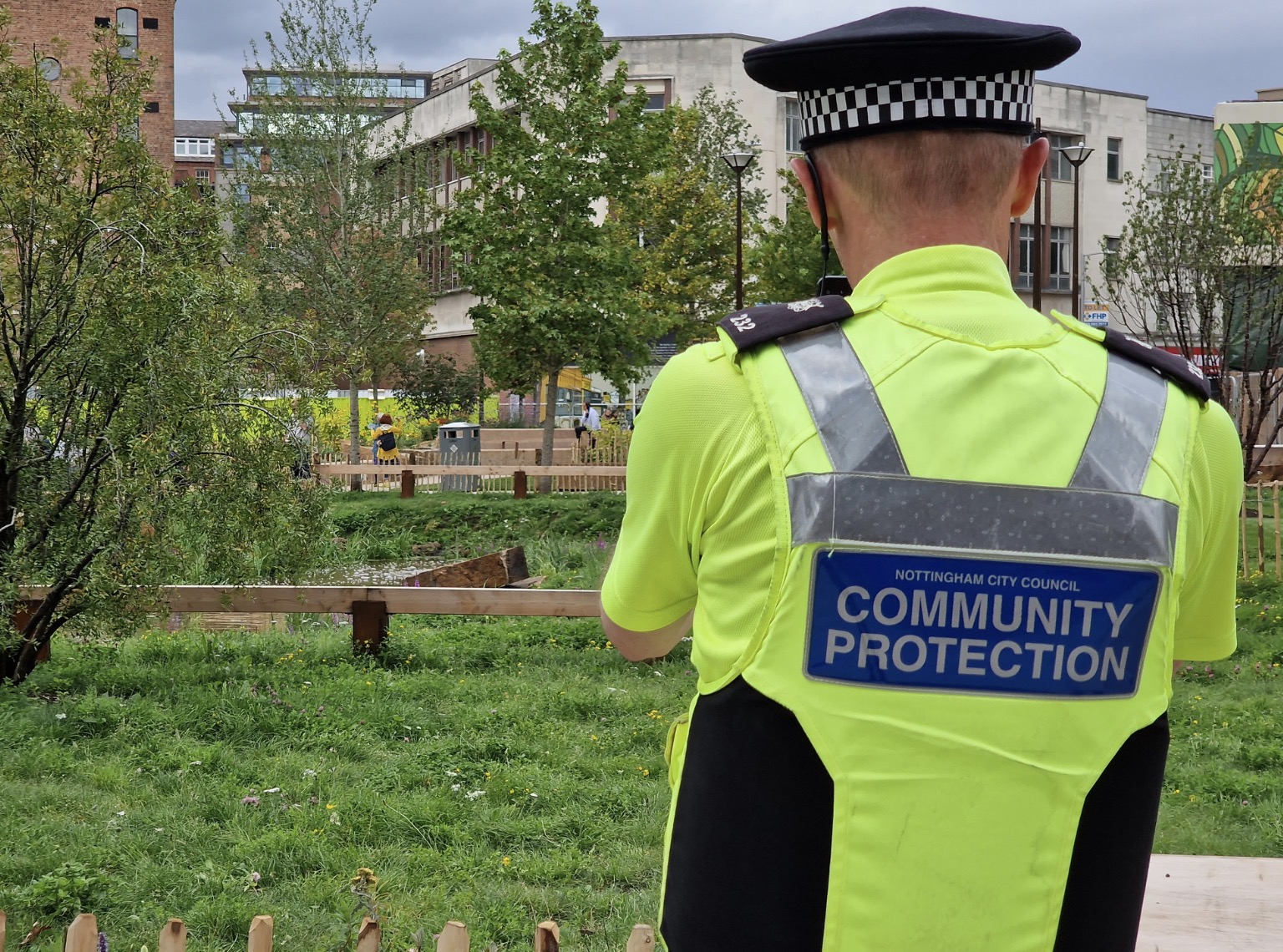
Their deployment will be based on local intelligence and demand, with phased recruitment and training planned.
CPO numbers had already increased to 45 before the latest allocation, with the authority previously setting out an ambition to more than double Community Protection Officer numbers to 100.
Officers have warned that recruiting people to short-term posts may prove difficult.
20 additional litter pickers
A further £657,000 will pay for 20 litter pickers working across Nottingham’s neighbourhoods.
They will provide additional cleaning in high-footfall areas and places experiencing persistent litter problems.
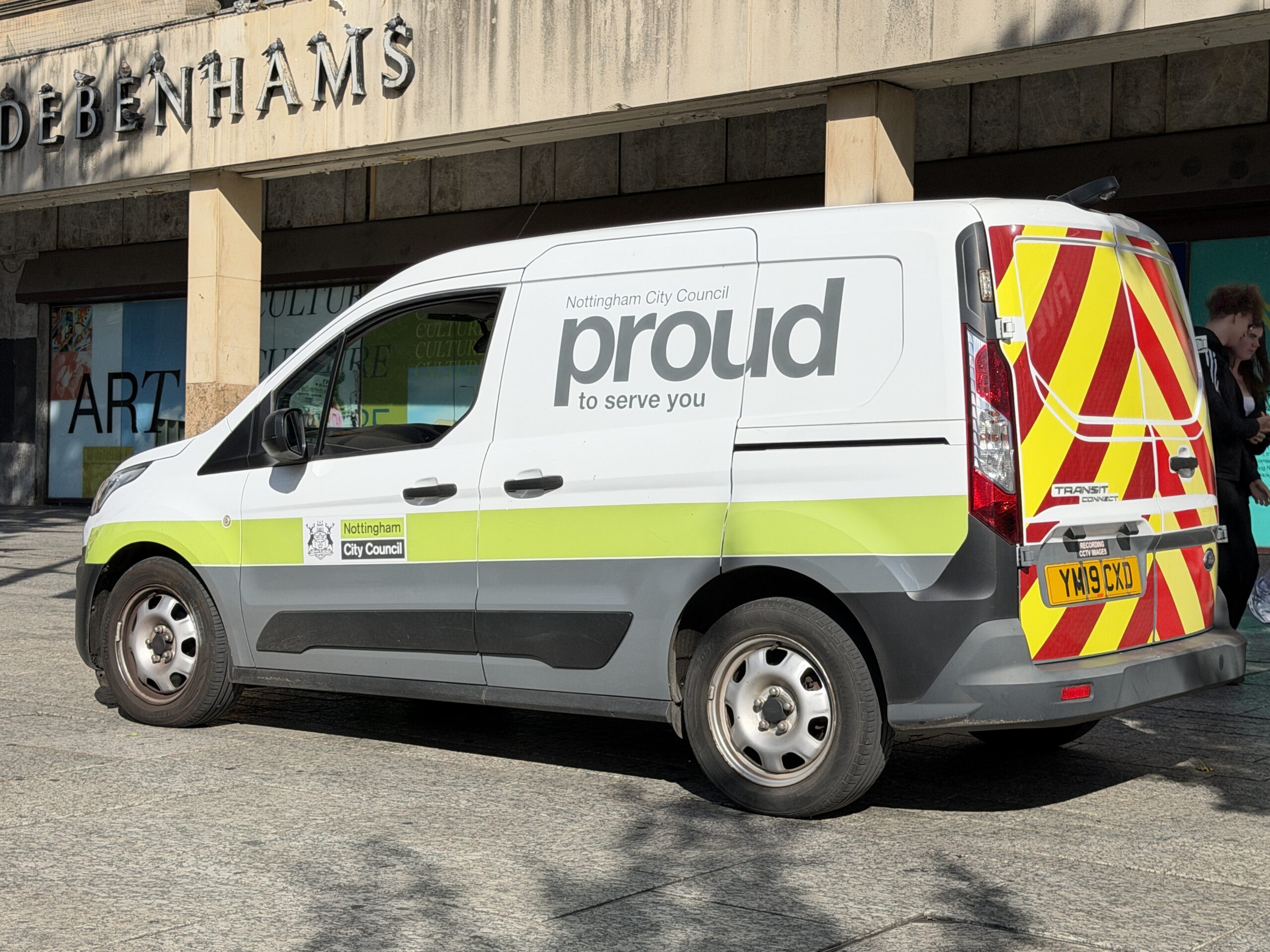
The council says the staff will allow it to maintain cleanliness throughout the day and respond more quickly to local problems.
£500,000 of practical support for unpaid carers
The council will invest £500,000 in respite, equipment, advice and digital support for unpaid carers.
The 2021 Census identified 24,346 carers in Nottingham, although the council estimates that the actual number could exceed 50,000 when people who do not identify themselves as carers are included.
The programme will seek to find more “hidden” carers by involving voluntary and community organisations when people first contact adult social care.
It is expected to increase the take-up of support by between 10 and 20 per cent.
£400,000 tree programme
An additional £400,000 will pay for work on trees beside highways and in public spaces across all Nottingham wards.
Projects identified through the Streets for People programme will be eligible, including improvements which could not be funded through existing capital allocations.
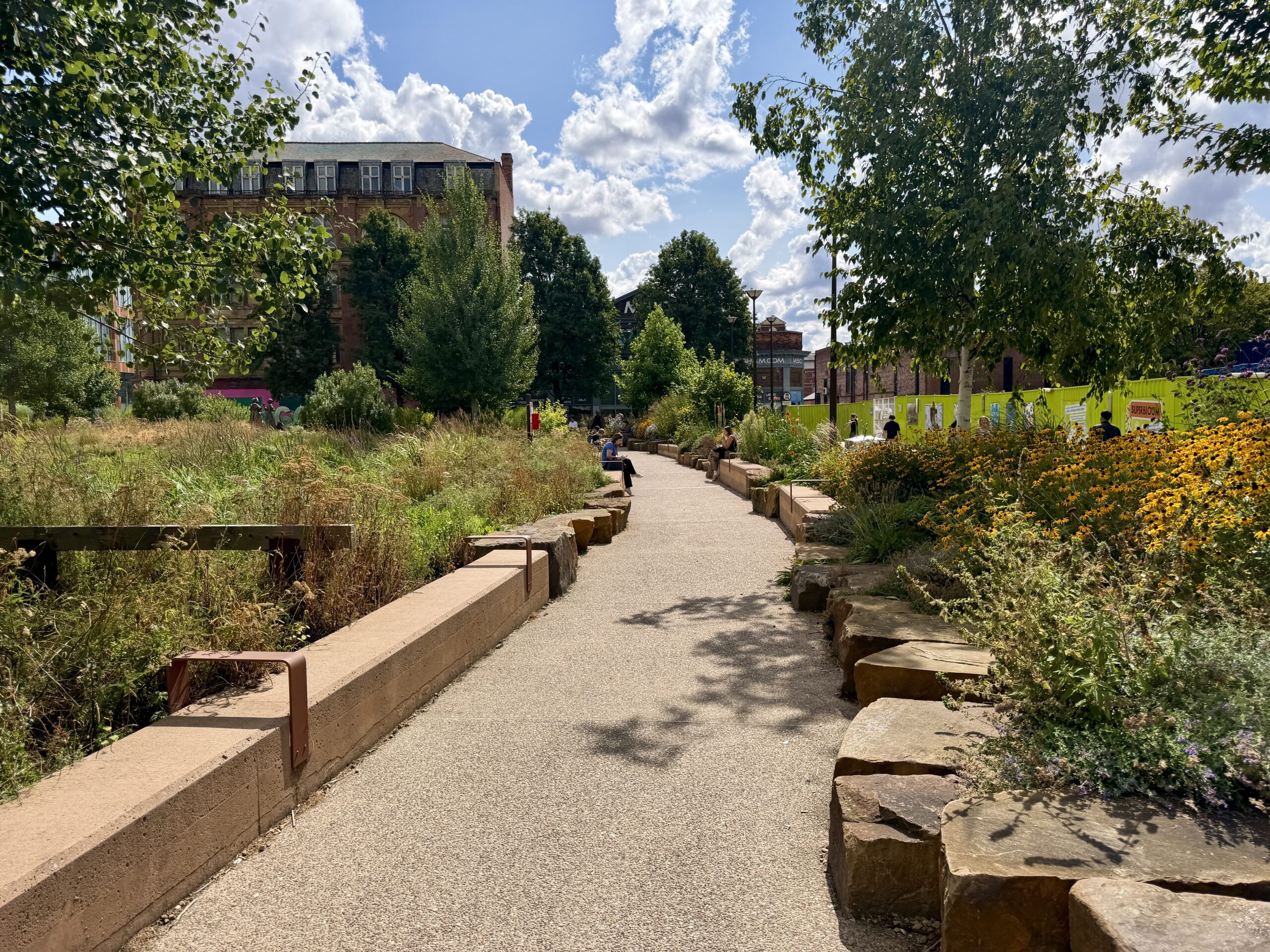
The enhancement work will be additional to the council’s statutory tree-safety programme.
£340,000 to clear blocked drains
The council will invest £340,000 in its highways drainage service to clear blocked drains and reduce the risk of road flooding.
Locations will be identified through highway inspections, ward walks and reports from residents.
The work will run for around 12 months and could continue into the first or second quarter of 2027/28.
£324,000 for intermediate care
A £324,000 allocation will strengthen services intended to keep people independent and prevent avoidable hospital admissions or moves into long-term care.
It will cover falls prevention, support following hospital discharge, community-based help and Shared Lives short breaks for people who cannot use conventional respite services.
The programme will also offer support to unpaid carers in an effort to prevent caring arrangements from breaking down.
£300,000 fund for care leavers
Nottingham care leavers aged between 18 and 25 will be able to receive practical and financial assistance from a £300,000 grant fund.
The scheme will be delivered with The King’s Trust during 2027/28 and 2028/29.
Funding could help young people enter education, training, employment or entrepreneurship, maintain a tenancy and meet health and wellbeing needs.
Applications will be considered using eligibility rules and with support from personal advisers.
£157,000 to investigate retail crime and antisocial behaviour
Three additional Police Staff Investigators will be funded for at least 12 months, joining an existing investigator paid for through the council’s homelessness fund.
The resulting four-person team will investigate retail crime and antisocial behaviour in Nottingham city centre and respond if offending moves into nearby areas.

File image
The investigators will be employed by Nottinghamshire Police rather than the council.
The scheme is intended to reduce investigative work falling on warranted police officers, although continued funding beyond the initial period is not guaranteed.
£156,000 for graffiti removal and ‘immediate justice’
Four posts will be created as part of a dedicated graffiti-removal service operating across the city.
Of the £156,000 allocation, £111,000 will support graffiti cleaning and £45,000 will contribute to an Immediate Justice programme.
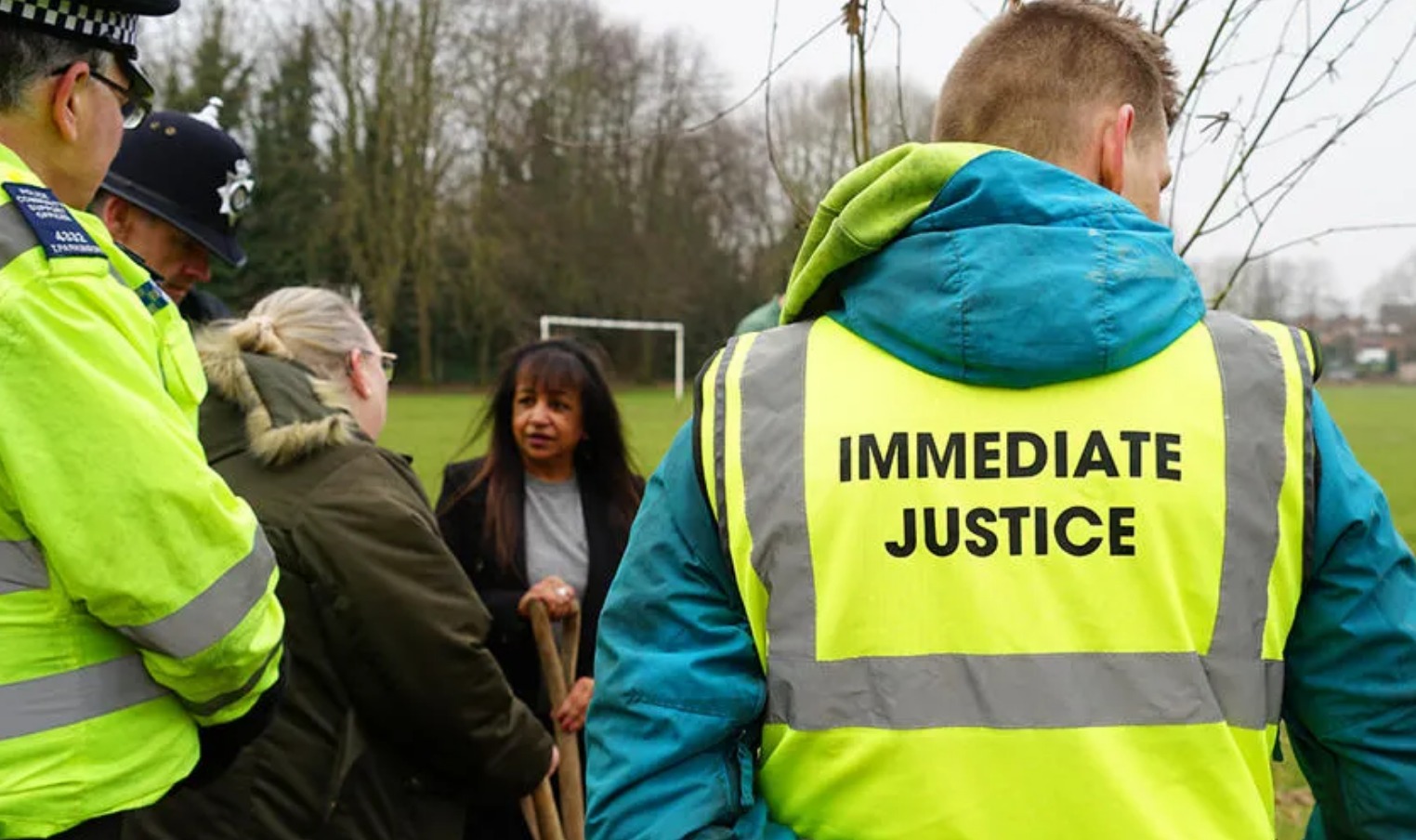
Under that scheme, eligible low-level offenders may carry out litter picking, clean memorials, maintain communal planting areas, assist with graffiti removal or undertake other approved environmental work.
Priority locations will include gateway routes, transport corridors, district centres, shopping areas and community spaces.
The report notes that graffiti on privately owned property could take longer to remove because the council would need permission to access it.
£150,000 for road and street signs
A citywide programme will clean, repair, repaint and replace damaged road and street signs.
It will address faded, missing, vandalised or damaged signs, including mounting systems.
The council’s existing budget largely covers urgent and safety-critical defects, while the new allocation will allow proactive improvements to appearance and condition.
£100,000 for Clean Champion incentives
The council will test incentives designed to recruit, retain and recognise Clean Champion volunteers.
These could include non-financial rewards and some low-cost financial incentives for people taking part in community cleaning and environmental projects.
The precise incentives have not yet been set out. The pilot will test whether they result in increased volunteer participation and activity.
£88,000 for litter bins
Around 80 damaged or end-of-life street litter bins will be replaced, principally in the city centre and other busy locations.
Bins which remain structurally sound will instead be repaired, repainted or refurbished.
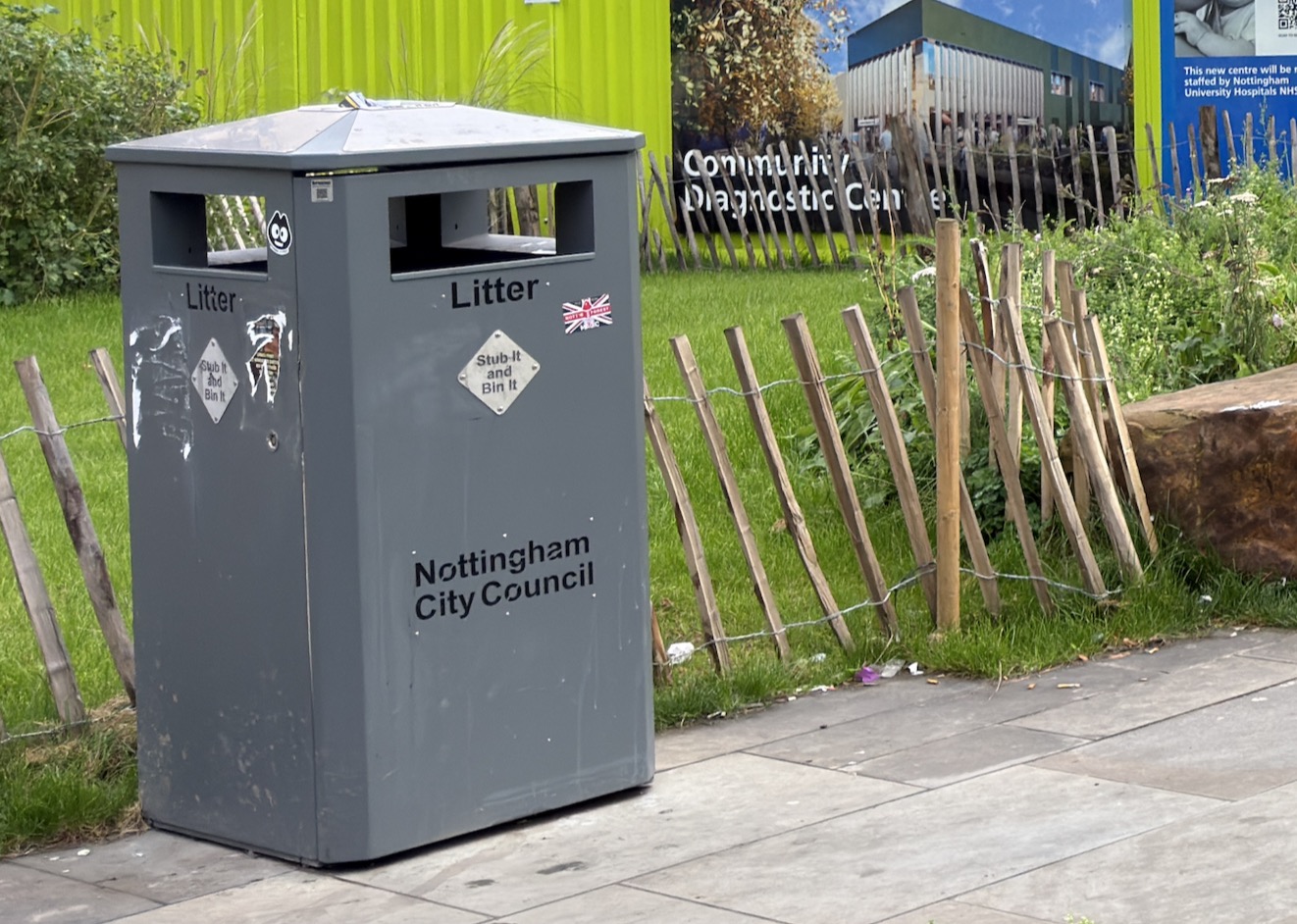
Locations will be selected using inspections, cleaning-service information, feedback from residents and businesses, city centre audits and councillor requests.
The 12-month programme could continue into 2027/28.
£50,000 for chewing gum removal
Specialist contractors will be used to remove chewing gum from high-footfall streets, pedestrian areas, council property and neighbourhood shopping areas.
The programme will provide a deeper clean than the council can deliver using its existing staff and equipment.

Work will be targeted at known hotspots, although officers acknowledge that discarded gum may quickly reappear.
How the package is being funded
The investment comes from Nottingham City Council’s underlying £20.4 million underspend during 2025/26.
The authority originally recorded a £41.2 million General Fund underspend, but that included £20.8 million of Exceptional Financial Support which had been budgeted for but was not used. Removing that provision left an underlying underspend of £20.4 million, as previously reported by The Wire.
Full Council authorised the use of the money on 14 September, before the Executive Board approved the individual projects today.
The package is separate from the council’s current financial position. Its latest monitoring report gives a central forecast of a £300,000 overspend against the 2026/27 budget, with the possible outcome ranging from a balanced position to a £7 million overspend because of continuing uncertainty. The Wire examined those financial pressures earlier this month.
The first two rounds of Council Plan investment, approved in April and May, totalled £7.604 million and came from funding included in the 2026/27 budget. Adding the £15.406 million of named projects approved in the latest round brings direct investment across the three tranches to £23.01 million.
The £4.994 million contingency sits outside that named-project total but remains within the £20.4 million fund.
Some contracts and operational decisions will require separate approvals before work begins, and the projects will be included in the council’s in-year delivery plan for performance monitoring and reporting.
