

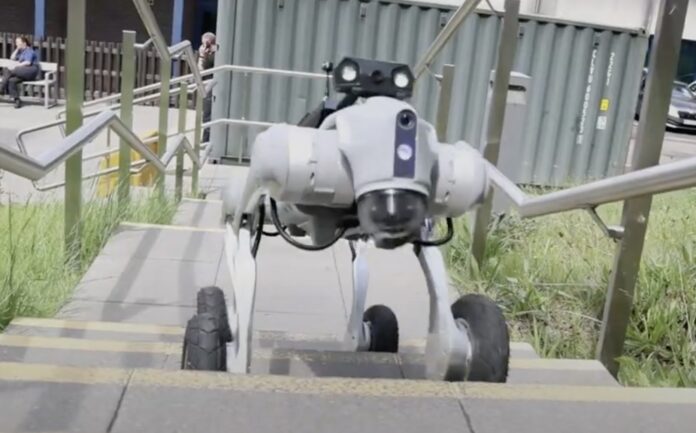
A state-of-the-art robot is being put through its paces, as experienced firearms officers test its ability to protect and serve the public.
The remotely controlled robot dog is fitted with high-tech thermal imaging cameras – allowing officers to find and observe people even in the dark.
It is also able to produce detailed three dimensional scans of internal spaces which will enable officers to accurately map entry and exit routes in dangerous situations.
With its distinctive wheeled feet, the four-legged unit has the ability to climb stairs and scramble over obstacles, meaning it can be used at safe distances inside buildings and over rougher terrain.




Unlike the miniature drones currently used by officers, the robot also has the ability to operate in complete silence.
The device, funded by the Office of the Chief Scientific Adviser, will now be put through a rigorous programme of testing by the force’s Firearms Training Team.
Over the next 12 weeks it will be inserted into various training scenarios which may include armed sieges, hostage negotiations and building searches.
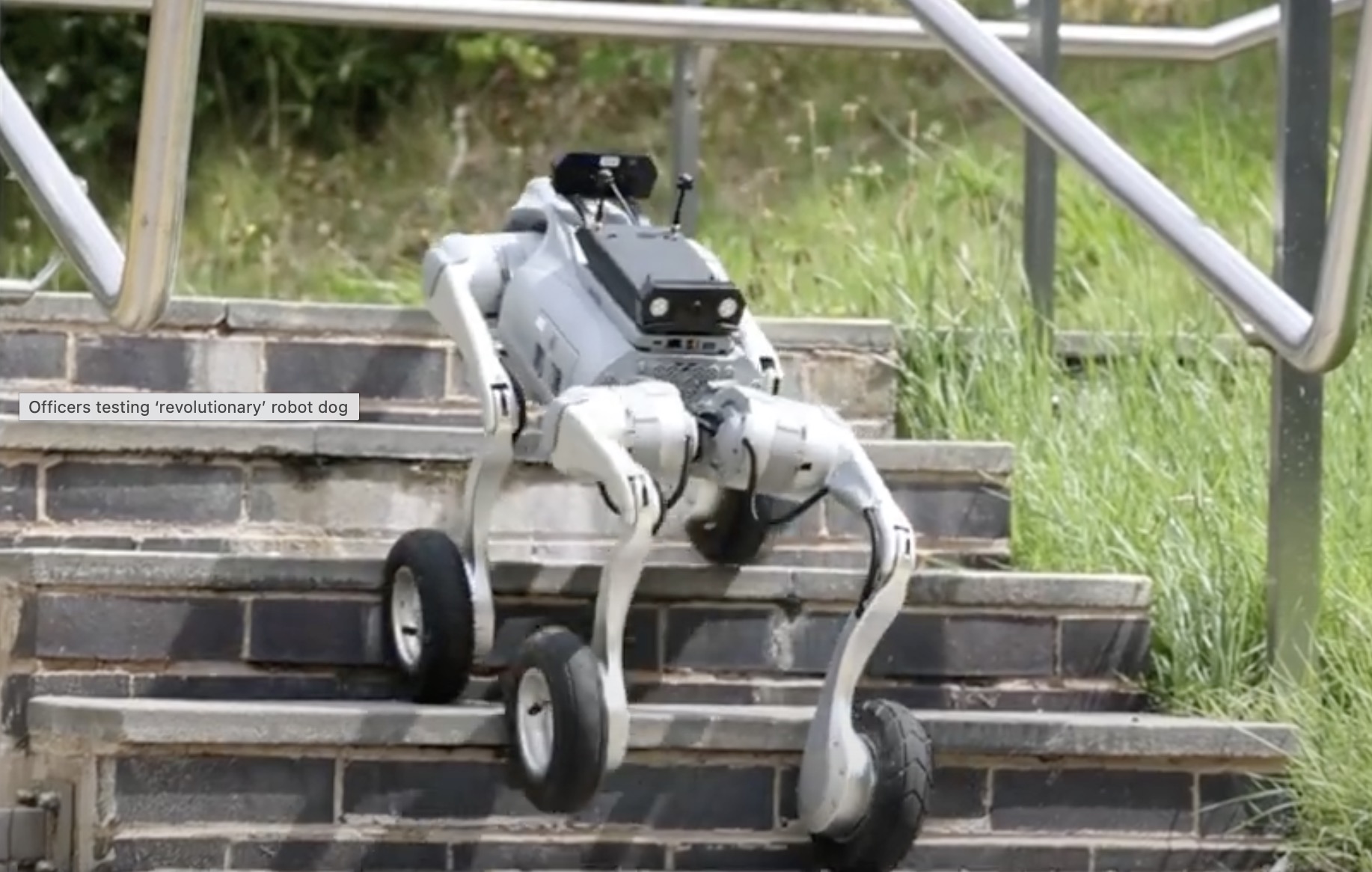
The results will be then be fed back to the Home Office, along with recommendations about how it can be used in front-line policing.
If deemed a success, the robot could enter operational service in 2026.
Superintendent Louise Clarke, of Nottinghamshire Police, said:
“While still in its infancy, it is not hard to see how this technology can and will be used in the future to protect and serve the public.
“In the right circumstances this equipment can enhance officer and public safety but will always compliment the appropriate deployment of armed officers to safeguard the public.”
“By doing so we can gather vital intelligence about a volatile situation without putting lives at risk.
“In the unlikely event of an incident involving chemical or biological agents, for instance, we would have access to another form of reconnaissance to gather vital information about a dangerous situation.
“That’s why we are delighted to have been asked to examine and stress test this very impressive new technology. It is really exciting to be at the forefront of what could be a revolution in policing technology.”
Although the robot dog has four legs and is referred to as a dog, there are no plans for it to replace the real dogs currently employed by the force.
That’s because they lack the speed, immediacy and heightened sense of smell needed to chase down suspects and detect hidden items like drugs, cash and firearms.
