
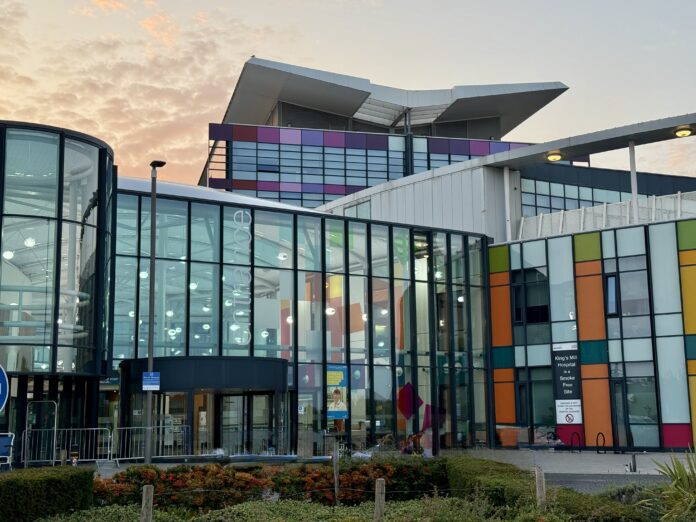
Concerns have been raised over levels of sickness among staff working for Sherwood Forest Hospitals Trust.
The authority, which runs King’s Mill Hospital in Sutton-in-Ashfield, Newark Hospital, and Mansfield Community Hospital, was alerted to the high number of sick days being taken by employees during a meeting of board members on Thursday, 4 December.
Presenting a report, Chief People Officer Robert Simcox said: “Sickness absence remains a challenge. When I was here last, I described some of the progress that had been made around reducing levels of absence in the hospitals, but recently we have seen an upturn in short-term absence – respiratory illnesses such as colds and coughs.”
Sickness absence levels were at 5.7% for the month of October – the highest figure since January 2025.
In 2025/2026 so far, the average sits at 5%.


The target is 4.2%.
Mr Simcox highlighted that sickness absence issues are not exclusive to the Sherwood Trust, with figures reflecting national trends.
Within the report, he also touched on flu vaccine uptake levels among staff, which are currently sitting just below the national target.
Documents say that internal staff uptake of the vaccine sat at 35.8% at the end of October, compared to a 53.2% NHS ideal.
In the meeting, Mr Simcox reported the Trust’s figure was now at around 52%.
That figure is shy of last year’s, which stood at 58% – but at the end of the winter period in which the vaccines are offered, in February.
SFH has the highest rates of vaccine uptake among any Nottinghamshire hospital trust, Mr Simcox said.
But board members were still interested in why this year’s figures weren’t already higher – with the Trust’s ultimate goal to restore uptake levels to around 75%, as seen before the Covid-19 pandemic.
Chief Executive Jon Melbourne asked Mr Simcox: “Have we got any data in terms of the reasons why about 50% of the staff don’t take up the vaccine or haven’t yet?”
In response, Mr Simcox said: “Some of the anecdotal feedback out there is, firstly, [people’s desire to avoid] the adverse impact following the vaccine in terms of feeling unwell, which might be for a short period of time.
“The unintended consequence of that is them being away from work for a day or two and the residual impact that has on the teams they’re working within. That’s certainly the message I’ve heard.
“I think the second bit is, unfortunately, some of that vaccine fatigue. We have tried to make the vaccine more accessible, particularly out of hours, with roaming teams that predominantly have been in hospitals from 8 or 9 p.m. onwards in the evening and then over weekends. I think that’s where we’ve seen more uptake than we have in previous years.”
The low uptake last year was similarly attributed to vaccine fatigue by Mr Simcox at the time.
Vaccine fatigue refers to hesitation and reservation around vaccination due to overwhelming levels of information.
Continuing on the potential reasons for the levels of staff absence, Mr Simcox said: “The prevalence of infection in the hospital could be a cause. Inevitably, our people will come into contact with that and, unfortunately, spread that.”
Trust Chair Graham Ward said: “That comes back to the flu vaccine.”
To combat absent staff, agency staff continue to be needed at the Trust, Mr Simcox said, with usage still remaining above the standard.
But the Trust has reduced usage by 32% compared to October last year.
Bank staff usage is 40% down on the same period last year, which is achieving standards.
