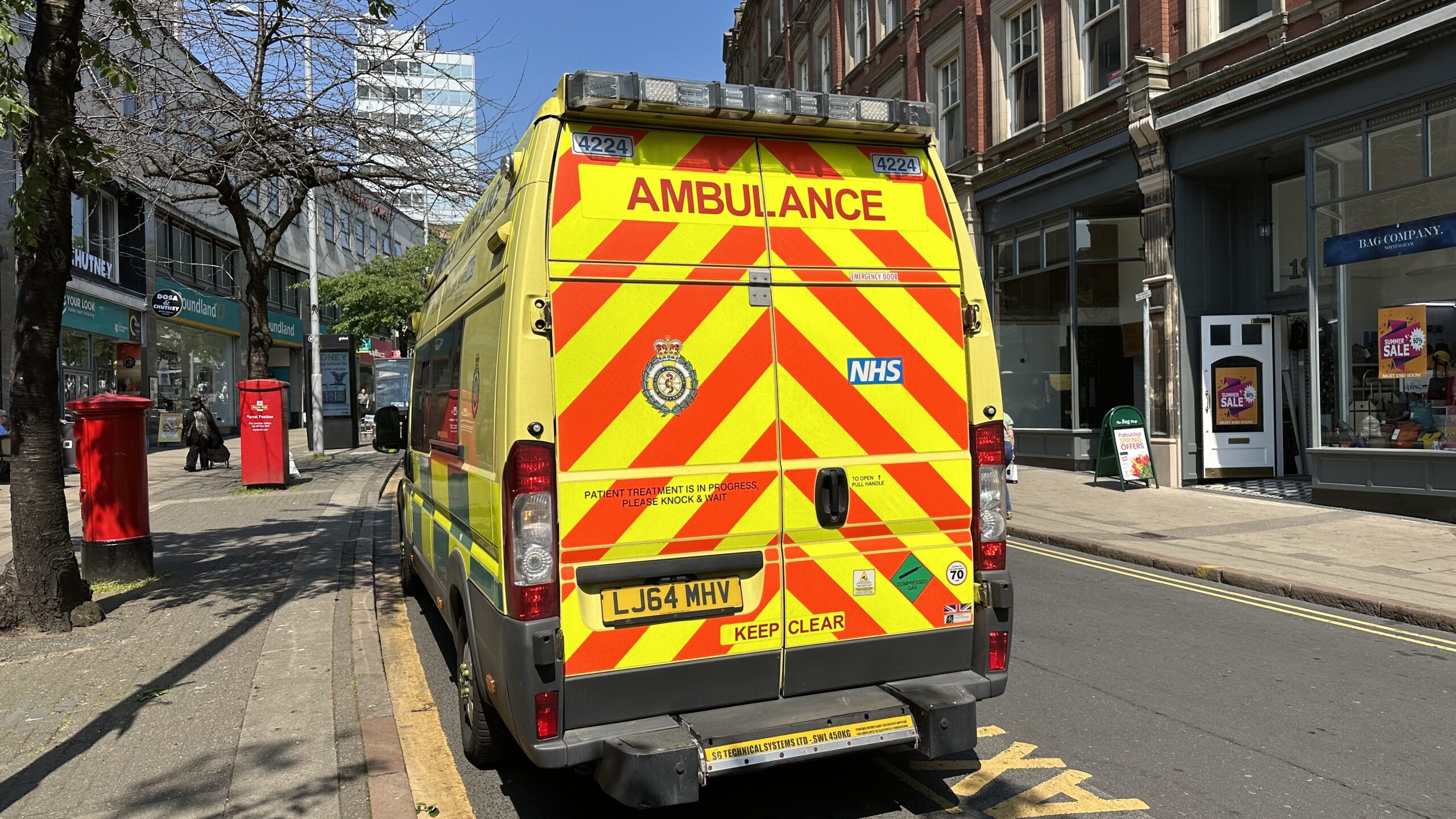
East Midlands Ambulance Service is planning to add 40 double-crewed ambulances to its fleet over the next two years after board papers warned that the service has fewer ambulances per head of population than comparable trusts.
The investment forms part of EMAS’s 2026/27 Annual Business Plan, which says the service needs to increase ambulance availability in order to improve response times and build greater resilience across the region.


The plan says EMAS has “fewer ambulances per head of population than other comparator ambulance trusts”, reducing its ability to respond, particularly during periods of increased demand or wider system pressure.
It adds that current ambulance capacity is “not yet optimally aligned to need” and that action is required to ensure the service is appropriately scaled and sustainable.
Under the plan, EMAS intends to grow both its fleet and workforce numbers, with a target to mobilise 20 additional double-crewed ambulances by 31 October 2026.
A separate section of the business plan says EMAS’s fleet has been historically under-invested and remains older than intended age profiles, reducing vehicle reliability and availability.
The trust says this directly constrains operational performance and response capability during periods of sustained demand.
Fleet condition and the current mix of vehicle types are also said to affect staff wellbeing through increased downtime, operational inefficiencies and reduced confidence in equipment.
EMAS says it now has a strategic fleet plan and investment in an additional 40 double-crewed ambulances over the next two years, enabling growth and a move towards more and newer vehicles.
The plan also supports a further shift towards electric vehicles, although board papers say limited charging and maintenance infrastructure means EMAS is not yet able to transition its fleet to electric vehicles at the pace required.
The new ambulance investment comes as the trust seeks to improve Category 2 response times, which cover serious conditions such as strokes and chest pain.
Board papers say EMAS was the worst-performing ambulance service for Category 2 responses during 2025/26, with an average response time of 38 minutes and 57 seconds for the year. The trust says this position is “not sustainable” and requires a more focused approach that directly increases ambulance availability and improves response times.
The Integrated Board Report for May said Category 2 response times improved in March 2026, helped by improved hospital handover performance and double-crewed ambulance resourcing being above plan. However, the year-end average remained 38 minutes and 58 seconds, which was nine minutes and 18 seconds above the annual plan.
In his report to the board, chief executive Richard Henderson said EMAS had reached full agreement with commissioners over its 2026/27 contract. He said commissioners had supported a request for additional funding to increase operational capacity across the East Midlands, with investment confirmed for each of the next three financial years.
The trust says the additional capacity is part of a wider “back to basics” performance plan focused on increasing ambulance availability, reducing variation and strengthening operational delivery.
