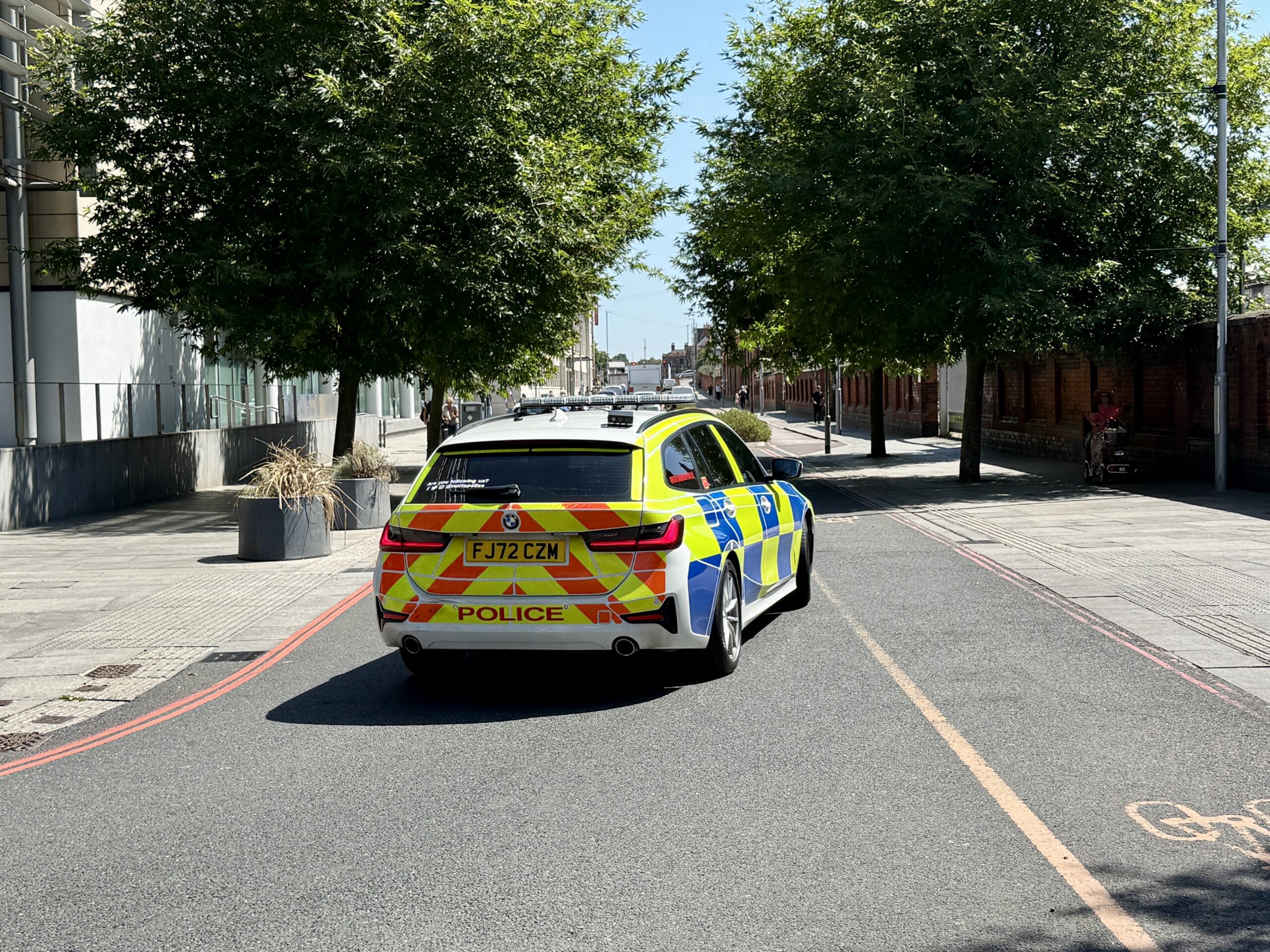
A new order giving council and police officers additional powers to tackle anti-social behaviour in Nottingham city centre has been approved – but restrictions on face coverings and balaclavas have not been included.
Nottingham City Council will instead hold a further public consultation before deciding whether controls relating to face coverings should be added to the Public Spaces Protection Order.


The decision remains subject to the council’s call-in procedure until 25 July.
The order, once brought into force, will run for three years and cover parts of the Castle, St Ann’s, Arboretum and Meadows wards.
It will give authorised officers powers to deal with obstruction, unauthorised requests for money, unauthorised Big Issue sellers, nuisance busking, the unapproved distribution of free materials, mobile advertising and public urination or defecation.
Breaching a PSPO without a reasonable excuse is a criminal offence carrying a maximum court fine of £1,000. An offender may instead be offered a fixed penalty notice. The council’s current fixed penalty for breaching a PSPO is £70, although this may be reviewed following national legislation increasing the permitted maximum to £500.
The council said concerns about face coverings emerged during consultation on the wider city centre order, despite the issue not forming part of the restrictions originally presented to the public.
Face coverings and balaclavas were identified as an issue in 179 of the 1,363 consultation responses analysed, equivalent to 13 per cent. They were also mentioned 76 times in respondents’ additional comments.
Officers concluded that a separate consultation should take place before any face-covering restriction is considered. However, they said postponing the entire PSPO until that work was completed would leave the city centre without the proposed enforcement powers for a prolonged period.
The approved order therefore does not ban or restrict face coverings. A further consultation will be undertaken after the PSPO is implemented, and any subsequent amendment would require another council decision.
The new order largely reinstates powers contained in the Management of Nottingham City Centre Public Spaces Protection Order 2019, which expired on 16 March 2025.
The previous order came into effect on 18 March 2019 and was extended twice. The council said its officers have had fewer enforcement options since its expiry, limiting opportunities for early intervention.
Unlike the previous order, the new PSPO will not include a restriction on psychoactive substances because these are now regulated under separate legislation.
Nottinghamshire Police recorded more than 3,000 anti-social behaviour-related incidents in the city centre between December 2025 and June 2026. According to the council report, a significant proportion involved nuisance behaviour, intimidation, unauthorised requests for money, disorder and other street-based anti-social behaviour.
Community Protection Officers have also reported continuing problems involving obstruction, unauthorised money requests, nuisance busking and public urination and defecation.
A four-week consultation on the new order ran from 19 May until 23 June and received 1,378 responses, although 1,363 responses were included in the detailed analysis of recurring themes.
The strongest support related to public urination and defecation, with 81 per cent of respondents strongly agreeing that the council should issue fines and a further nine per cent agreeing.
A total of 79 per cent strongly agreed that the council should be able to act when people obstruct access to buildings, hinder cleansing operations or obstruct vehicles or pedestrians. Another 12 per cent agreed.
There was also majority support for controlling unsolicited requests for money, requiring Big Issue sellers to use approved pitches and display identification, regulating the distribution of free material and requiring permission for mobile advertisements such as placards and “human A-boards”.
Busking will continue to be permitted across most of Nottingham city centre, including Clumber Street. The order will allow officers to require performers to stop when they are causing an unreasonable disturbance and will restrict busking in a small area surrounding the Council House.
The council said the limited exclusion area was intended to protect nearby businesses, residents and public services, including the Coroner’s Office, where staff regularly meet bereaved families.
The Musicians’ Union opposed designated no-busking areas and argued for informal resolution and graduated enforcement. Nottingham Socialist Party, Nottingham Save Our Services and Nottinghamshire Trades Council also raised concerns about the order’s proportionality, its effect on vulnerable people and the potential impact on lawful political activity and peaceful protest.
Political and religious literature will be exempt from the restrictions on distributing free material. The council said the order was not intended to prevent lawful campaigning, protest, freedom of expression or freedom of assembly.
Its legal assessment acknowledged that some restrictions could disproportionately affect people experiencing homelessness, those with disabilities or substance dependence, young people and certain minority ethnic groups.
Officers will be expected to follow a five-stage enforcement model prioritising engagement, advice and voluntary compliance before formal action. Where vulnerabilities or support needs are identified, they will be expected to consider safeguarding measures and access to support services.
The report says the PSPO is intended to address specific behaviour rather than target people because they are homeless or otherwise vulnerable. This follows the repeal of the Vagrancy Act 1824, meaning rough sleeping and begging are no longer criminal offences in themselves.
The council will spend approximately £608 on eight metal signs outlining the restrictions. The cost will be met from the service’s existing revenue budget.
Following the expiry of the call-in period, council officers will arrang publication of the order and install the required signs before it comes into force.
