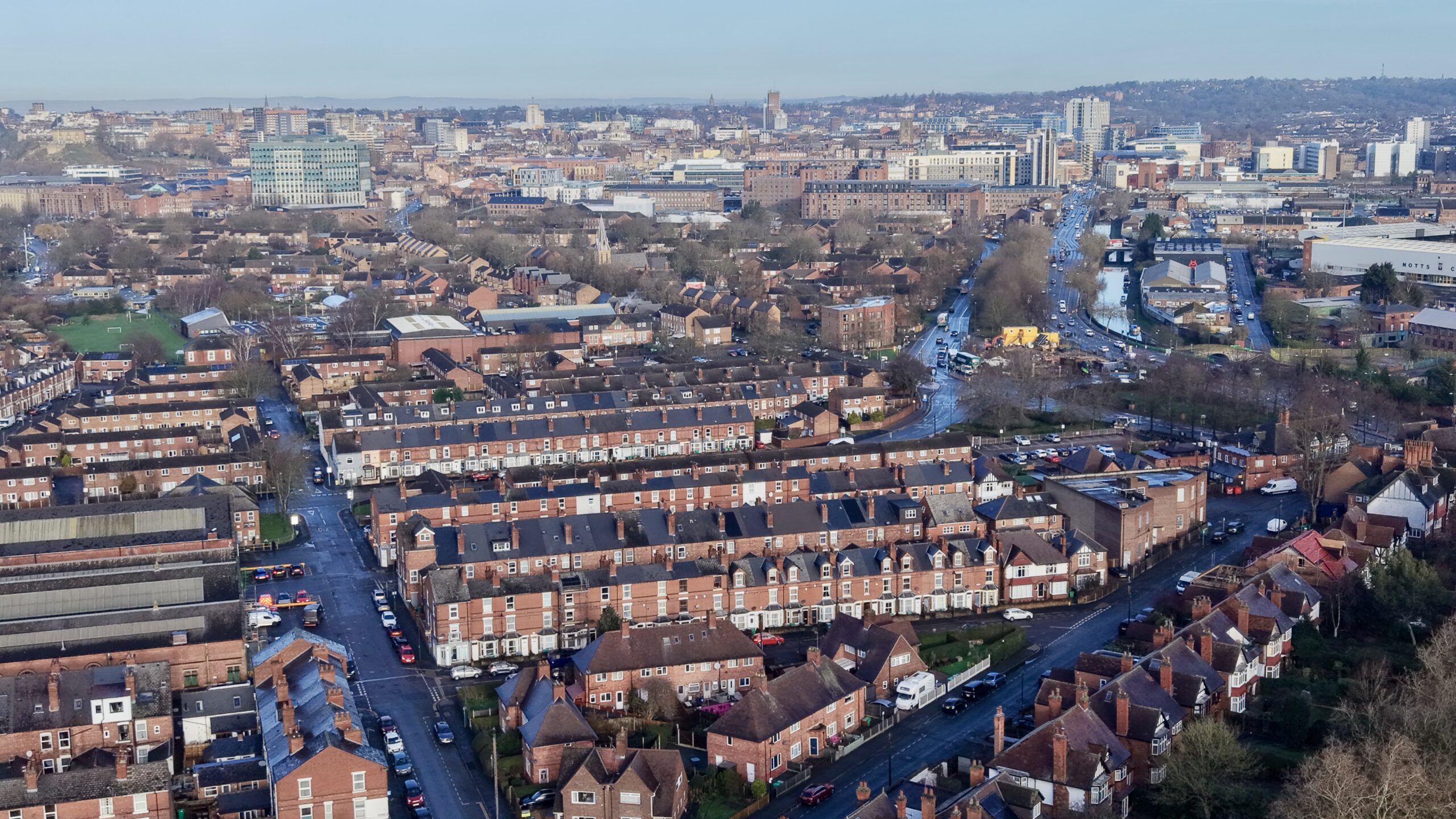
Nottingham could partner with a leading company to help it become net zero by 2050.
In 2008, the UK set a legally binding target of achieving net zero carbon emissions by 2050.


This means any carbon emissions put into the atmosphere are offset by those that are removed.
Nottingham City Council has its own target of becoming carbon neutral by 2028 and has so far achieved an 80 per cent reduction in emissions compared to 2007.
In a bid to make the push to net zero, the city council is planning to partner with a blue-chip company or companies – typically large, national, or multinational corporations – to boost investment.
Such moves have already been made in Bristol and Coventry.
In January 2023, Bristol City Council entered into a 20-year strategic partnership known as Bristol City Leap, joining forces with American firm Ameresco and Swedish state-owned Vattenfall to reduce carbon emissions.

Meanwhile, Coventry has partnered with energy firm E.ON under a 15-year deal to become the UK’s greenest city.
Market testing took place in Nottingham in March, confirming strong market interest in the approach “from several entities”, the council says.
Cllr Sam Lux, the city’s Executive Member for Climate and Energy said that Nottingham could partner with an energy firm under what is known as the Strategic Energy Partnership (SEP).
Explaining the potential benefits for residents at a meeting on Wednesday (June 3), she said: “Any decarbonisation is directly beneficial to residents.
“Firstly, through reducing air pollution, which does impact lung health and brain health, especially in young children, so that is a point that is not often stated enough.
“This is really escalating the scale of what we are doing, and that is going to have a significant public health impact.
“Then, through bill reductions as well. By creating more home-grown energy, it is not reliant on international energy markets, so it is not going to subject residents to price hikes in energy, and overall it will reduce their bills.”
According to council documents, the cost of the city reaching net zero by 2050 could range anywhere from £4 billion to a top-end estimate of £8 billion.
Mike Lyon, Energy Project Manager at the council, said the SEP would help deliver roughly 20 per cent of this total cost, or around £1.5 billion to £2 billion.
He said it is possible that borrowing would be required in some capacity to meet some of the costs.
Nottingham City Council currently has a voluntary cap on borrowing, which was put in place following the collapse of Robin Hood Energy in 2020.
This has allowed the authority to significantly reduce its debt.
Mr Lyon said: “We do not envisage any borrowing associated with the programme in the early years, but once it is established, because of the scale of the problem, there will inevitably be a need to borrow money.
“It is not something that is on the table at the moment. If this is a 15- to 20-year strategic partnership and we want to deliver £2 billion worth of improvements, at some point there will be a requirement for financing.”
Some of the projects outlined by the council include solar farms, new heat networks, and improved housing.
No areas for wind power have yet been considered, but an area of land has been identified for a solar farm on the periphery of the city.
The exact location has yet to be disclosed.
Cllr Lux added: “If we, as a council, continue to reduce emissions from our estate, we will save money significantly. Our bills will go down and then we can reinvest the money saved into resident services. That is one benefit to the public.
“But another is that, depending on what we are decarbonising, if we are decarbonising social housing or the private rented sector, we are directly reducing residents’ bills through retrofitting and installing solar panels.”
Retrofitting council homes in the city has already reduced tenants’ bills by 50 per cent, even before the current energy crisis, Cllr Lux said.
No timescales have been given for when the SEP could be set up.
