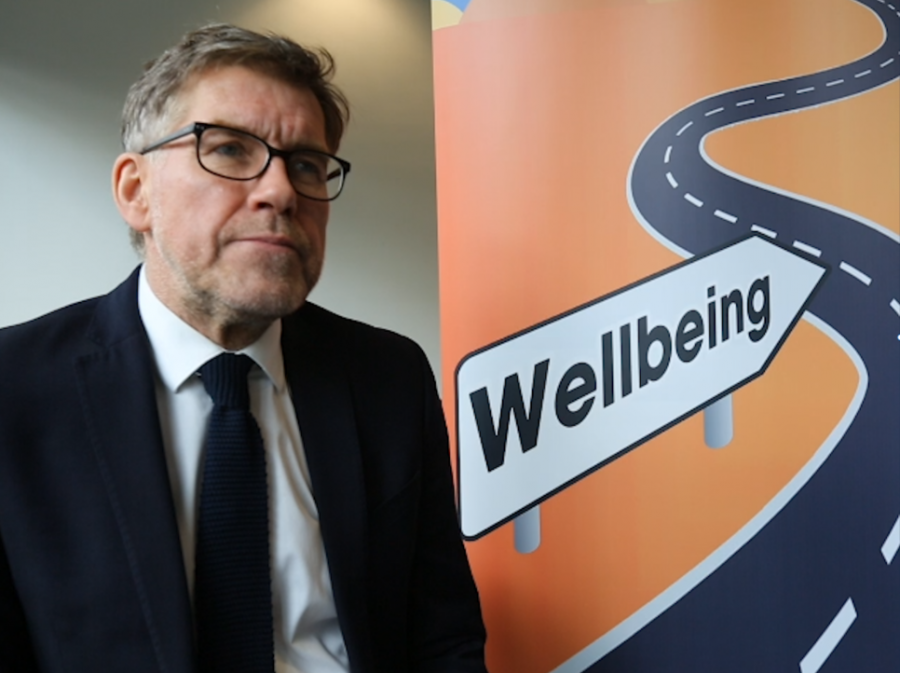
The man who has taught world famous footballers how to sleep properly so they could play better is now giving police officers in Nottinghamshire his top tips.
The nature of police work means there are large numbers of officers at Nottinghamshire Police force working round the clock doing shift work, which can have a knock on effect on work life balance and in particular sleep patterns.



A recent all-staff and -officer survey said sleep, or lack of it, was a key issue across the organisation, and so the force has now sought the help of elite sport sleep coach Nick Littlehales to impart his wisdom to the workforce.
And yesterday he delivered a talk to over 90 staff and officers about what tips to take when it comes to getting a good night’s rest. His guidance will also be accessible to all officers and staff following this session.
Nick has taught his techniques all over the world, to many famous athletes and leading sports professionals, including at Manchester City, and Olympic sports stars. His guidance includes discovering what your sleep cycle is and why naps are essential.
He said: “In today’s world there are infinitely more pressures that we put on ourselves with our 24/7 society, with the knock on effect being that sleep is something that suffers.
“For organisations like the police where many operate shift patterns working through the night, the ability to then adjust your body to being able to sleep properly is essential. That is why I am delighted to be able to help Nottinghamshire Police officers and staff to be able to achieve this goal.

“Only by having a good understanding of the natural physical and mental processes can people be enabled to have quality and consistency in their sleep and in turn better their overall performance. It really isn’t rocket science.”
He added the need to get a full eight hours sleep is a myth and needing to have specialist places to sleep was also not necessary, because you can sleep any time, any place, anywhere.
“We need to understand our own bodies and listen to what they are telling us,” he added. “Humans are actually designed to sleep alone and have the ability to sleep anywhere at any time. How people sleep is actually connected to the sun and the natural rhythms of the body in terms of whether we are up with the larks or a night owl – ie what chronotype we are.
“We are all pre-conditioned genetically and we need to know how we are programmed if we are to manage to sleep as we are meant to.
“Once we know this about ourselves, like our chronotype, we will never suffer from too little or too much sleep again and we will be able to focus and process what we have to do in our waking hours much more effectively and efficiently.”
Deputy Chief Constable Rachel Barber, who leads on staff well-being, added: “The health and wellbeing of all policing professionals is essential not only to the safe and effective operation of the police service, but because as an employer of choice it is the right thing to do.
“Our staff and officers are our greatest asset and so we need to ensure we treat them well. Through the staff survey people told us sleep was an issue which is why we are grateful to Nick for giving us his time to help us to be able to help ourselves more as a workforce, so thank you Nick.”
Wellbeing is now ‘centre stage’ across Nottinghamshire Police, following the launch of a strategy last year with key aims of supporting efforts to improve workplace health, enhance productivity and to have a more sustainable and motivated workforce.
Nick’s top guidance is now being circulated across the force internally so all staff and officers have access to his learning.
His seven key sleep recovery indicators are:
– Learn about the circadian rhythms – tap it in your browser. These are physical, mental, and behavioural changes that follow a daily cycle. They respond primarily to light and darkness in an organism’s environment. Shift workers can change their sleeping habits by following this process.
– Identify your chornotype ie whether lark or an owl. This will indicate when you are most likely to be motivated and perform at your best.
– Sleep in cycles – polyphasic approach which is more natural to human beings. – – Sleeping in shorter periods more often – day or night shift workers.
– Don’t get hung up on pre-sleep because post-sleep is the most important period when you wake up. All about starting your day correctly.
Better balance of activity with periods of recovery is essential to our ability to recover.
– Environment – mentally remove everything from your bedroom and consider only putting back in what is designed to help you recover because we can over- complicate our bedrooms.
– Products – a mattress isn’t what will help you to sleep, it is following all the other tips. Humans can sleep comfortably on a mat on the ground.
