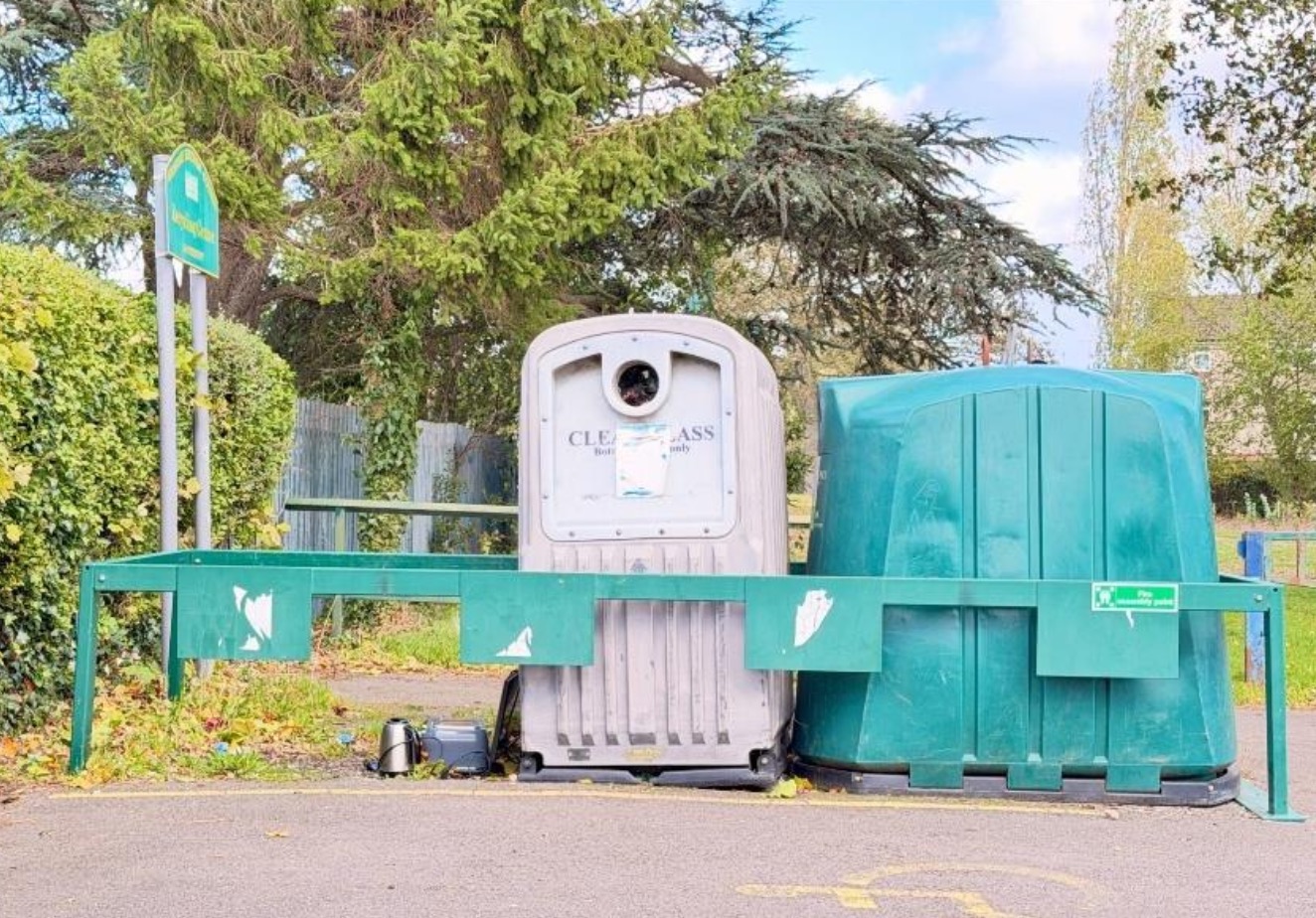
Recycling banks across Broxtowe could be retained, reduced in number or phased out as councillors consider whether to launch a review of the service.
A report to Broxtowe Borough Council’s Overview and Scrutiny Committee says around £40,000 would be needed to replace ageing banks and refurbish sites, with most materials they previously accepted now collected from residents’ homes.



The committee will consider the report on 19 November. It is being asked whether to include a detailed review in its future work programme, rather than approve closures or changes to collections at this stage.
The facilities, known as “bring recycling sites”, primarily provide glass recycling banks at locations including car parks, leisure centres and supermarket sites.
They were introduced across the borough in 1994, before comprehensive kerbside recycling collections were available. At its peak, the network included 25 sites accepting materials such as glass, paper, cardboard, cartons and aluminium cans.
Some supermarket sites were subsequently removed at the request of their hosts, which chose to make their own recycling arrangements.
The expansion of household collections has further changed the network’s role. Cartons have been accepted in green-lidded recycling bins since March 2026 under Simpler Recycling arrangements, and collections of cartons at bring sites ended in July.
Officers say most council-owned glass banks are approaching the end of their operational life and would need replacing to meet current safety and operational requirements.
Replacing the banks is estimated to cost £25,000, with a further £15,000 needed for work including surfacing, fencing, signage and other site improvements.
The network generates around £24,000 a year in recycling credit income, paid by Nottinghamshire County Council as the waste disposal authority.
However, the report warns that this income cannot be assumed to continue. Its future is uncertain following the introduction of extended producer responsibility funding arrangements, which could incorporate existing funding mechanisms into wider payments.
Three possible approaches are set out for discussion: retaining the existing network and investing in it, reducing the number of sites while concentrating investment on the most heavily used and strategically located facilities, or gradually withdrawing the service.
The report says these are starting points for discussion and that other approaches could be considered.
Keeping the network would preserve an alternative for residents with limited storage space at home, while requiring investment and continued maintenance.
Reducing provision could lower investment costs and retain facilities at selected locations, but would make recycling banks less accessible for some residents.
Phasing out the sites would avoid future replacement costs and reduce servicing requirements. However, officers identify potential disadvantages including the loss of an option for people who rely on the banks, the loss of recycling credit income and a possible reduction in the amount recycled.
Usage varies considerably between locations. The report’s figures for 2025/26 show Morrisons in Eastwood collected 113.59 tonnes of glass, compared with 27.52 tonnes at Derby Street in Beeston and 22.60 tonnes at Hickings Lane in Stapleford.
At the lower end, the Village Hotel site in Toton collected 1.49 tonnes, Chilwell Barracks collected 3.82 tonnes and Nottingham University in Beeston collected 3.90 tonnes.
Despite those differences, officers say the network continues to make a consistent contribution to recycling across the borough. Total annual collections through bring sites have ranged between approximately 225 and 345 tonnes over the past five years.
The report says kerbside collections generally offer the most efficient way to collect recyclable materials and reduce the need for separate car journeys. However, it also recognises that bring sites provide additional capacity for residents who cannot store much recycling at home or need an alternative facility.
The council is not legally required to provide bring recycling sites and meets its statutory recycling duties through its kerbside service, according to the report.
Any proposals to reduce or withdraw provision would require an equality impact assessment before a decision was taken. Changes at sites on land the council does not own would also need to take account of arrangements with landowners.
If councillors support a fuller review, it could examine the options in more detail and consider whether residents should be consulted. No changes to the service are being approved at this meeting.
