
Major projects planned across Nottinghamshire could reshape the county’s roads, countryside and former power station sites for decades to come.
A series of nationally significant infrastructure projects are now either approved, awaiting Government decisions, or being prepared for submission. They include huge solar farms, battery storage schemes, new electricity transmission lines, a major upgrade to the A46 Newark Bypass and clean energy development around Nottinghamshire’s former coal-fired power stations.


Many of the schemes are centred on the Trent Valley and north Nottinghamshire, where former power station sites at West Burton, Cottam and High Marnham are being lined up for a new generation of energy projects.
West Bridgford Wire has previously reported how the area is being promoted as the Trent Clean Energy Supercluster, a major clean energy corridor focused on the redevelopment of three former coal-fired power station sites in Bassetlaw.
The former power stations were once part of “Megawatt Valley”, a key part of Britain’s energy system which helped generate power for homes and businesses across the country.
Now, the same grid connections, industrial land and energy infrastructure are being used to support plans for solar farms, battery storage, hydrogen, nuclear-related projects and fusion energy.
The most high-profile project is the Spherical Tokamak for Energy Production, known as STEP, at the former West Burton A power station site.

The £2.5 billion fusion project aims to develop a prototype plant capable of producing low-carbon energy by replicating the process that powers the sun.
Earlier in June STEP Fusion assumed control of part of the West Burton site, marking a major milestone in the transformation of the former coal power station.
The project is expected to play a central role in Nottinghamshire’s long-term clean energy ambitions, with the wider Trent corridor also being promoted for new jobs, investment and advanced technology.
But STEP is only one part of a much wider infrastructure pipeline.
Across Nottinghamshire and its borders with Lincolnshire and Yorkshire, several major schemes are being handled through the nationally significant infrastructure project process. This means they are decided by Government ministers rather than through ordinary local planning applications.
Some have already been approved. Others are awaiting a final decision. More are expected to be submitted over the coming months.
Ratcliffe Power Station
Ratcliffe-on-Soar Power Station, near the Nottinghamshire, Leicestershire and Derbyshire border, is a major site in the county’s energy transition.
The power station was the UK’s last operational coal-fired plant before it closed in 2024, marking the end of coal-fired electricity generation in Britain. Its owner, Uniper, has previously set out ambitions to turn the wider Ratcliffe-on-Soar site into a low-carbon energy and technology hub, with potential uses linked to hydrogen, data warehouses, battery storage, advanced manufacturing and other clean energy industries. Although Ratcliffe sits outside the West Burton, Cottam and High Marnham corridor, it remains central to Nottinghamshire’s shift from coal power to clean energy.
A46 Newark Bypass
One of the biggest road schemes affecting Nottinghamshire is the planned upgrade of the A46 Newark Bypass.
The route is a key trade corridor through the East Midlands, linking the M1 and Leicester with the A1 and central Lincolnshire.
National Highways wants to widen 6.5km of the existing single carriageway into a dual carriageway, providing two lanes in each direction between the Farndon and Winthorpe roundabouts near Newark-on-Trent.
The scheme is intended to improve congestion, journey times and safety on a stretch of road that has long been seen as a bottleneck.
In October 2025, the Government approved the Development Consent Order for the project, giving it planning permission to proceed.
The £686m scheme could move forward within the next five years, although National Highways has still not confirmed a start date, end date or final delivery programme.
The latest information on the National Highways website still lists the project’s start and end dates as to be confirmed.
If delivered, the upgrade would be one of the most significant road improvements in Nottinghamshire for years and would affect commuters, freight traffic, businesses and residents around Newark.
Cottam Solar Project
The Cottam Solar Project is one of several major renewable energy schemes linked to former power station sites in and around Nottinghamshire.
The scheme is proposed as one of the UK’s largest solar farms and could generate up to 600MW of electricity.
Developers say this would be enough clean energy to power around 180,000 homes and save around 400,000 tonnes of carbon each year.
The project is linked to the decommissioning of Cottam Power Station, outside Retford in Bassetlaw.
Renewable energy developer Island Green Power says the aim is to “repower” the area with clean energy, replacing around 30 per cent of the former coal-fired station’s generation capacity.
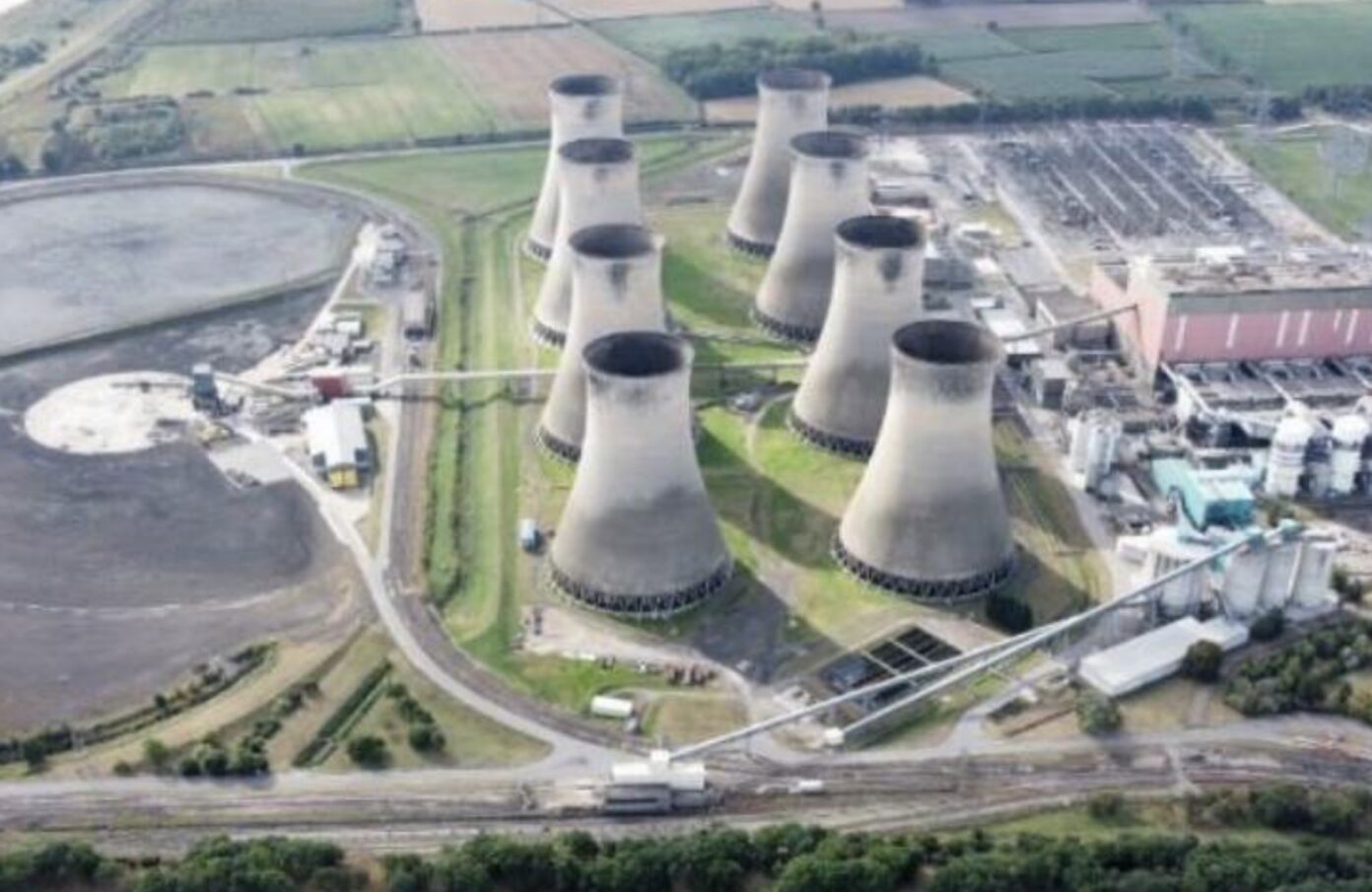
The solar farm and battery storage project was granted a Development Consent Order by the Government in September 2024.
The scheme crosses the Nottinghamshire and Lincolnshire border. The main solar farm would be in West Lindsey, Lincolnshire, while cabling and the grid connection would run to a substation at the former Cottam Power Station in Bassetlaw.
Land parcel one is to the east of Willingham by Stow, Normanby by Stow and Stow.
The project is one example of how former coal-fired power station infrastructure is being reused for large-scale renewable energy generation.
Gate Burton Energy Park
Gate Burton Energy Park is another cross-border solar and battery storage project with a connection into Nottinghamshire.
The scheme, proposed by renewable energy company Low Carbon, would be built on land near Gate Burton in Lincolnshire.
It could generate up to 500MW of electricity, enough to provide clean energy to more than 160,000 homes.
Developers say it could also save more than 100,000 tonnes of carbon each year.
The project was approved by the Government in 2024 and is listed as “in development” by the company.
Although the main solar farm would be in West Lindsey, Lincolnshire, the cabling and grid connection would run to a substation at the former Cottam Power Station in Bassetlaw.
The project is part of a wider pattern of major renewable energy schemes being planned around existing grid infrastructure in the Trent Valley.
Great North Road Solar and Biodiversity Park
The Great North Road Solar and Biodiversity Park is one of the largest proposed solar schemes affecting Nottinghamshire.
Energy company Elements Green is developing the project to the north-west of Newark-on-Trent, near the A1.
West Bridgford Wire has previously reported on the scale of the proposals, which could generate around 800MW of solar energy.
The developer says that would be enough to meet the power needs of around 400,000 homes.
The site is spread around the villages of Caunton and Ossington, forming an incomplete ring shape across a large area of countryside.
The scheme is not only being promoted as a solar farm. It also includes biodiversity and public access proposals, including 64,500 new trees, 50km of hedgerow, 22 footpaths and six bridleways.
In total, the developer says the project would provide 34.8km of new recreational routes.
However, the size of the scheme has also raised concerns locally, with residents and councillors previously questioning its impact on countryside, villages and rural roads.
In late April 2026, the Planning Inspectorate completed its examination of the proposals.
The examining authority has three months from that point to send a recommendation to the Secretary of State on whether a Development Consent Order should be granted.
That recommendation is due by July 28.
North Humber to High Marnham
National Grid is proposing around 90km of new 400kV overhead electricity line between two new substations at Birkhill Wood in Yorkshire and High Marnham in Nottinghamshire.
The project is designed to reinforce the electricity transmission network between the north of England and the Midlands.
It is also intended to help connect proposed new offshore wind farms to the wider power network.
Although the project may appear to be a straightforward power line scheme, it forms part of the wider national challenge of moving electricity from where it is generated to where it is needed.
The two new substations would require separate planning permission from their respective local authorities.
National Grid says an application to the Government is expected in 2026.
If the current timetable is followed, construction could start in 2028 and the new line could become fully operational from 2031.
For Nottinghamshire, the High Marnham end of the project would add another major energy scheme to an area already central to the county’s clean energy plans.
One Earth Solar Farm
The One Earth Solar Farm is proposed on the Lincolnshire-Nottinghamshire border.
The scheme would cover the equivalent of around 2,800 football pitches around the River Trent and could power around 200,000 homes.
It would produce more than 50MW of energy and cover 3,954 acres of land north of South Clifton, east of Skegby and west of Thorney.
A Government decision on the project is expected by July 2026.
In May 2026, Newark and Sherwood District Council considered a motion seeking assurance that the Government would have considered all necessary information before reaching a decision.
The motion raised concerns about issues that councillors said had not been answered during consultation and examination.
These included questions about why DEFRA and the Drinking Water Inspectorate had not been consulted on the plans, and whether environmental impacts had been properly assessed.
The project is one of several large solar schemes proposed around the Trent Valley, where developers are seeking to use available land and strong grid connections.
Steeples Renewables Project
Developer RES wants to build a new solar farm and battery storage development near the decommissioned West Burton Power Station, near Retford.
If approved by the Government, the Steeples Renewables Project could export up to 600MW of electricity.
RES says this would be enough to power around 180,000 homes each year, equivalent to around half of all homes in Nottinghamshire.
The project is also expected to deliver around £320,000 a year in community benefits.
Over the lifetime of the scheme, this could amount to approximately £13 million.
The community benefits could include the developer’s electricity discount scheme, which provides a minimum annual discount of £350 on electricity bills for the closest homes and businesses.
RES expects a Government decision on whether to approve the project by October 2026.
The scheme would add another major renewable energy project to the West Burton area, which is already central to Nottinghamshire’s future energy plans because of the STEP fusion programme.
Tillbridge Solar Project
The Tillbridge Solar Project is another major scheme based mainly in Lincolnshire but connected to Nottinghamshire’s energy network.
Energy developers Tribus Energy and Recurrent Energy were granted permission in October 2025 for the 500MW solar farm east of Gainsborough.
The project is expected to produce clean energy for nearly 300,000 homes.
Although the main site is in Lincolnshire, the project includes works to connect it to the National Grid at Cottam substation in Nottinghamshire.
That connection again shows the importance of former Nottinghamshire power station infrastructure to the next generation of energy schemes.
West Burton Solar Project
The West Burton Solar Project is being developed by Island Green Power.
The scheme was given Government approval in January 2025 and would use the grid connection point at the former West Burton Power Station, which was decommissioned in 2023.
It would include solar generation and energy storage.
The project is cross-border, involving both Lincolnshire and Nottinghamshire.
The developer says it would generate enough clean energy to power around 144,000 homes and replace about 24 per cent of the former coal-fired power station’s generation capacity.
Together with STEP and the Steeples Renewables Project, it would form part of a major change in the role of the West Burton site.
The concentration of projects in and around Nottinghamshire is not accidental.
The county has a long history as an energy producer, with coal mining, coal-fired power stations and high-capacity grid infrastructure shaping much of north Nottinghamshire and the Trent Valley.
Former power station sites are now attractive for new energy projects because they already have grid connections, industrial land, transport links and an energy workforce legacy.
The Trent Clean Energy Supercluster is focused on West Burton, Cottam and High Marnham.
The area is being promoted as a major clean energy and technology corridor, with ambitions linked to fusion, hydrogen, solar, nuclear-related development, data centres and wider economic growth.
For local communities, the projects could bring investment, jobs and new infrastructure.
But they also raise questions about landscape change, agricultural land, construction traffic, biodiversity, flooding, public access, community benefits and how much influence local councils and residents have over nationally significant decisions.
If all or most of the schemes progress, Nottinghamshire could see one of the biggest infrastructure shifts in its recent history.
The A46 Newark Bypass upgrade would affect road users, businesses and freight routes across the East Midlands.
The solar farms and battery schemes would change large areas of countryside, particularly around Newark, Bassetlaw and the Lincolnshire border.
The new power line between North Humber and High Marnham would reinforce Nottinghamshire’s role in the national electricity network.
The STEP fusion project at West Burton could place north Nottinghamshire at the centre of a long-term effort to develop a new form of low-carbon power.
Many of the projects are still subject to final decisions, detailed delivery programmes or further planning steps.
But taken together, they show how Nottinghamshire’s former coal and power station landscape is being repositioned for the next phase of Britain’s energy system.
The county’s energy past helped power the country for generations.
The decisions now being made could determine whether Nottinghamshire plays a similar role in the clean energy economy of the future.
