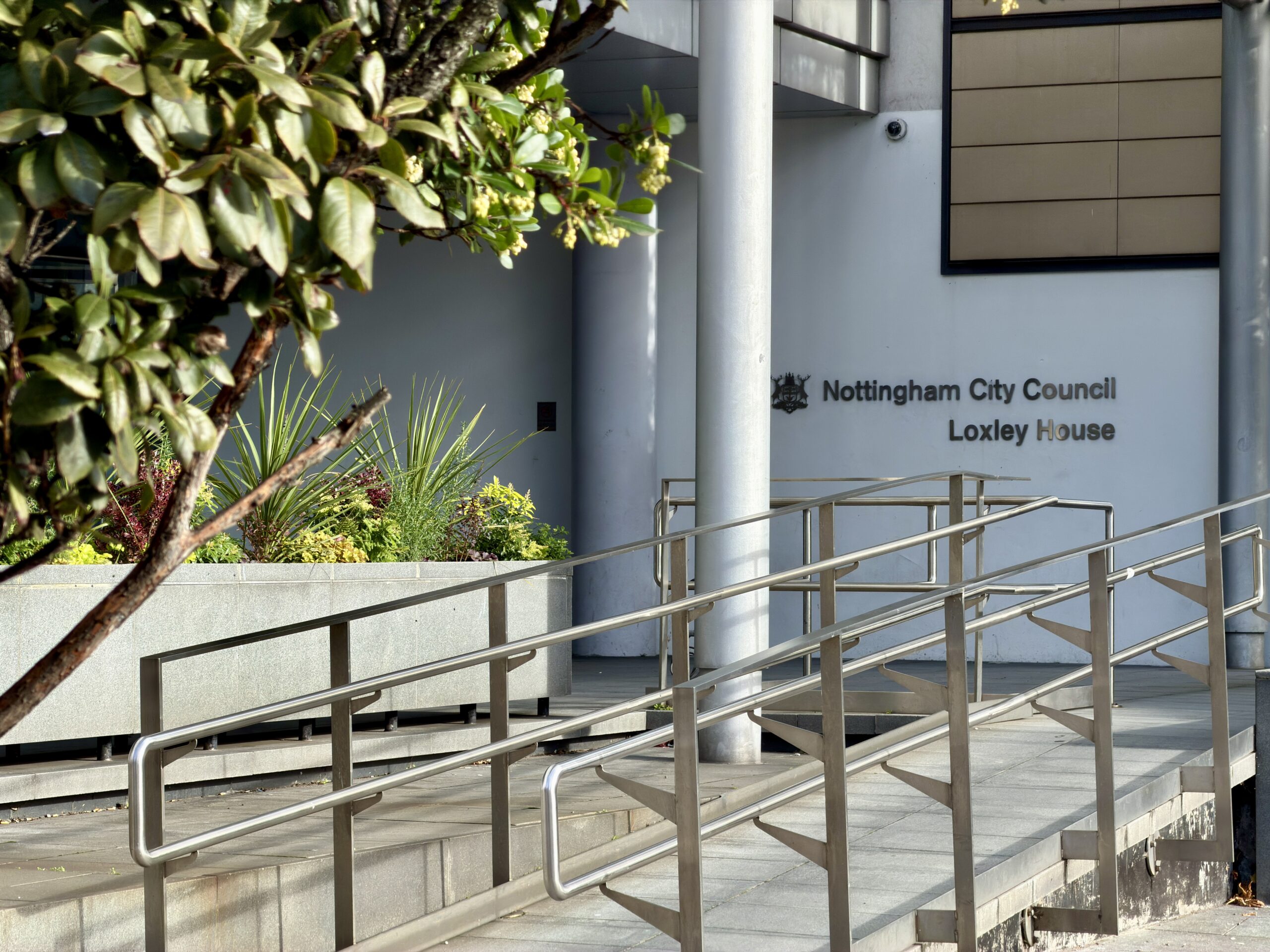
Nottingham City Council is proposing to freeze its share of council tax next year, with a draft budget showing a small surplus for 2027/28 but further savings still needed in later years.
The proposals would leave the city council’s element of a Band D bill at £2,342.08, unchanged from 2026/27. The figure covers Nottingham City Council’s share of the bill.


Councillors will consider the draft budget and Medium-Term Financial Plan at the Executive Board meeting on 20 October. They are being asked to approve public consultation running from 20 October to 30 November, with the final budget due to go before Full Council on 1 March 2027.
The draft sets out a net revenue budget of approximately £466.8 million for 2027/28 against projected core funding of £466.9 million, leaving a forecast surplus of £100,000.
It follows the council setting a budget with a £1.063 million surplus for 2026/27. The report attributes that position to efficiency and transformation measures alongside additional government funding.
Officers say Nottingham benefited from the government’s revised funding arrangements, which updated the formulas used to distribute money between councils for the first time since 2013. The changes directed more resources towards urban and deprived areas, giving Nottingham an above-average percentage increase in core funding.
The three-year government settlement provides greater funding certainty through to 2028/29. However, the report warns that funding beyond that point remains uncertain, while demand for social care and housing services is expected to continue increasing.

For 2027/28, the financial plan includes £11.3 million for pay pressures, £9.2 million for contractual inflation and £13.1 million of service growth. It also incorporates approximately £5.9 million of new savings and £2.1 million of previously agreed savings.
The council describes the new savings as largely efficiencies rather than policy decisions. It intends to consult on the principles behind the budget and opportunities for investment, while officers continue developing delivery plans so savings can take effect from April 2027.
Adult social care and health accounts for the largest proposed directorate budget, at approximately £162 million, followed by children and education services at £113.9 million.
Although the draft balances the books for next year, the longer-term position depends on additional savings that have not yet been identified.
Before those further savings, the plan forecasts funding gaps of approximately £4.5 million in 2028/29, £12.6 million in 2029/30 and £24.7 million in 2030/31. It assumes new recurring savings building to £10 million, £20 million and £30 million respectively across those years.
If achieved, those savings would turn the projected gaps into surpluses. However, the report says the four-year plan remains finely balanced and highly sensitive to changes in assumptions, inflation and savings delivery.
Delivering measures already approved also remains a risk. At the first-quarter monitoring stage, the council expected to achieve £20.1 million of the £21.3 million in new savings agreed for 2026/27, but that forecast included £6.4 million assessed as being at risk.
A further £16.6 million of undelivered savings had been carried forward from previous years. Officers expected £14.9 million of those to be achieved during 2026/27, including £4.3 million also assessed as at risk.
The council plans to retain a £15 million contingency to manage delayed savings and unexpected pressures. The report stresses that this funding is intended to give services time to take corrective action rather than permanently cover savings that are not delivered.
The forecast for reserves also highlights continuing financial risks.
Unallocated General Fund reserves are expected to stand at approximately £39.4 million by the end of March 2027, equivalent to around 8 per cent of the proposed 2027/28 net revenue budget. That is below the finance director’s recommended minimum of 10 per cent.
The position includes a provision of approximately £15.2 million against the potential non-recovery of pressures associated with the Dedicated Schools Grant, reflecting uncertainty over national funding arrangements.
Following the pause in local government reorganisation, £13 million has been moved from the council’s transition reserve into unallocated reserves, strengthening the amount available to manage financial risks.
The report says that, although total reserves exceed £600 million, most are restricted or committed to purposes such as housing, capital projects and contractual obligations. They cannot all be treated as money available for ongoing services.
Reorganisation remains another uncertainty. The report describes Nottingham’s agreed proposal as a new unitary authority covering the city and parts of Broxtowe, Gedling and Rushcliffe, but says implementation dates are uncertain following a government review.
Work dependent on decisions about boundaries and governance has been paused, while preparatory activity continues. The financial plan will be updated as the timetable and costs become clearer.
The council also intends to continue reducing borrowing, with external debt forecast to fall to approximately £373 million by March 2028.
Stuart Fair, the council’s corporate director for finance and resources and statutory finance officer, considers the draft a robust basis for budget decisions. The proposals nevertheless remain subject to consultation, updated financial information and final approval in March.
- Harvey Hadden Stadium faces £2.08m repair plan as infrastructure deteriorates
- £3.06m Nottingham parks programme proposed – allocations for every ward revealed
