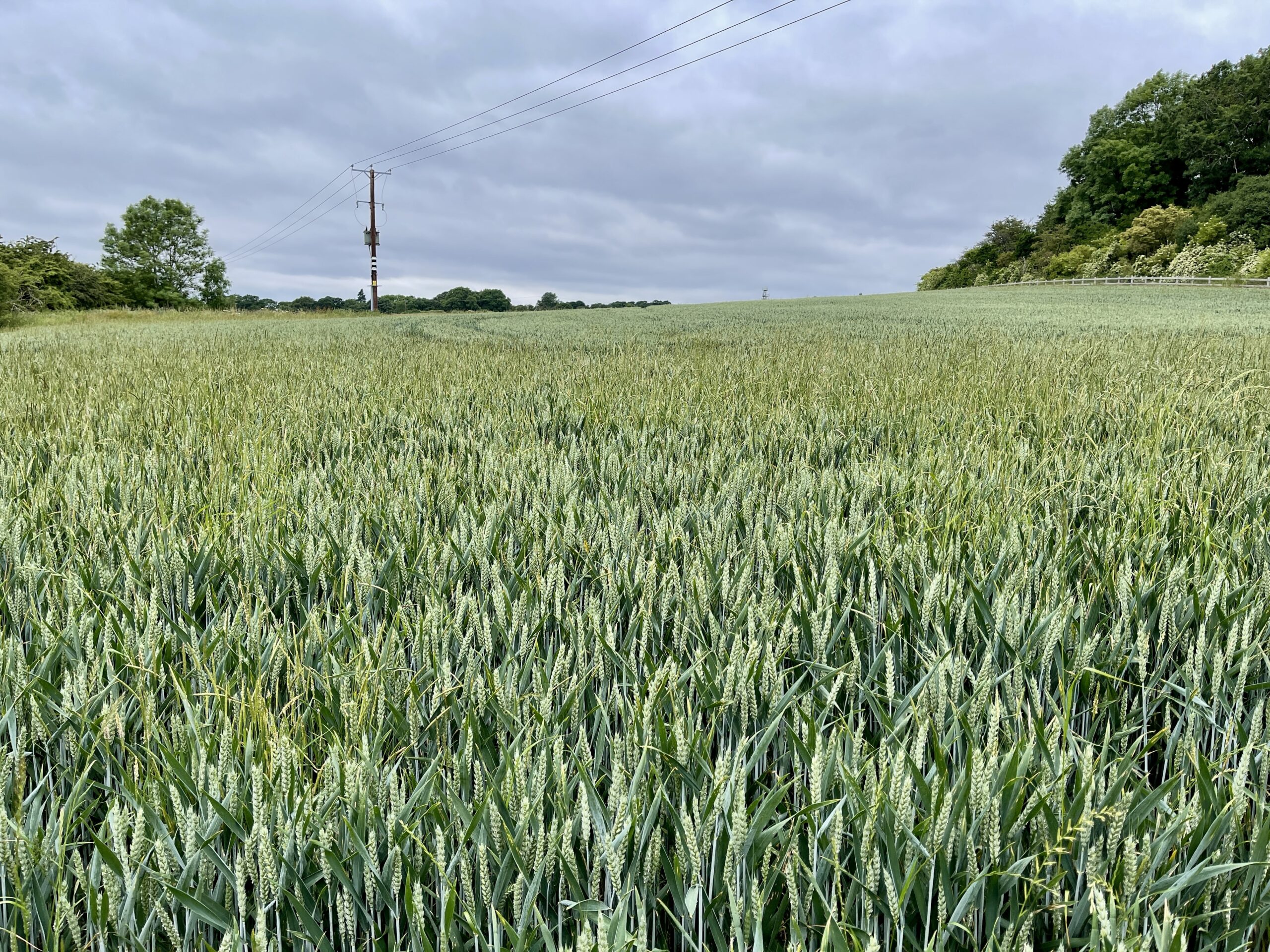
The East Midlands farmland market saw a notable uplift in activity during 2025, with new analysis from Savills showing both an increase in land coming forward and stable values across the region.
A total of 26,000 acres of farmland were publicly marketed in the East Midlands during 2025, compared with 21,900 acres in 2024, representing a 19% increase in supply. This contrasts with the national picture, where supply in England fell by 13%, underscoring the region’s stronger-than-average market conditions.


The East Midlands also accounted for a significant 22% share of all farmland marketed in England in 2025, highlighting its position as one of the country’s most active and important agricultural regions.
The Savills Farmland Value Survey shows that prime arable land values in the East Midlands rose by 0.3% in 2025 to £8,550 per acre. This contrasts with a 1.9% decrease in average prime arable values across Great Britain, where the typical value stood at £10,000 per acre.
This stability reflects continued interest from a wide range of buyers – from farmers consolidating or expanding operational scale, through to those seeking land for natural capital, biodiversity programmes and long-term investment. These findings align with the national trends reported in the latest Savills research report, titled Spotlight: The Farmland Market, which shows a resilient UK market overall, underpinned by long-term demand, even as supply patterns remain variable across regions.
County figures reveal a diverse but highly active East Midlands market. Lincolnshire remained the dominant contributor to supply, bringing 14,391 acres of farmland to market in 2025. Historically, Lincolnshire has been termed a trading county, with the opportunity to acquire farmland at size and scale. This was followed by 5,098 acres in Northamptonshire, 3,079 acres in Nottinghamshire, 1,920 acres in Leicestershire (including Rutland) and 1,496 acres in Derbyshire. These variations reflect differing local drivers, including business restructuring, retirement, succession planning and shifting policy incentives – factors that have also been shaping national farmland trends in recent years.
Henry King, farm agent for Savills in the East Midlands, based in Lincolnshire, comments: “The East Midlands farmland market was particularly active throughout 2025, supported by increased supply and steady values. We are seeing a broad mix of motivated buyers, from progressive farming businesses to those seeking land for environmental projects and investors looking to purchase a low-risk investment. Lincolnshire continues to underpin the region’s strong performance, but demand is consistent across all counties. With more certainty returning to the policy landscape, we expect confidence to remain robust into 2026.”

Across Great Britain, Savills recorded a 12% fall in publicly marketed farmland year on year, along with overall average values dipping by around 1%. Farmers remained the largest buyer group (45%), with most acquiring farms to expand. Despite short-term adjustments, Savills expects farmland values across the UK to remain firm before entering a new phase of steady growth, driven by long-term demand for land across food production, environmental markets, renewable energy and development potential.
Looking at the national picture, Andrew Teanby, Director, Savills Rural Research, comments: “We expect farmland values to remain broadly firm through the next two years before entering a phase of steady growth as policy clarity improves and profitability prospects stabilise. This is based on the finite nature of farmland and growing competition for this resource for food production, as well as environmental markets, development and renewable energy.”
