
New figures show public confidence in Nottinghamshire Police has risen slightly over the past year, although several measures of performance remain below pre-existing baselines, according to the latest monitoring report on the county’s Police and Crime Plan.
The update, covering performance to December 2025, tracks progress against the Nottinghamshire Police and Crime Plan 2025–2029, which sets the strategic direction for policing and community safety partners across the county. The plan focuses on three main objectives: putting communities and victims first, strengthening partnership working, and ensuring policing remains effective and resilient.

Data in the report shows overall public confidence in the police stood at 50.5% for the 12 months to December 2025, a small increase of 0.5 percentage points over the previous year but still 1.5 percentage points lower than the 2023/24 baseline used to measure progress.



Confidence levels vary between different groups and locations. The report notes larger decreases among minority ethnic respondents and disabled people, while district-level analysis highlights differing trends across Nottinghamshire. Mansfield recorded improvements in several perception indicators, including whether police are tackling local issues and doing a good job, while confidence remains below the force average in areas such as Ashfield and Bassetlaw.

Public perceptions of police visibility remain a challenge. Only 31.7% of respondents said police were visible in their area, significantly below the long-term ambition of more than 42%. Despite this, the number of neighbourhood police officers has risen significantly over the past year, increasing to around 299 full-time equivalent posts by December 2025, a rise of more than 16% compared with the previous year.

At the same time, the number of Police Community Support Officers has fallen to around 135 full-time equivalent roles, a drop of more than 14% compared with the baseline figure. The report also notes a reduction in special constables, with some volunteers leaving to join the regular police or relocating.

Police-recorded anti-social behaviour across Nottinghamshire has fallen sharply, with incidents down nearly 21% compared with the same period the previous year. Officials attribute this reduction to hotspot policing, preventative neighbourhood work and early intervention programmes aimed at reducing repeat demand and keeping young people out of the criminal justice system.
However, the police and crime survey suggests more residents say they have personally experienced anti-social behaviour in the past year. The most common issues reported include illegal use of e-scooters and e-bikes, vehicle nuisance, noise complaints, drug use or dealing and fly-tipping.

Across the wider crime picture, total neighbourhood crime increased slightly over the year. Vehicle crime, robbery and theft from the person all rose compared with the previous 12 months, although residential burglary remained lower than the baseline level.
Serious violence indicators also show mixed trends. Possession of weapons offences and knife-related violence have both increased compared with the previous year, while modern slavery offences and referrals linked to child criminal exploitation have also risen, partly due to changes in recording rules and improved identification of victims.

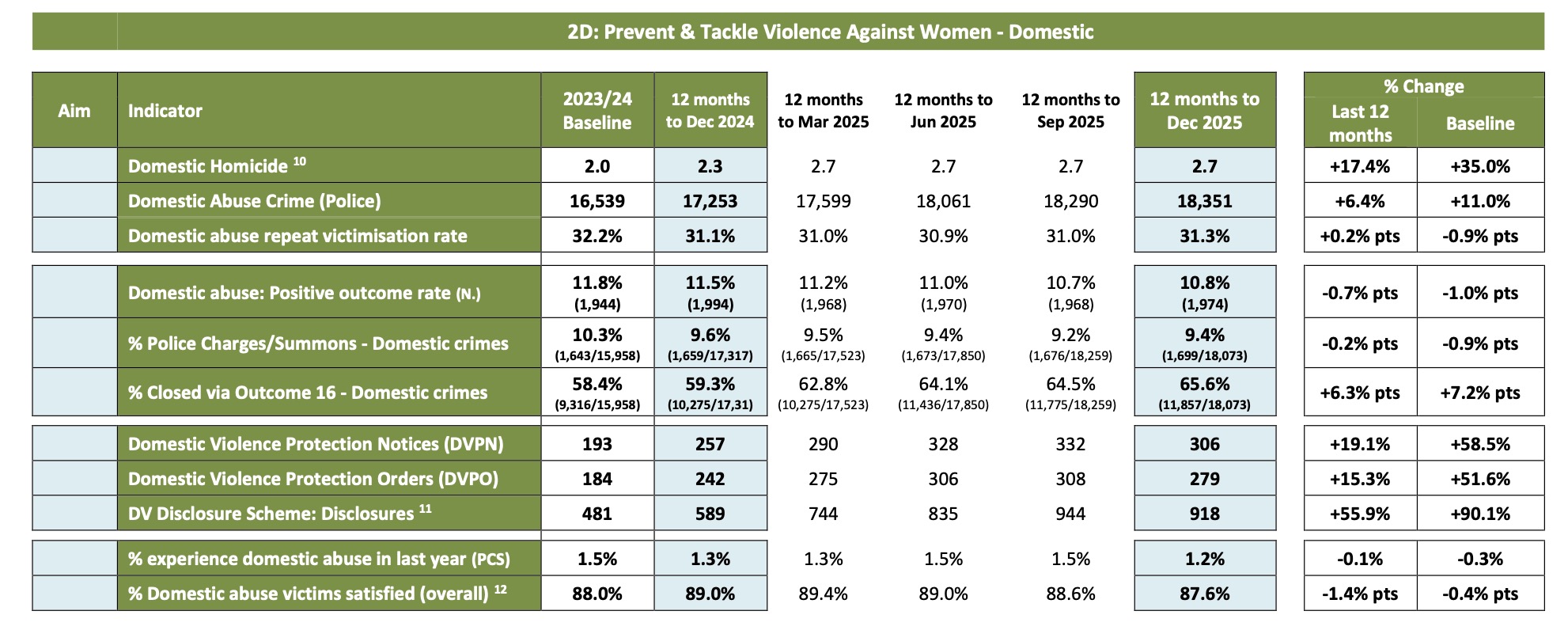
Domestic abuse crimes increased by around 6% compared with the previous year. The report suggests higher reporting levels may be linked to awareness campaigns such as White Ribbon and the national “16 Days of Activism” initiative encouraging victims to come forward. At the same time, the number of Domestic Violence Protection Notices and Orders issued by police has increased significantly following additional officer training.

Sexual offences have also risen, with reported rape and serious sexual offences increasing by just over 5% year on year. Police say greater confidence in reporting and work with specialist liaison officers at local universities may be contributing to the increase in recorded offences.
Demand on police services remains high. More than 240,000 emergency 999 calls were made in the 12 months to December 2025, while online reporting of crime and incidents has grown rapidly, increasing by more than 86% compared with the previous year as more people choose to report issues digitally.
Workforce figures show the overall number of police officers has remained relatively stable at around 2,374 full-time equivalent officers. Police staff numbers have increased slightly, while the number of police cadets has grown significantly after new cadet units opened in Worksop and Newark during 2025.
The performance framework is used by the Police and Crime Commissioner and Nottinghamshire’s Police and Crime Panel to monitor progress against the Police and Crime Plan, with updates reported quarterly to ensure policing priorities and resources remain aligned with community safety goals across the county.
