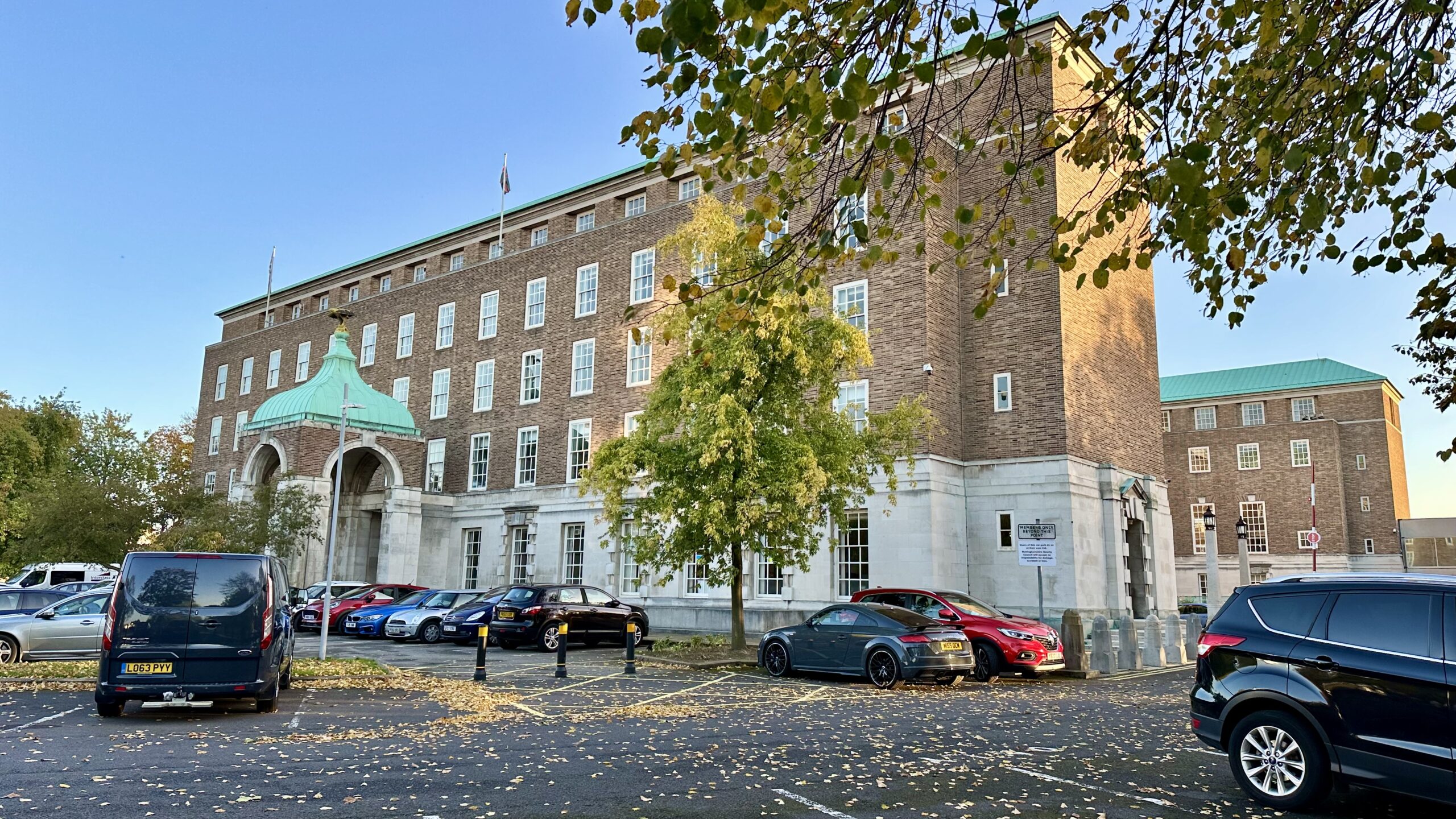
Nottinghamshire County Council has set out its current approach to the use of artificial intelligence (AI), outlining how it is being used in frontline services, the governance arrangements being developed, and the safeguards in place to manage potential risks.
A report ahead of an Overview Committee meeting on 12 March explains that AI is not a single technology but a family of tools designed to perform tasks that would normally require human intelligence. These include machine learning, where systems identify patterns in data to support predictions or decisions, and generative AI, which can create or summarise content in response to prompts.


The council states that while AI presents opportunities to improve services and productivity, it also carries legal, ethical, operational and security risks. As a local authority responsible for large volumes of sensitive data and statutory services such as adult social care, children’s services, education and planning, it must ensure compliance with UK GDPR and maintain strong governance arrangements.
The report highlights concerns including the risk of algorithmic bias, inaccurate or fabricated content generated by AI systems, over-reliance on automated outputs by staff, and increased exposure to cyber threats. It also notes the need to prevent uncontrolled use of AI tools and to ensure projects are driven by service needs rather than technology alone.
An AI policy has been drafted and is currently progressing through the council’s internal approval processes. Governance of AI initiatives has so far been overseen through the Digital Board and programme boards, with plans to introduce a three-tier model comprising an AI Governance Board for strategic oversight and ethics, an AI Steering Group to align activity to business priorities, and an AI Centre of Excellence to provide technical assurance and standards. The council is also participating in national AI forums, including the Local Government Association AI group, and has developed internal training for staff on the use of tools such as Microsoft Copilot.
• Pothole protest at County Hall in West Bridgford
One of the most developed use cases is within Adult Social Care and Health. In early 2025, the council began piloting an AI-assisted transcription tool known as Magic Notes. Following a review, the tool was approved for wider rollout in September 2025. Magic Notes captures conversations during assessments and reviews, produces verbatim transcripts and generates structured summaries, which practitioners review before uploading to the council’s Mosaic system.

The stated aim is to reduce administrative burdens and improve the quality and timeliness of case recording, allowing staff to spend more time supporting residents and developing care packages.
Survey comparisons before and after rollout indicate a reduction in the proportion of staff spending more than half their time on administration from 56 per cent to 23 per cent.
The percentage of staff spending more than an hour writing up notes for a single visit fell from 59 per cent to 28 per cent, while those submitting notes within one day increased from 34 per cent to 73 per cent.
The proportion of staff rating the quality of their conversations with people they support at eight out of ten or above rose from 35 per cent to 72 per cent.
In parallel, the council ran a 2025 pilot of Microsoft Copilot involving 300 users. Within Adult Social Care and Health, analysis of 182 usage entries recorded total estimated time savings of 378.3 hours, with a median saving of 1.33 hours per entry and an average efficiency gain of 72 per cent. Meetings accounted for the largest cumulative time savings, largely due to automated note-taking and action summaries, while applications and automation work also delivered significant benefits.
Looking ahead, the council says it will continue a careful but aspirational approach, focusing on proven technologies supported by business cases and benefits tracking rather than adopting untested innovations. Work is under way with the Access Group to explore how AI could support Mosaic and related products in areas such as speeding up care package reviews and predictive reporting. Reviews are also being undertaken into the AI functionality within SAP systems and a digital EHCP assistant developed by Somerset County Council.
The report outlines potential future applications aligned to the council’s strategic priorities, including early identification of families needing support through multi-agency data analysis, AI-assisted scheduling and care plan drafting, digital tools for SEND support, community insight dashboards, and systems to support planning and infrastructure forecasting. However, these are presented as areas for investigation rather than confirmed projects.
There are no direct financial or legal implications arising from the report itself, as it is for noting by the Overview Committee. Any future AI implementations not already reflected in the council’s budget would require separate approval, including details of revenue and capital costs. The report confirms that any AI technology procured will need to comply with the Procurement Act 2023, Procurement Regulations 2024 and UK GDPR requirements.
Members of the Overview Committee are being asked to consider and comment on the council’s current approach. The report notes that AI is expected to support the authority’s work towards Local Government Reorganisation implementation.
