A pledge has been made to tackle “unacceptable inequalities” in Nottingham after it was revealed that men living in an area of the city have one of the lowest healthy life expectancies in the entire country.
In the Arboretum, Forest and Trent University area of the city, men are only expected to live for a median average of 48.9 years in good health before their health deteriorates.


This means the area has the fifth-lowest healthy life expectancy in the country, according to data from the Office for National Statistics (ONS).
Cllr Helen Kalsi (Lab), executive member for adult social care and health at Nottingham City Council, said: “There is much more to do” to improve health outcomes for people in the city.
“People’s health is affected by a wide range of social and economic factors, and those living in more deprived communities typically experience poorer outcomes.”
“We will continue working with our partners and local communities to tackle the underlying causes of poor health, improve healthy life expectancy and reduce the unacceptable inequalities across Nottingham.”
In the Hyson Green and Arboretum City Council ward, which makes up much of the area cited by the ONS, nearly two-thirds, or 64 per cent, of children were reported as living in poverty as of 2024.
It was the highest proportion of children living in poverty in Nottinghamshire and the worst area across the entirety of the East Midlands.
Men living and working in the area cited poverty as one of the main reasons why they believe healthy life expectancy is so low.
Damien Bower, 50, who is currently living in a hostel in the area, said: “It’s down to poverty, and there are degrees to it.
“A lot of the residents in the area have mental health problems, drug addictions, and all sorts.
“There are a lot of charities with buildings around here, so there are a lot of people in housing who are homeless, and they go out and beg a lot – which is fair enough as it is – but it’s the numbers of them.
“It’s the absolutely massive number of people who are asking you for money, and not just nicely. It’s the drugs.
“I get addiction. I’m an alcoholic. I’m in a hostel myself. I was a nurse. I lost everything due to drinking because bullying got out of hand and whatnot.
“But this charity has helped save my life, and I’m back in my place. I grew up just over the hill here in Sherwood, and that area is nice and lovely.
“There’s trouble and bits and bobs every now and again, but it’s the same everywhere.”
Another resident, Andrew, 53, echoed Mr Bower’s views regarding the impact of poverty on living longer in good health.
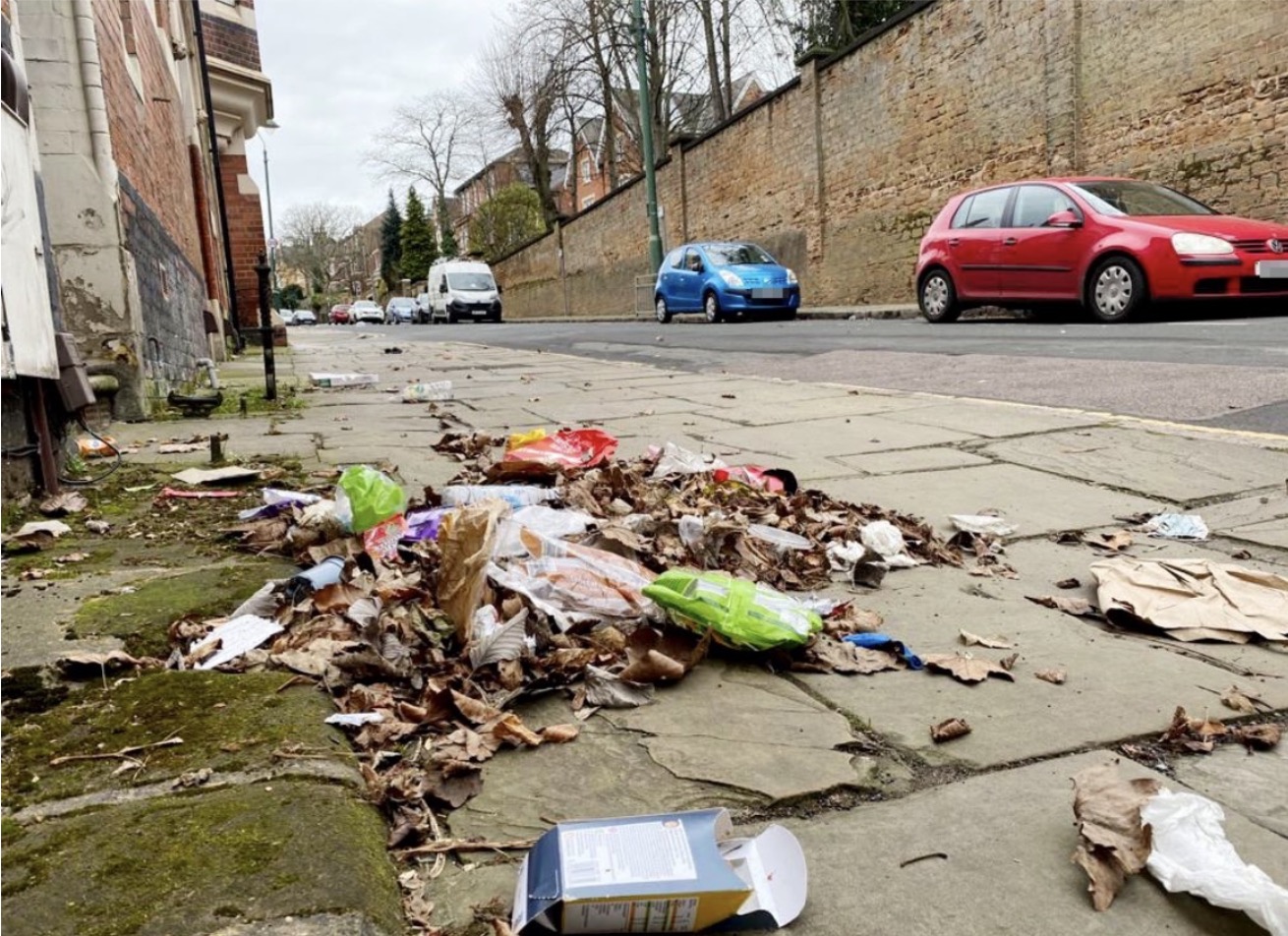
“It’s a deprived area, but there are a lot of students, so there’s no community, no community spirit, I don’t think, which means that people don’t look after the place, and so then it just feeds on itself,” he said.
“So, people get used to rubbish everywhere. It becomes normal, and standards keep dropping. It’s sort of the opposite of the broken windows theory, where, you know, you fix the graffiti in New York, and then people have pride, and you build from the bottom up.
“It’s happening the opposite way here. It’s just a reflection of the socio-economic group. I think the environment affects mental health, and people are given the opportunity not to work.
“I think they lose their self-respect, and I think it all has a knock-on effect on health. So, you can’t make that easy, and then you need to improve the environment and get people invested in it and caring about it.
“But it’s like a 20-year project, and policies aren’t implemented over that time period. So, there’s no hope.”
Riley Gadsby, 23, said: “Well, as someone who’s just come here, I’ve only been here for about a month. I can tell the air quality isn’t as good.
“When I walk around, there’s a lot of rubbish and pollution in the area, and I guess it can’t be healthy if you’re breathing that stuff in.”
The median average healthy life expectancy at birth for women across 2019 to 2023 was 66.8 years in England.
For men, the median is lower, at 65.3 years.
According to the latest data from the Office for Health Improvement and Disparities, the overall life expectancy in the city for women is 80.8 years, while it is 76.4 years for men.
Cllr Kalsi added: “Improving healthy life expectancy and reducing the gap between different parts of our city are central to Nottingham’s Joint Local Health and Wellbeing Strategy.
“Together with our partners and communities, we are focusing on six priorities: alcohol use; giving children the best start in life; eating and moving for good health; severe multiple disadvantage; smoking and tobacco control; and work and health.
“We have already taken action and are seeing progress.”
By Joe Locker and Briony Dack, Local Democracy Reporters