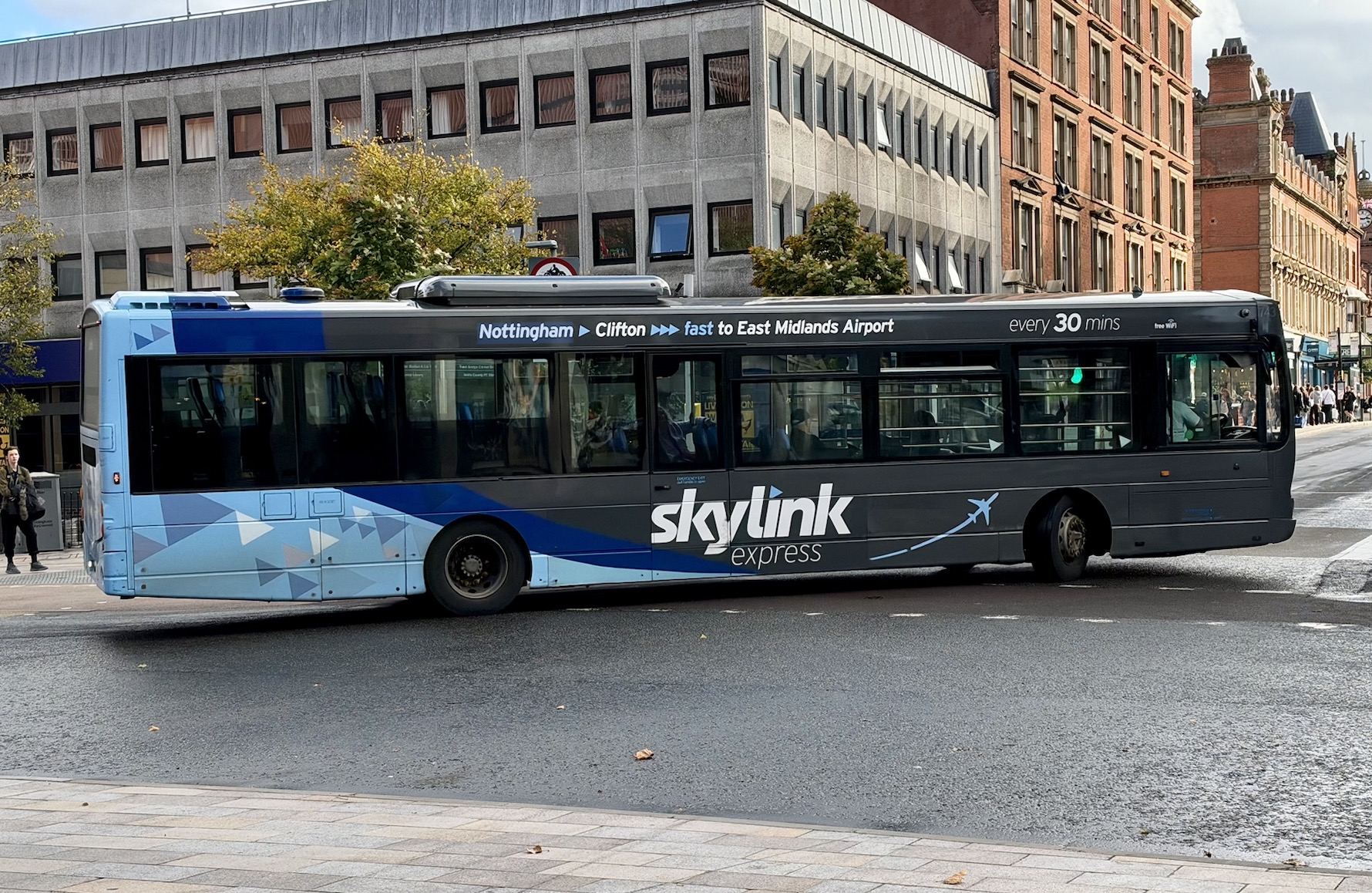
Trentbarton is seeking £28.7 million in public funding towards a £55.6 million programme to replace 82 diesel buses with electric vehicles and upgrade three depots serving Nottinghamshire and Derbyshire.
West Bridgford, Bingham, Beeston, Long Eaton and Eastwood are among the communities identified as benefiting from the proposals, which would see battery-electric single-deck buses introduced alongside new charging infrastructure.


An assurance report recommends approval of the programme business case and records that it was endorsed by the Investment Panel on 13 October 2026. However, further details are required, including full business cases for each depot, confirmed costs and arrangements for delivering and overseeing the work.
The programme covers Trentbarton’s Meadow Road depot in Derby, Langley Mill and Nottingham. Funding sought from the East Midlands Combined County Authority would cover approximately 51.6 per cent of the total cost, with Trentbarton providing the remaining £26.9 million.

The proposed investment would replace 82 diesel buses and increase power supplies at the three depots. The infrastructure would also provide capacity for a further 112 battery-electric vehicles in future, although those additional buses are not included in the proposed purchase.
According to the report, the new vehicles would offer audio and visual passenger information and other accessibility features for people with mobility needs. The assessment also identifies quieter buses and improved air quality as expected public benefits.

Services linking communities with major employment areas, universities and hospitals would benefit. Alongside the Nottinghamshire locations, the report names Mickleover, Allestree, Littleover, Little Eaton, Alfreton, Ripley, Heanor and Ilkeston. It does not specify individual routes or how the 82 buses would be allocated.

The largest share of the proposed spending is at Langley Mill, where £21.6 million is allocated, comprising £17.6 million for vehicles and £4 million for depot infrastructure.
A further £18 million is proposed for Meadow Road, including £10.4 million for buses and £7.6 million for infrastructure. Nottingham’s proposed allocation is £16 million, split between £9 million for vehicles and £7 million for depot works.
These figures remain indicative. Quotes and detailed cost plans are still required, and the report says final costs must be confirmed through procurement.
The programme is expected to begin in late 2026, with all 82 buses intended to be in service by September 2029. Vehicle orders are planned by June 2027, subject to Trentbarton board approval, with buses entering service in stages as work at the depots is completed.
The report identifies electricity supply as a key risk at all three sites. Feasibility studies must establish the additional capacity required and whether and when connections to the national grid can be provided.
Planning consent will also be required at each depot. Meadow Road involves demolition and reconstruction, with an alternative operating facility identified for use during the works.
In Nottingham, the depot is leased from Nottingham City Council. The appraisal says the lease period is unclear from the business case and that agreement appears necessary to install and operate the electrical infrastructure. This must be resolved for the next business case stage.
The economic assessment, using the Department for Transport’s Greener Bus Tool, gives the programme a benefit-cost ratio of 1.05. This means the modelled benefits are approximately £1.05 for every £1 of cost included in the appraisal.
The report describes this as positive value for money, but says the calculation must be repeated once final procurement costs are known.
An alternative involving the purchase of the 82 buses without the preferred level of depot investment was considered. The assessment says limited charging capacity would leave electric vehicles underused and mean environmental benefits were only partly achieved.
Trentbarton would meet the ongoing operating costs of the buses and fleet. The report does not identify an ongoing operating funding requirement for the combined authority once the programme is completed.
Trentbarton’s board supports the programme in principle, but the report says its approval would follow EMCCA approval and confirmation of the authority’s funding conditions. The assurance summary does not record a final funding award.
Further work includes detailed delivery milestones, a full risk register, clearer project management arrangements and dates for planning processes and power supply upgrades. Suppliers have been identified as potential providers, but appointments remain subject to final selection and financial checks.
