
Broxtowe Borough Council is considering introducing new planning controls on shared housing in parts of the borough as the number of Houses in Multiple Occupation (HMOs) begins to increase outside Beeston.
A report to Cabinet on 10 March recommends expanding the existing Article 4 direction in Beeston and introducing three new Article 4 areas covering parts of Eastwood, Kimberley and Stapleford. If approved, the changes would mean planning permission is required before a standard dwelling can be converted into a small HMO housing between three and six people.



The council already introduced an Article 4 direction in Beeston in March 2022 alongside a supplementary planning document setting out how planning applications for HMOs should be assessed. The new report says concerns have been raised about increasing numbers of shared properties in other parts of the borough and the potential impact on neighbourhood character, local services and antisocial behaviour.
An Article 4 direction removes permitted development rights, meaning changes that would normally not require planning permission must instead go through the planning process. The council would still be able to approve HMOs but would assess applications against planning policies and the HMO guidance.
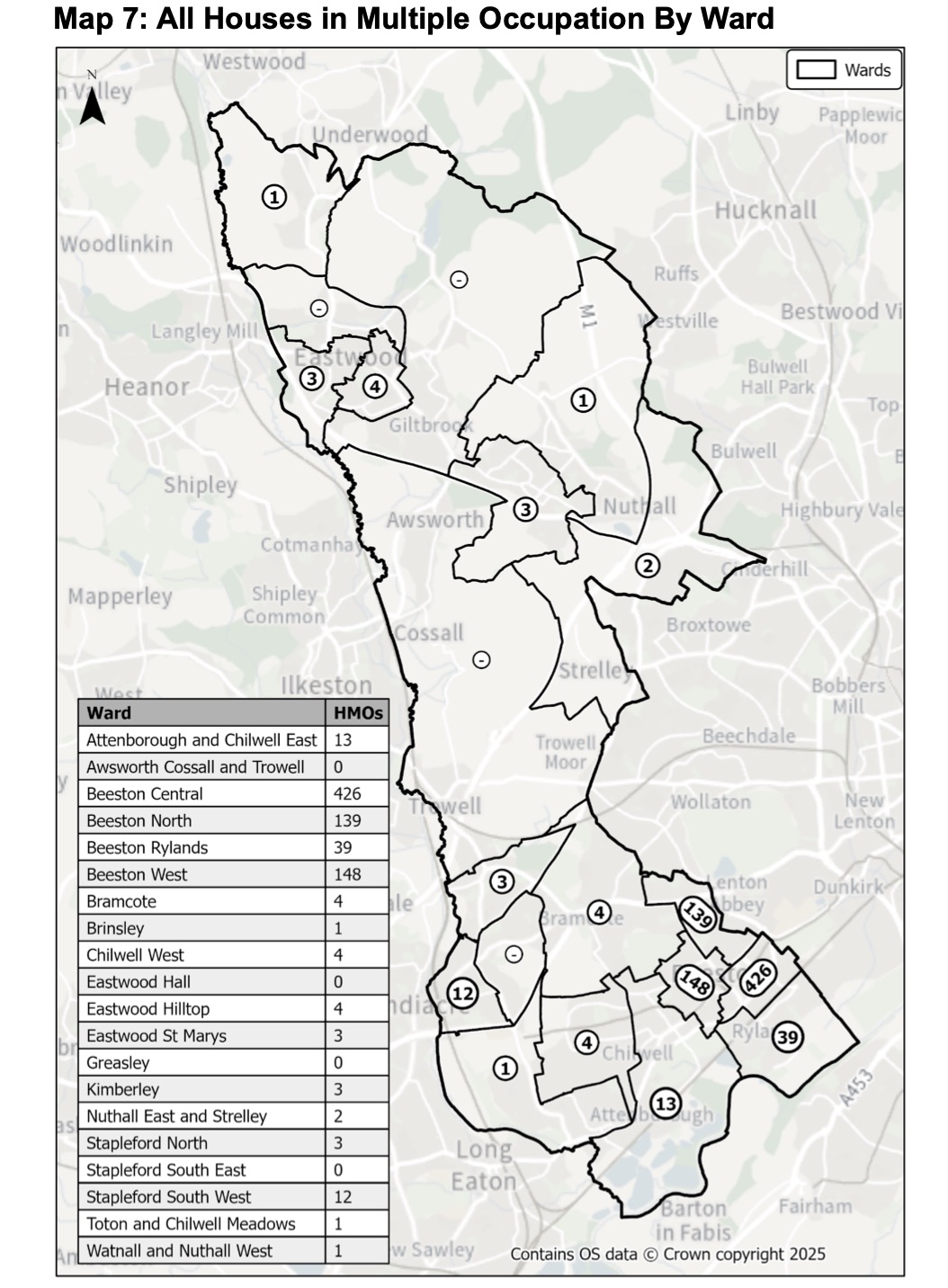
A review of housing data across the borough has identified emerging concentrations of HMOs in Eastwood, Kimberley and Stapleford, alongside continued pressure in Beeston. The report states that Beeston already contains the majority of HMOs in Broxtowe due to its proximity to the University of Nottingham, the tram network and major employment areas.
Mapping of licensed properties shows significant clustering in Beeston Central, Beeston North and Beeston West, with further growth occurring just outside the current Article 4 boundary. Officers say areas such as Beeston Rylands and neighbourhoods south of Queens Road and east of Station Road are increasingly vulnerable to further conversions.

The council therefore proposes extending the existing Article 4 area west to Cator Lane and south to include Beeston Rylands.
In addition to the Beeston extension, three new Article 4 areas are proposed in Eastwood, Kimberley and Stapleford. The report says these towns are beginning to experience similar patterns of HMO growth, particularly in older terraced housing close to town centres and public transport routes.
Eastwood’s proposed Article 4 area would cover older central neighbourhoods and the Hill Top area, where Victorian terraces and compact semi-detached homes are considered particularly susceptible to conversion.
In Kimberley the proposed boundary focuses on traditional terraced streets around the town centre where lower property prices and good bus links to Nottingham and Eastwood make shared housing more viable.
In Stapleford the proposed area would include the town centre and older residential streets north of the A52 and around Church Street and Brookhill Street, where clusters of HMOs have begun to emerge.
The council says the characteristics of these neighbourhoods – including older housing stock, lower purchase prices and strong public transport links – make them attractive locations for shared housing.
The report also highlights the influence of planning policies in neighbouring areas. Nottingham City Council already has a city-wide Article 4 direction covering large areas around Lenton, Dunkirk and Wollaton Park, while Erewash Borough Council is proposing similar controls in Long Eaton and Ilkeston.
Broxtowe officers warn these restrictions could push further HMO investment into nearby areas without similar controls, increasing pressure on parts of the borough with suitable housing and good transport connections.
Cabinet is being asked to approve issuing the new Article 4 directions and to carry out a six-week public consultation on the proposed boundaries. A separate consultation will also be held on updates to the council’s Houses in Multiple Occupation supplementary planning document.
• Calls for tougher HMO rules in West Bridgford not backed by evidence
The consultation responses would then be considered in a future Cabinet report before a final decision is taken on whether to confirm the directions.
Because compensation may be payable if a direction takes effect within 12 months of confirmation, the council proposes that any new Article 4 controls would not come into force until 2027.
