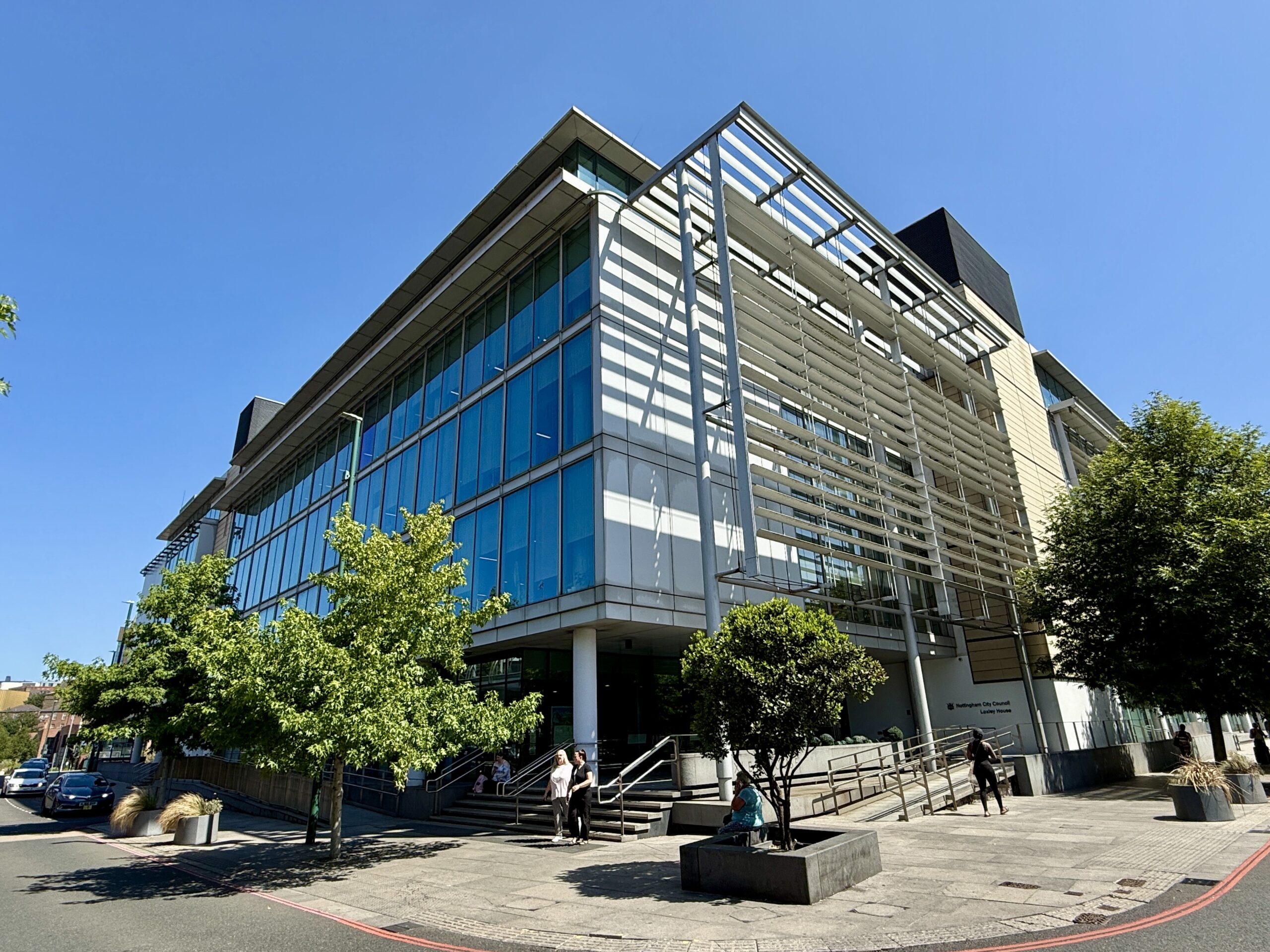
Nottingham City Council has identified a risk of overspending by up to £7 million this financial year, as councillors prepare to consider a separate £20.4 million package of investment funded from last year’s underspend.
The council’s first-quarter budget monitoring report puts the main forecast overspend for 2026/27 at £300,000. However, it warns that uncertainty means the outcome could range from no overspend against budget to an overspend of £7 million.


The report also identifies £16.6 million of savings carried forward after they were not delivered in previous years. Most are now expected to be achieved during 2026/27, although £1.7 million is forecast to remain undelivered this year.
Both the monitoring report and the proposed investment package are due before the council’s Executive Board on 22 September.
The £20.4 million package would fund measures including £4 million for road repairs, £2.5 million for solar power and other energy-saving measures, and £1.5 million for greener city centre spaces. It also proposes additional Community Protection Officers and litter pickers, alongside support for pensioners, carers and small businesses.
That package is proposed one-off spending funded from the council’s 2025/26 underspend. The monitoring report concerns the separate budget for 2026/27, using forecasts at the end of June.
The distinction means last year’s underspend and this year’s forecast pressures can exist at the same time. The £7 million figure is the upper end of the report’s assessment of possible outcomes, rather than its main forecast or an overspend that has already occurred.
There is also an important qualification to the reported £300,000 overspend. The council originally budgeted for a surplus of approximately £1 million, so the main forecast still leaves it with a surplus overall, although smaller than planned.
Officers say the improved financial position at the end of 2025/26 provides a stronger starting point, but continued financial discipline and early action remain necessary.
Delivering previously agreed savings is a significant part of that challenge.
Alongside the £16.6 million carried forward, the current budget includes £21.3 million of savings approved for 2026/27, including increases to savings agreed in earlier years. Of those, £20.1 million is expected to be delivered, leaving £1.2 million outstanding this year.
Together, the two programmes have approximately £2.9 million of savings forecast not to be delivered during 2026/27. The report says these shortfalls already affect the current forecast, so they should not be added to the £300,000 headline figure as a separate overspend.
The forecast also assumes that £10.7 million of savings classified as at risk will be delivered in full. These comprise £6.4 million from the current year’s programme and £4.3 million carried forward from earlier years.
Some savings have been delayed rather than abandoned. The report says £1.3 million of adult social care and public health savings is now expected to be delivered in 2027/28, leaving a pressure on this year’s budget.
Adults and Public Health has the largest forecast departmental overspend, at £4.1 million. Within that total, the Access and Prevention service forecasts £6.2 million of additional external care package expenditure, including £2.1 million relating to undelivered savings.
Officers attribute adult social care pressures to rising demand, an ageing population and increasingly complex needs. Savings recovery plans are being developed to address the position.
Overspending in some departments is partly offset by forecast underspends elsewhere, including £2.8 million in Growth and City Development and £1.4 million in Children’s and Education.
The report identifies a separate, larger pressure in funding for children and young people with special educational needs and disabilities.
The High Needs element of the Dedicated Schools Grant is forecast to record an in-year deficit of £27.3 million, which is £24.2 million worse than the assumptions in the council’s approved recovery plan.
Officers say demand has exceeded earlier forecasts. The projected deficit would use up the existing £12.1 million High Needs reserve and leave a cumulative shortfall of £15.2 million by March 2027.
This is accounted for separately from the General Fund forecast. Temporary accounting arrangements keep the schools funding deficit outside the council’s day-to-day General Fund position until 31 March 2028, with further government guidance awaited on what happens afterwards.
However, the uncertainty is already affecting the council’s financial reserves. The report says a £15.2 million provision has been made against the potential High Needs deficit, reducing forecast unallocated General Fund reserves to approximately £26.4 million.
That is about six per cent of the council’s £419.9 million net expenditure budget, below the minimum ten per cent recommended by its chief finance officer. The position will be reassessed as the schools funding implications become clearer.
For residents, the proposed investment package offers specific improvements funded from a previous year’s underspend, while the monitoring report shows continuing pressure on the budgets supporting everyday services.
The report does not propose cancelling the £20.4 million package. It asks councillors to note the forecasts and the urgent need to address undelivered savings, and to approve transfers between budgets that do not change the council’s overall net budget.
The investment proposals remain subject to the Executive Board’s decision on 22 September.
