
Nottingham hospitals still under pressure as emergency care, cancer and diagnostic waits remain below plan.
Nottingham University Hospitals NHS Trust says emergency care, cancer and diagnostic services remain under pressure, despite some improvement in performance.


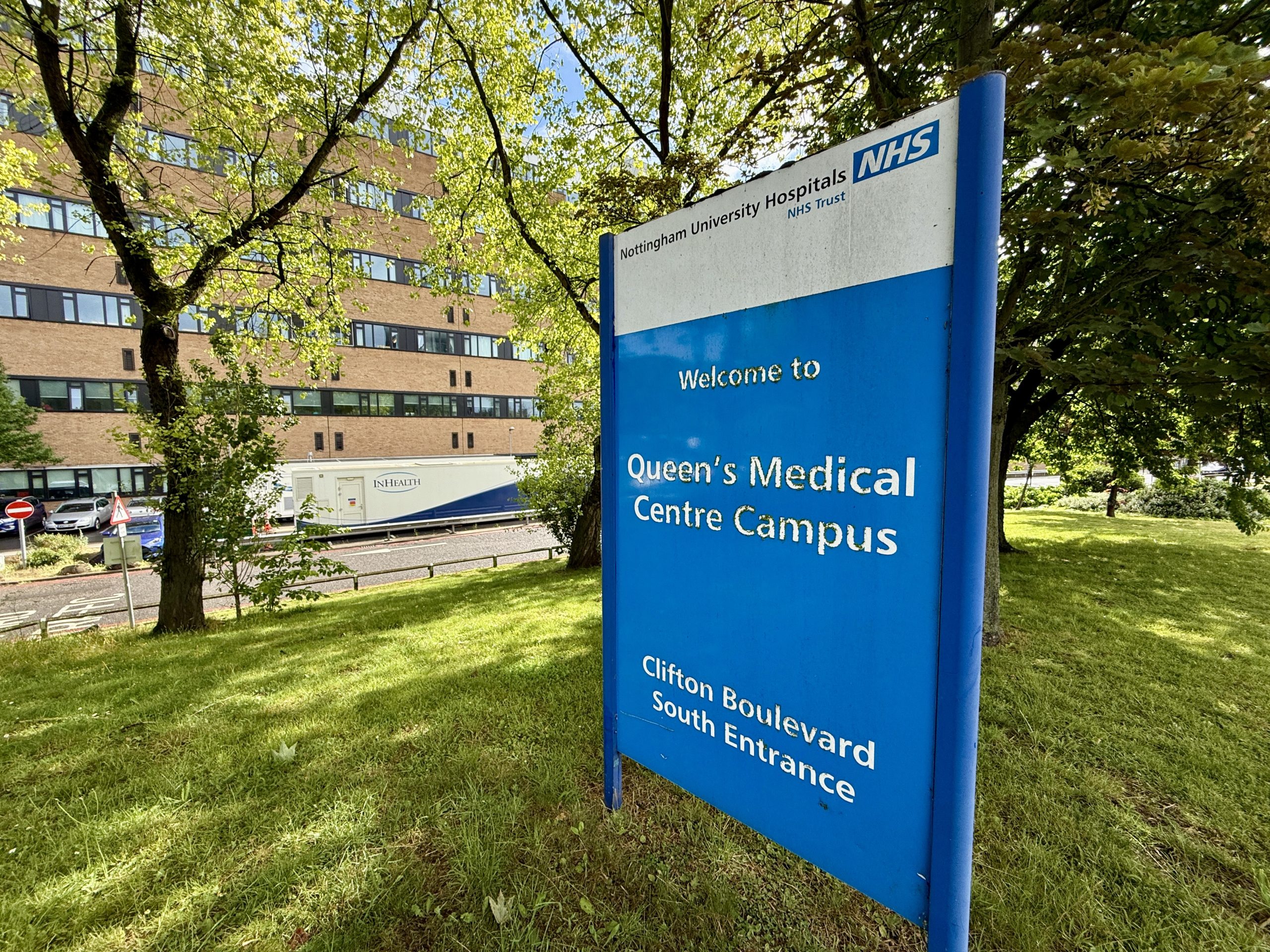
A report by Chief Executive Anthony May, prepared ahead of the Trust Board meeting on Thursday 14 May 2026, sets out the latest position across Nottingham’s hospitals, including Queen’s Medical Centre and City Hospital.
The report says performance against the four-hour urgent and emergency care standard improved in March to 65.8%, up from 63.4% in February. However, this remained below the Trust’s planned trajectory. Twelve-hour length of stay also remained under pressure, at 25.2%, only slightly better than 25.8% in February.

Mr May says higher levels of patient acuity are continuing to drive increased admissions across acute medicine, respiratory medicine, cardiology and geriatric medicine, putting sustained pressure on the Emergency Department and inpatient flow. The Trust says it is continuing to work with partners to reduce delays for medically safe patients who are ready to leave hospital.
The report says NUH has maintained additional winter beds and is continuing a series of measures to support patient flow, including a 45-minute ambulance handover process, enhanced Same Day Emergency Care pathways, additional acute and geriatric medicine support within the Emergency Department, and expanded Urgent Treatment Centre capacity. These have helped ambulance offload and earlier clinical decision-making, but the report says Emergency Department performance remains challenged and vulnerable when patients cannot move through the hospital quickly enough.

The report also highlights the continuing impact of NUH’s Electronic Patient Record implementation on elective waiting lists. More than 80,000 Referral to Treatment pathways were transferred as part of the process, creating a need for significant validation work. Validation capacity has now been restored, and the Trust says recovery is expected to continue.

Referral to Treatment performance improved from 55.1% at the end of January to 63.5% by the end of March 2026, an increase of 8.4 percentage points. March RTT data had not been finalised at the time the report was written. The Trust says elective recovery will require a whole-system approach focused on capacity, productivity and stronger oversight of patient pathways.

Outpatient services have also seen increased use of Patient Initiated Follow-Up pathways. The Trust achieved the national PIFU target in March, with more than 6,000 patients transferred across 81 specialties. The aim is to reduce unnecessary follow-up appointments and make better use of outpatient capacity.
Diagnostic performance remains challenged, with the largest backlogs in MRI, CT, ultrasound and echocardiography. The report says waits of more than 13 weeks reduced by more than 200 during March, mainly because of additional MRI capacity. Recovery plans are in place for each diagnostic area, with oversight through the Diagnostic Performance and Transformation Board.

Cancer performance, which is reported one month in arrears, improved in February across the Faster Diagnosis, 31-day and 62-day standards. However, the Faster Diagnosis and 62-day standards remained below trajectory. The cancer Patient Tracking List remained above plan at 4,222 patients, despite treatment volumes being higher than planned.
The report says performance is still being limited by workforce and diagnostic capacity, particularly in breast, gynaecology, urology and lower gastrointestinal pathways. NUH remains under NHS England Tier 1 oversight for four challenged tumour sites, with tumour-specific recovery plans reviewed weekly through the Cancer Taskforce and overseen by the Trust Cancer Board.
Resident doctors took industrial action between 7 April and 13 April. According to the report, around 75% of resident doctors due to work during the day and 63% due to work overnight did not attend, with higher levels of action over the weekend. As in previous rounds of industrial action, elective and outpatient activity was reduced to prioritise patient safety in acute services. Patient safety mitigation requests were also submitted for obstetrics. Internal and Integrated Care Board debriefs have since taken place to identify learning for future planning.
A significant section of the report focuses on corridor care. On 28 April, NUH held a Corridor Care Summit involving more than 100 staff from across the Trust. Mr May describes caring for patients in corridors in the Emergency Department as “undignified” and “below the standards” the Trust aspires to.

The summit considered national data, patient feedback and NUH’s own incident reporting. The report says the Trust will treat eliminating corridor care as an organisational risk and shared priority, requiring clear leadership, stronger governance and whole-system collaboration. The outcomes will feed directly into the Trust’s Urgent and Emergency Care Strategy for 2026/27.
Mr May also says the Trust needs stronger governance to deliver its new Medium Term Plan. The plan, which includes a three-year numerical return and five-year narrative, was approved by the Trust Board and submitted to NHS England in March.
The report says the governance arrangements used in 2025/26 “did not achieve what was required” and that some transformation programmes had been disconnected. A new structure has now been agreed for delivery of the 2026/27 plan, built around four monthly boards: urgent and emergency care, planned care, cancer, and financial sustainability. These will report through the Trust Leadership Team and will be supported by weekly sub-meetings for key programmes of work.
The Trust Leadership Team has also endorsed work on a Trust-wide Clinical Strategy, which will come back to the Board for formal consideration at a later stage. It has backed stronger workforce controls linked to the Financial Recovery Plan, while recognising that these controls could affect service delivery and will need ongoing Board oversight.
The report identifies several risks requiring Board awareness, including delivery of the Financial Recovery Plan, workforce sustainability, urgent care service continuity, development of the Clinical Strategy and maintaining effective governance during a period of change.
Mr May also reports that he attended regional and national NHS leadership meetings in April, where NHS England priorities, the Government’s three strategic shifts and the forthcoming 10-Year Plan were discussed. He also met NUH staff network chairs and executive sponsors on 20 April, with actions agreed around staff network consistency, reasonable adjustments, carers support, and network governance and engagement.
