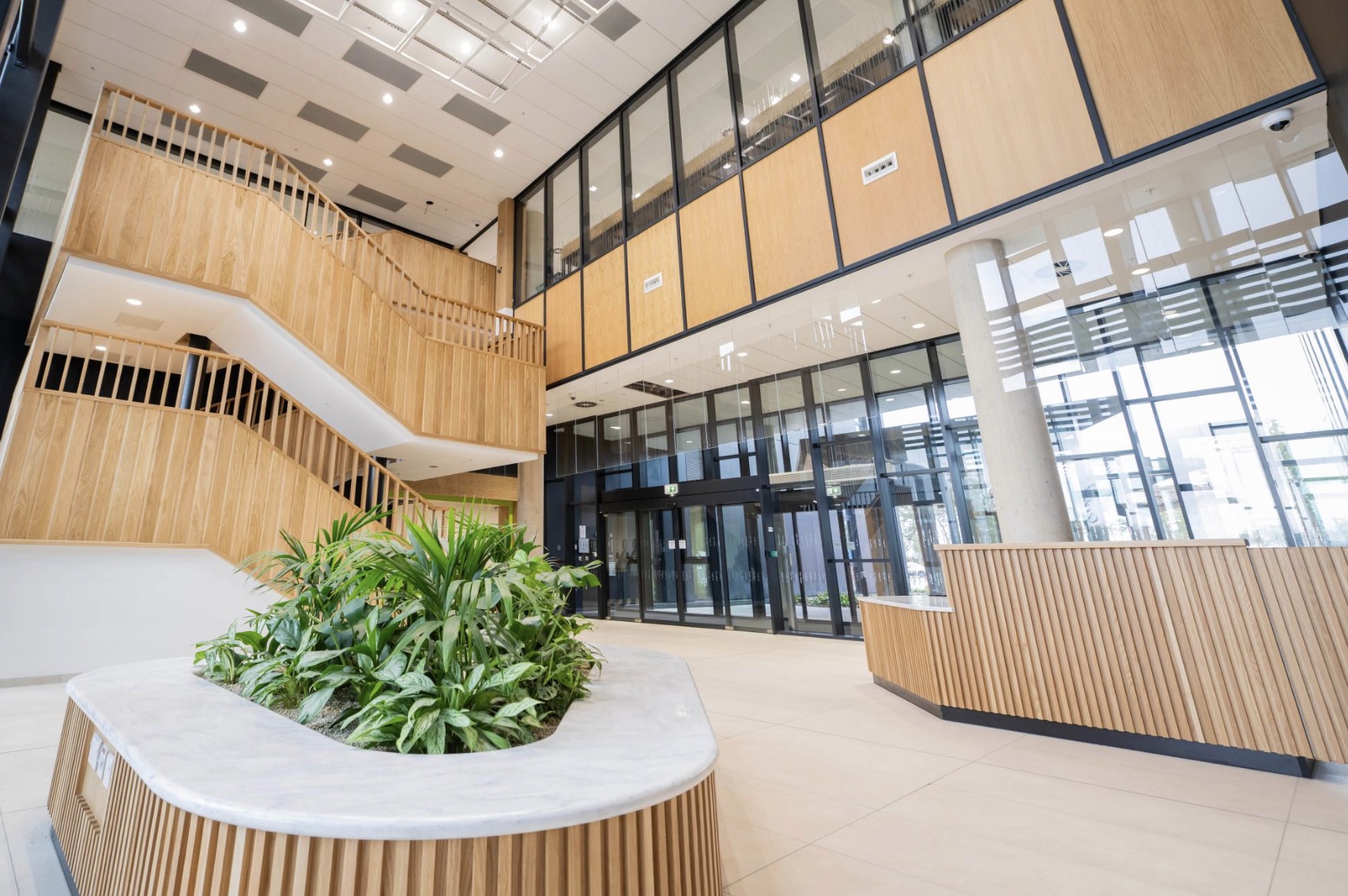
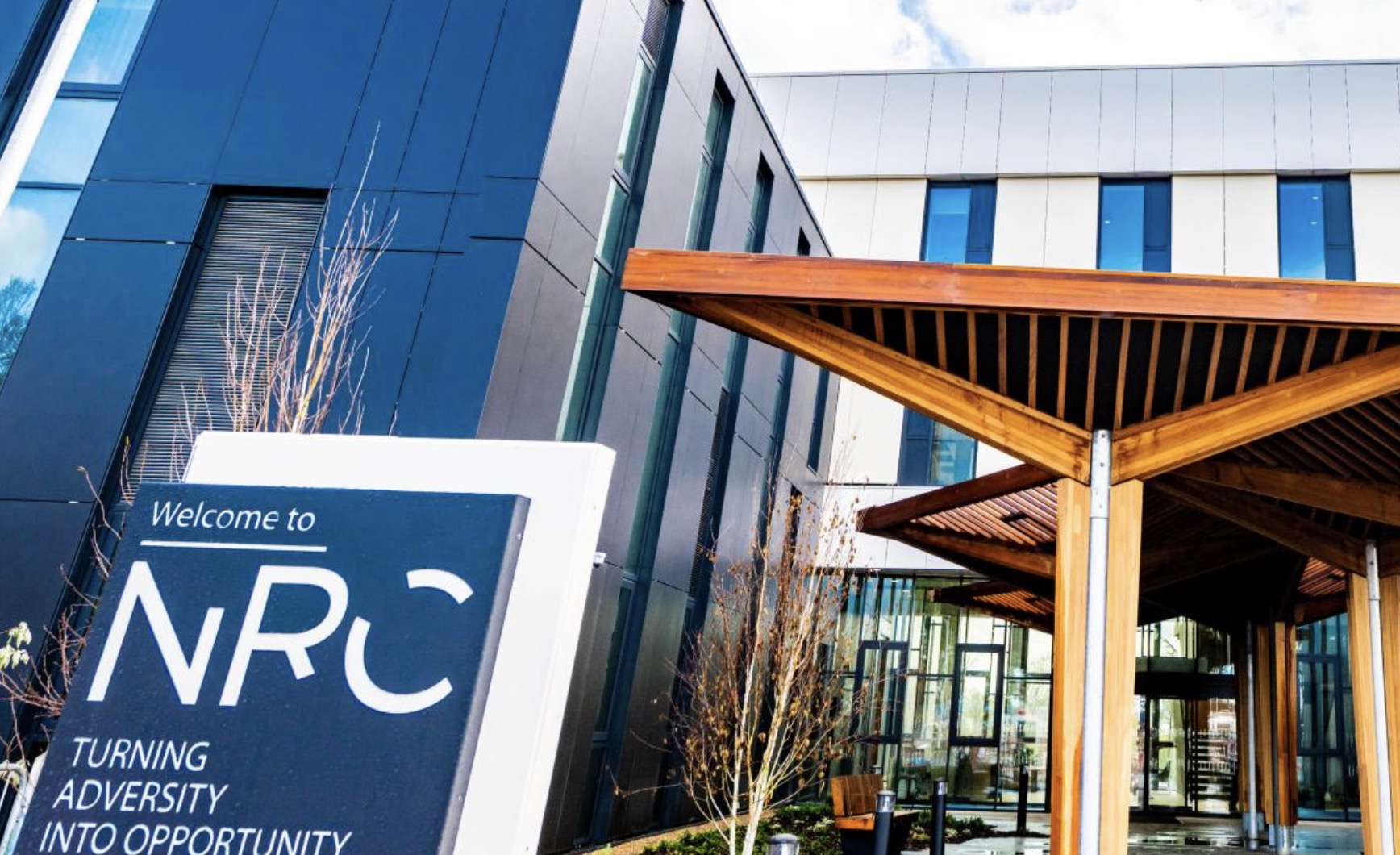
The country’s first NHS National Rehabilitation Centre has welcomed its first patients in Nottinghamshire.
The 70-bed centre, near Loughborough, will provide specialist rehabilitation for NHS patients recovering from life-changing illnesses and injuries.


Run by Nottingham University Hospitals NHS Trust (NUH), the facility will offer intensive rehabilitation earlier in patients’ recovery, with personalised programmes delivered by a specialist workforce.
The National Rehabilitation Centre (NRC) is based alongside the Defence Medical Rehabilitation Centre at the Stanford Hall Rehabilitation Estate, giving patients access to extensive clinical, technological and outdoor facilities.
Its opening was delayed from November because of a water quality issue. NUH said the problem had been fully resolved by construction contractor Integrated Health Projects, a joint venture between VINCI Building and Sir Robert McAlpine.
The trust accepted the keys to the building on 24 July, allowing staff to complete refresher training and prepare for the arrival of patients.
Government funding of £107 million supported the development of the NRC through the New Hospital Programme.
The building is described as the NHS’s first single-site operationally carbon-neutral facility. It has rooftop solar panels and is served by four air-source heat pumps in a neighbouring energy centre.
Facilities for patients include what NUH says is the most comprehensive robotics suite in the NHS. Its equipment can help people relearn how to walk, use their hands and rebuild movement in specific parts of their bodies.
The centre also has the UK’s first 360-degree ZeroG partial body-weight support system, which allows patients to practise walking and moving with support in the main gym.
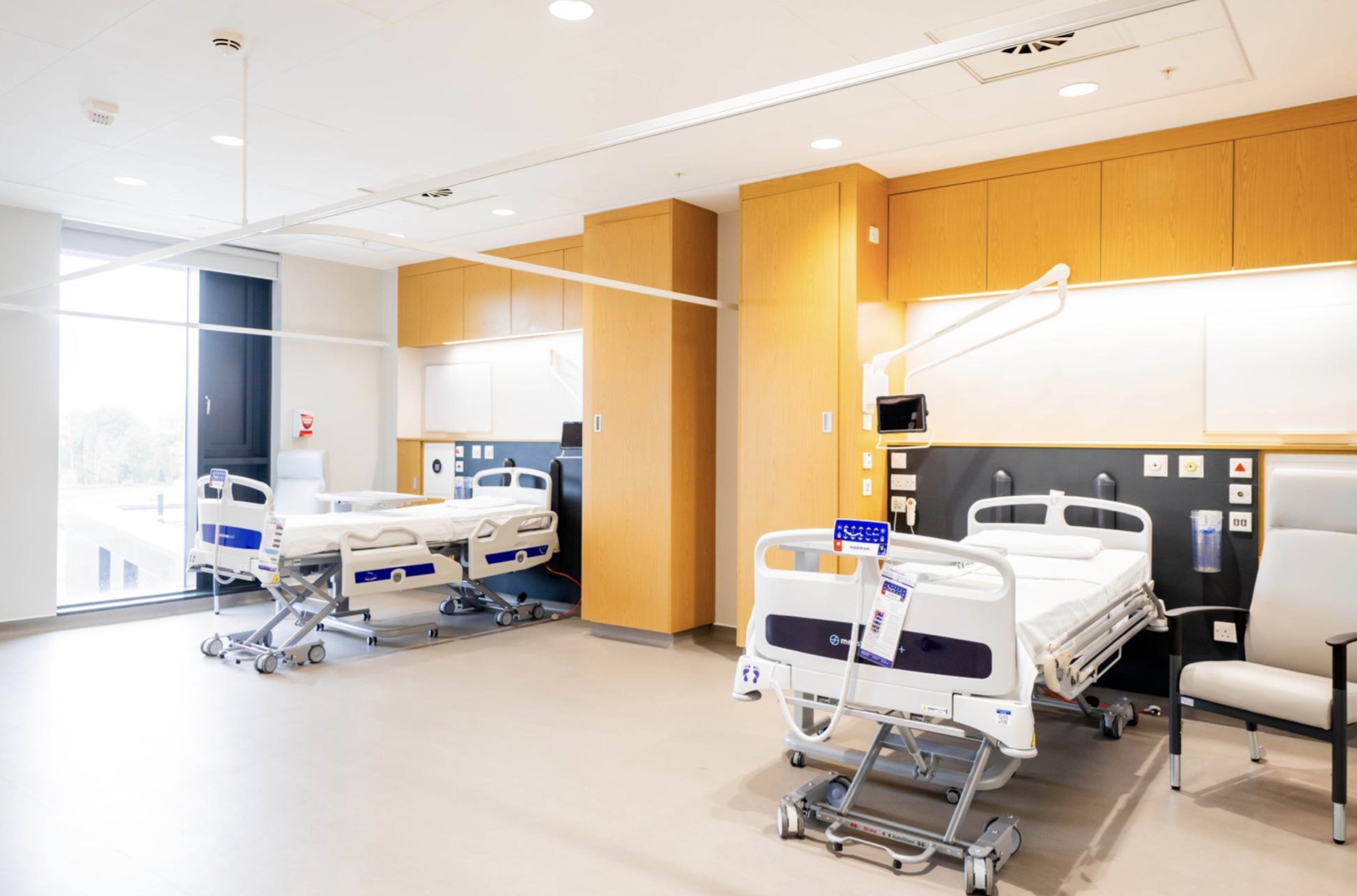
Other technology includes a silent nurse-call system, intelligent bedside screens designed to promote independence and real-time location systems intended to improve safety.
Patients will be able to use parts of the neighbouring Defence Medical Rehabilitation Centre, including its hydrotherapy suite, gait laboratory, X-ray and MRI facilities.
They will also have access to the 365-acre Stanford Hall estate, which includes a five-kilometre trail, hand-cycle track, fishing lake and pitch-and-putt golf course. Every patient bedroom has an uninterrupted view across the estate.
The NRC is expected to receive most of its patients from across the East Midlands, including people treated at the region’s major trauma centre at Nottingham’s Queen’s Medical Centre.
Alongside patient care, the centre will lead research, innovation, training and education through an NRC Academy working with a consortium of 26 English universities.
Patients will be offered opportunities to participate in research, while clinical staff will be encouraged to contribute to research and educational work.
The centre’s longer-term ambition is to become the national hub for a network of regional rehabilitation units across England.
The concept of placing national and military rehabilitation centres on the same site was developed by the late 6th Duke of Westminster in 2009.
He purchased the Stanford Hall estate for the project, while the Black Stork Charity was established to help deliver the plans. A fundraising campaign raised £300 million to create the defence centre and enable the development of the NHS facility.
Anthony May, chief executive of NUH, said: “The difference the NRC will make to patients and families cannot be underestimated.
“The NRC has been 15 years in the making. I should like to thank all those who have been involved for their perseverance, dedication and determination to make it a reality.
“This is a significant moment for NUH, for rehabilitation medicine in this country, and for the many NHS patients whose lives will be changed and restored in this pioneering facility.”
NRC director and physiotherapist Miriam Duffy said timely rehabilitation could make the difference between a patient returning to their home, work and family life or losing their independence.
She added: “By taking inspiration and learning from other rehabilitation centres across the globe, we are confident that we have delivered the very best rehabilitation facility.
“However, this is just the beginning, and the NRC is much more than just a building. Our aim is to revolutionise rehabilitation across the country.”
Health minister Karin Smyth said the centre would give hundreds more patients access to earlier and more intensive treatment.
She said: “Its cutting-edge robotics and technology will help patients regain movement, rebuild their independence and have the best possible chance of recovering their quality of life.”
Mark Preston, chairman of the Black Stork Charity, said the centre had the potential to help more people return to work and independent living.
He said the approach would need to demonstrate its effectiveness over the next two years before the Government considered extending similar provision across the country.
Mark Bessey, director of healthcare at IHP, said the building’s design, digital technology and carbon-neutral credentials would support rehabilitation, research and training for years to come.
