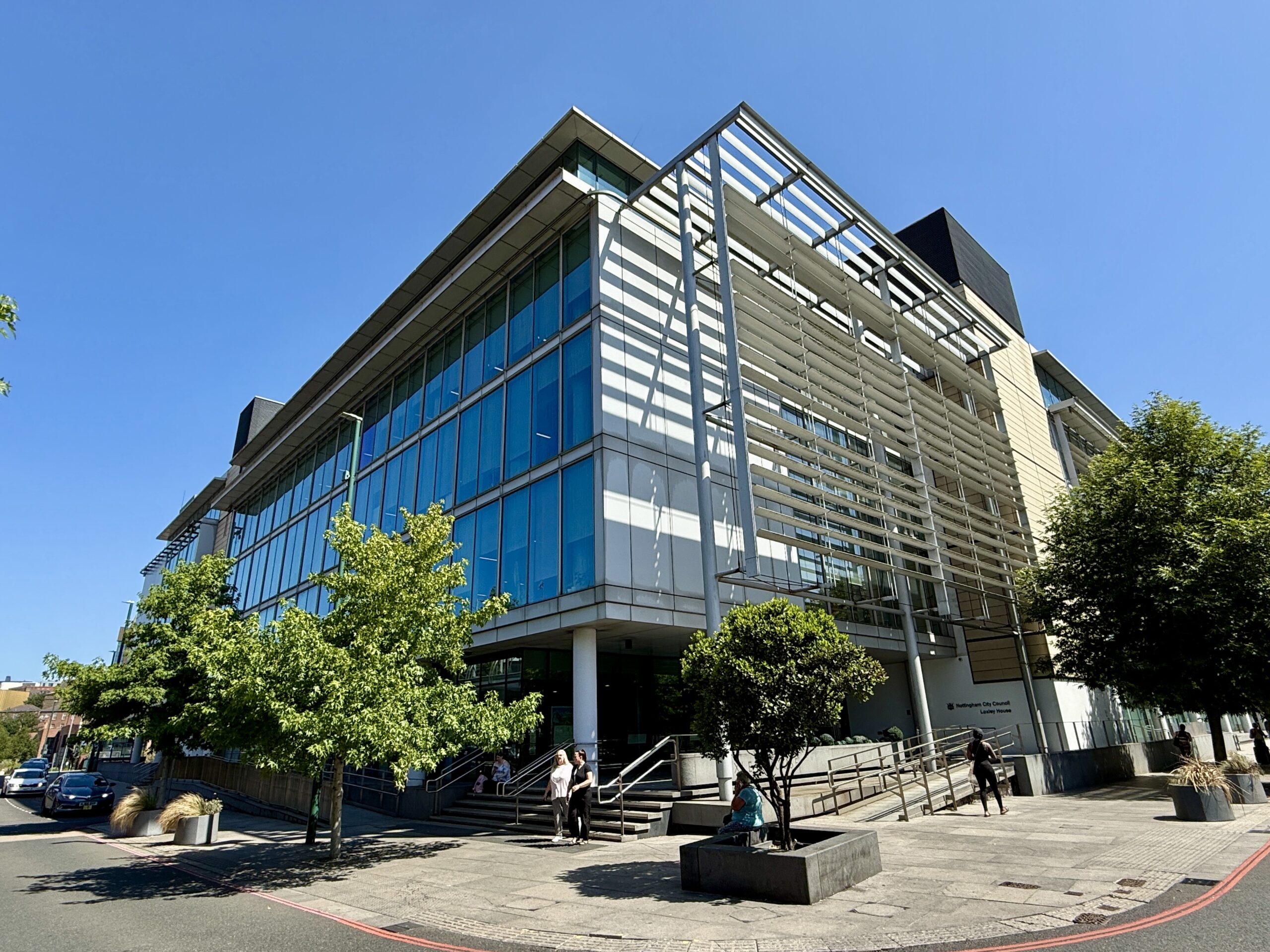
Nottingham City Council is expected to approve the acceptance of almost £19.54 million in government funding for a ten-year regeneration programme in Clifton.
The council’s Executive Board will consider the proposals at its meeting on Tuesday 21 July, when councillors will be asked to accept the grant and authorise its use under the Clifton Pride in Place Programme.



The government selected Clifton for the programme in October 2023. A ten-year vision and four-year regeneration plan were subsequently prepared and approved by the Ministry of Housing, Communities and Local Government on 23 March 2026.
The Executive Board report recommends accepting £19,536,000 from the department. A more detailed financial assessment in the report gives the total value of the decision as £19,535,724.
The money will be provided over ten years, from the 2026/27 financial year to 2035/36, and will cover Clifton East and Clifton West. Around 75 per cent of the funding is intended for capital investment, such as physical improvements and facilities, with 25 per cent available for revenue expenditure, including programme delivery and administration.
The report does not seek approval for individual regeneration projects. Those proposals will be developed and delivered in accordance with Clifton’s approved regeneration plan, with further approvals potentially required for contracts, grants, procurement exercises and the appointment of delivery partners.
Priorities for investment will be determined by the independent Clifton Neighbourhood Board, whose membership includes community representatives, partner organisations, two ward councillors, the Nottingham South MP and the city council’s executive member responsible for regional development, growth and transport.

The board’s role is to develop projects and priorities based on feedback from the community. Nottingham City Council will act as the accountable body, meaning it will retain legal and financial responsibility for the programme and must ensure that expenditure complies with government grant conditions and the council’s own financial and procurement rules.
Council officers will oversee financial management, auditing, risk, procurement and value for money. The authority could also require changes to a board decision where officers consider that a proposal would create an unacceptable financial or compliance risk.
The report says the arrangement is intended to allow local representatives to determine the programme’s priorities while ensuring the public money remains subject to council and government controls.
Before the main funding can be released, the council must sign a Memorandum of Understanding with the Ministry of Housing, Communities and Local Government. The Executive Board is being asked to delegate authority to the council’s chief executive to sign that agreement.
Clifton has already received £600,000 in capacity funding, some of which has been used to support preparatory work and smaller projects. The council says the main programme funding will not be released until the memorandum has been returned.
For 2026/27, the programme is allocated £231,640 in revenue funding and £360,000 in capital funding. The annual allocation rises substantially from 2027/28, when £255,632 of revenue funding and £1,735,636 of capital funding is scheduled to be available.
The programme will be divided into three investment periods covering 2026/27 to 2029/30, 2030/31 to 2032/33 and 2033/34 to 2035/36.
Funding will be received at the start of each financial year and can be carried forward, but the neighbourhood board will be required to meet minimum spending levels. It must forecast expenditure of at least 25 per cent of the cumulative allocation during each investment period, while at least half of the total cumulative allocation must have been spent by the end of the seventh year.
Annual expenditure reports and updated forecasts will have to be submitted to the government before later payments are released.
The report also states that funding requiring commitment by March 2027 could have to be returned if it is not allocated by that deadline. Project timetables and budgets may therefore need to be adjusted if there are delays in receiving the main grant.
Council officers identified financial compliance, delivery capacity, disagreements between stakeholders and delays to projects as potential risks. Proposed safeguards include a formal register of interests, training for board members, published meeting information, dedicated programme management and continuing scrutiny by the council and the government department.
The funding will remain separate from Nottingham City Council’s other budgets and can only be spent on the approved Clifton programme. This means it cannot be redirected to meet unrelated council spending pressures or support services elsewhere in Nottingham.
The Executive Board has not yet approved the recommendations. If councillors agree to accept the grant and the Memorandum of Understanding is signed, the council will put the necessary financial and governance arrangements in place so that delivery can begin under the approved regeneration plan.
