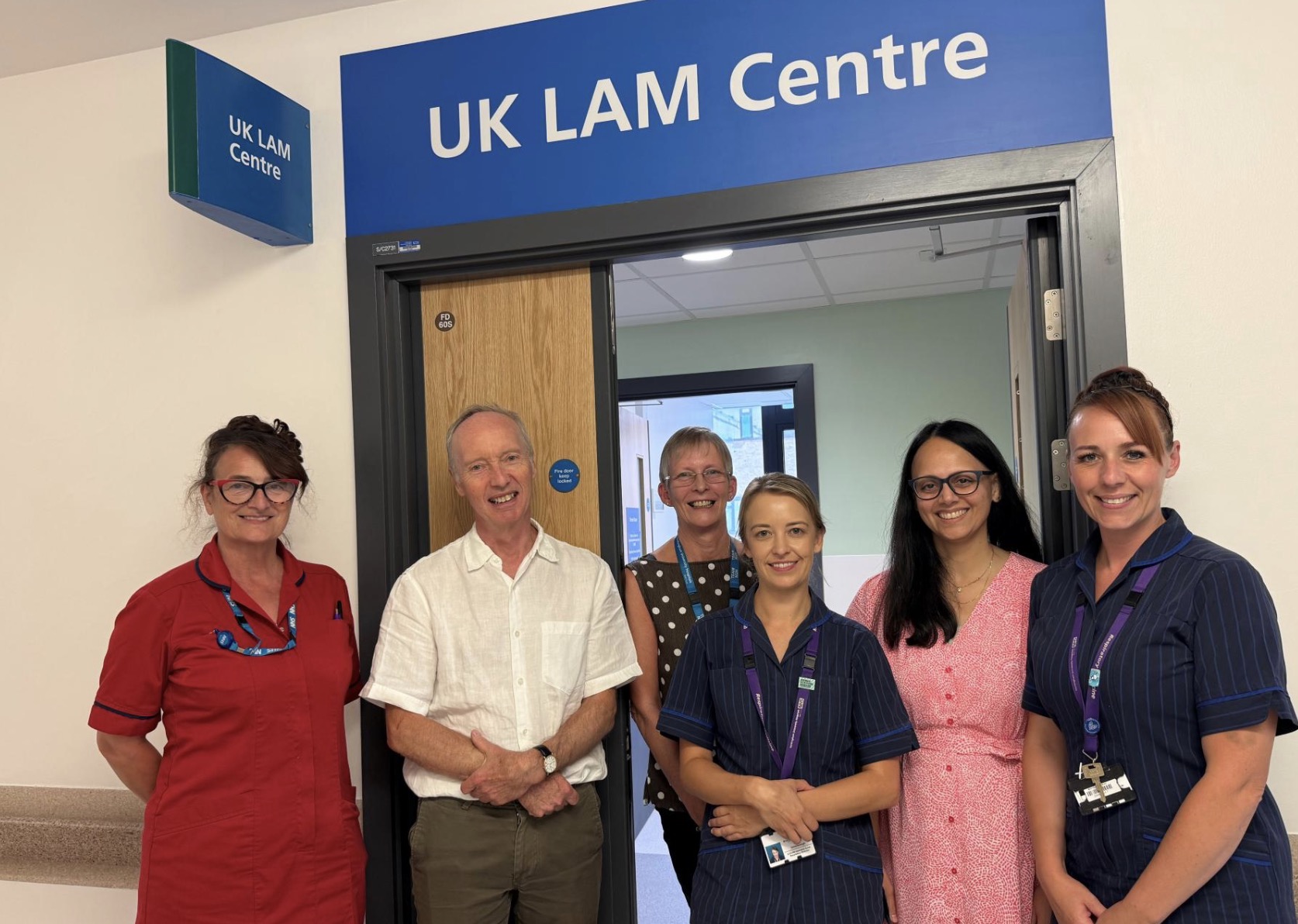
When Helen Sabin, 57, was diagnosed with a rare lung disease, lymphangioleiomyomatosis (LAM) she was frightened and facing an uncertain future.
Today, she says the specialist team at the national LAM Centre, based within Nottingham University Hospitals NHS Trust (NUH), gives her the reassurance, expertise and support she needs to focus on living her life rather than worrying about her condition.


The disease which almost exclusively affects women, can cause cysts to develop in the lungs, leading to breathlessness, reduced lung function and, in some cases, repeated lung collapse. It can also affect the lymphatic system and kidneys.
The Nottingham service is the UK National Centre for the disease, caring for patients from Cornwall to Inverness. Some patients are seen directly by the Nottingham team, while others receive care closer to home through partnerships with local hospitals, ensuring access to national expertise without unnecessary travel.
Helen was 39 when she was diagnosed with LAM. Before her diagnosis, she had become increasingly breathless while playing netball and developed a persistent cough. She later discovered that her right lung had collapsed. At the time, she had never heard of the condition.
Like many people diagnosed with a rare disease (currently, around 500 women in the UK have a LAM diagnosis), Helen suddenly found herself searching for answers and trying to understand what the future might hold. After researching the condition, she asked to be referred to the specialist Centre at NUH.
Since then, Helen says the team has helped her understand her condition, manage her treatment and feel confident that expert support is always available whenever she needs it.
She said: “When you have such a rare disease, it is so reassuring to have people at the LAM Centre who know what they are talking about. Their knowledge makes such a huge difference.
“They do the worrying, and I just get on with life. That is how it feels to me.”
Living with LAM for the last 18 years still presents daily challenges. Helen experiences significant fatigue and uses oxygen during exercise, but she says the support she receives from the specialist team helps her cope with those limitations.
“If you are concerned, they are always there to discuss it and suggest alternatives,” she said.
Helen also believes the Centre’s coordinated, holistic approach makes a real difference to patients travelling from across the country. Appointments are arranged wherever possible so that tests, nursing reviews and consultant consultations can take place on the same day, reducing the burden of repeated journeys.
She added: “When I was originally diagnosed, I was given five years’ life expectancy. People are still very scared when they are diagnosed. That is why it is so important that people know the LAM Centre is there, what it does for patients, and the reassurance and expertise it can provide.
“I would encourage anyone newly diagnosed with LAM to ask their GP or consultant about being referred to the specialist LAM Centre in Nottingham.”
Patients attending the Centre can access specialist nursing support, medical assessment, lung function testing and scans in one visit, with clinicians coordinating information from local hospitals to provide joined-up care.
The LAM Centre is led by Professor Simon Johnson, Respiratory Research Theme Co-Lead at the NIHR (National Institute for Health and Care Research) Biomedical Research Centre: Nottingham.
Professor Johnson is also co-lead of the LifeArc Centre for Rare Respiratory Diseases, a £9.4 million research collaboration to transform lung health for thousands of people living with chronic and rare respiratory diseases.
He said: “LAM is a rare and complex condition, and many healthcare professionals may only ever see one or two patients with it. By bringing expertise together in Nottingham, we can provide patients with specialist assessments, treatment advice and ongoing support, while also working closely with their local NHS teams.
“What makes this service so important is the holistic approach. LAM can affect more than one part of the body, so patients need joined-up care that looks at the whole person, not just one aspect of the disease.
“We know that being diagnosed with a rare disease can feel isolating. Our aim is to give patients access to specialist expertise, clear information and practical support, wherever they live.”
He added: “Helen’s experience shows how specialist services can make an important difference for people living with rare diseases. Our role is not only to provide expert clinical advice, but to help patients understand their condition, coordinate care and access the right support as their needs change.”
The Centre is now encouraging more patients to share their experiences to help raise awareness of LAM and ensure more women know that specialist support is available.
