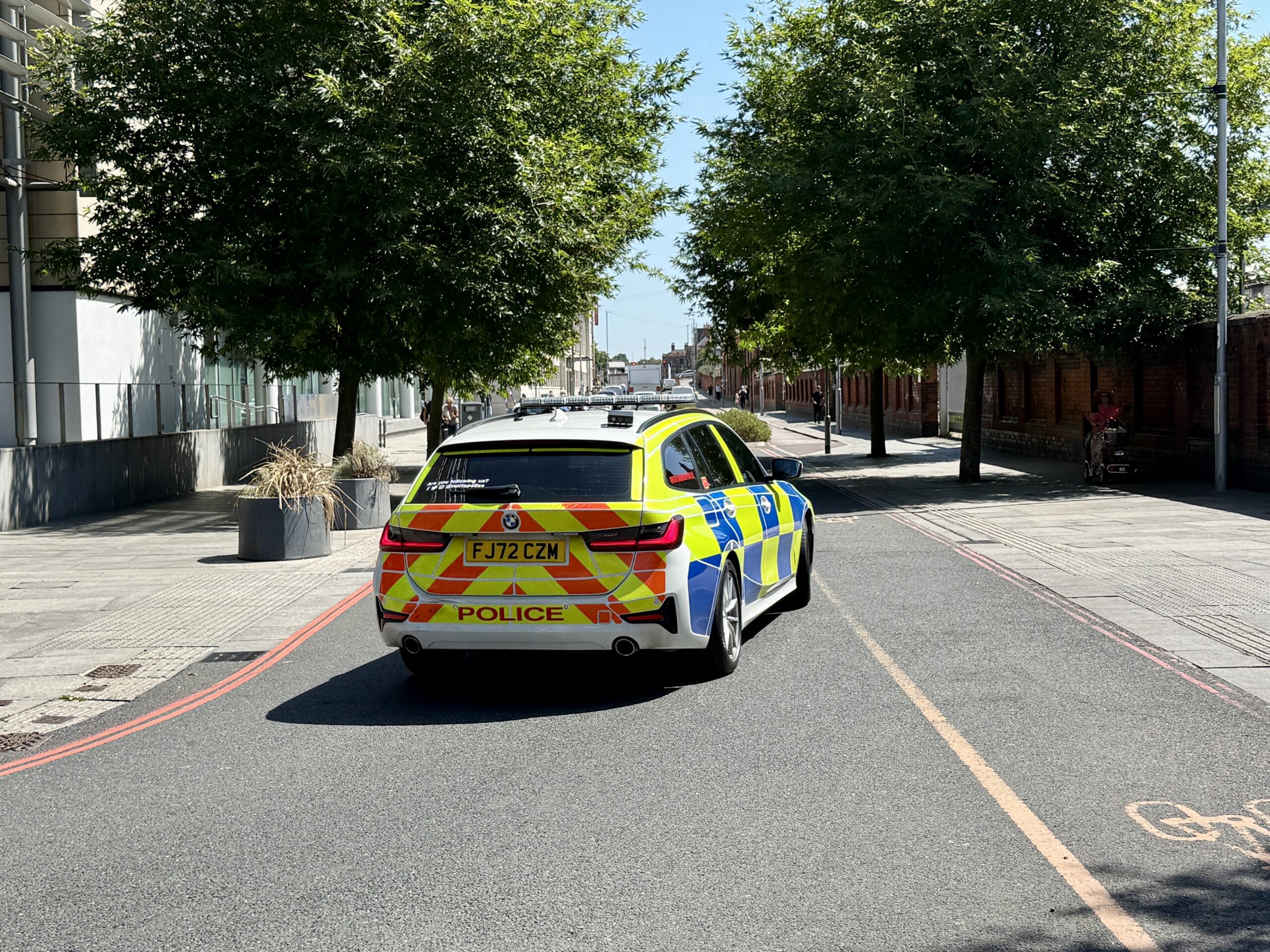
The Police and Crime Commissioner has published an update report setting out activity and progress across policing, crime prevention and community safety in Nottinghamshire since November 2025.
The report highlights the establishment of the PCC’s Strategic Board in November 2025, bringing together senior partners to set strategic direction on crime prevention and community safety across the county.
It also reports on a range of operational activity, particularly in Nottingham city centre during the busy winter period, where targeted policing and partnership operations were credited with improving safety and public confidence. High-visibility patrols involving Nottinghamshire Police, British Transport Police, NET tram enforcement and city council teams formed part of this approach, alongside continued enforcement activity against anti-social behaviour and serious violence.

• Council funding of £455,000 for 10 more Neighbourhood Safety Officers for city
Neighbourhood policing remains a central priority, with more than 10 per cent of the force workforce now dedicated to neighbourhood roles, placing Nottinghamshire among the highest proportions nationally. The report states that this model is focused on engagement, problem-solving and targeted activity, with closer working between police, councils, schools and voluntary organisations intended to make officers more accessible and responsive to local concerns. For residents, this is presented as a move towards more visible policing and quicker responses to persistent neighbourhood issues.



The Commissioner’s update also outlines progress on the Immediate Justice scheme, which has received more than 1,000 referrals since its launch in January 2024. The scheme delivers swift restorative and reparation activity for low-level crime and anti-social behaviour, typically within two weeks of an offence. An evaluation cited in the report found lower reoffending rates among participants compared with other community resolutions and estimated savings to the criminal justice system of around £70,000 to date. A detailed report on the scheme is scheduled to come before the Police and Crime Panel in March 2026.

Illegal use of e-scooters and e-bikes features prominently, with the PCC launching a public campaign in December warning that privately owned e-scooters remain illegal on roads, pavements and cycle lanes and can result in fines, penalty points and vehicle seizure. The report links the campaign to enforcement activity by neighbourhood teams and highlights concerns around safety, particularly where vehicles are used anti-socially or by children.

Rural crime is also addressed, with specialist training delivered to rural officers to improve investigations into wildlife offences such as hare coursing and badger baiting. The report states that this work is aimed at improving evidence gathering and prosecution outcomes, responding to concerns raised by rural communities.
• Police warn rural communities after suspected hare coursing in Tollerton
On transparency and accountability, the update describes the work of custody detention and independent community scrutiny panels, including reviews of custody extensions and stop and search body-worn video footage. While panels found procedures to be appropriate, areas for improvement were identified, including more consistent recording of ethnicity. Work is under way to establish a new community panel to scrutinise police use of force, with the first meeting expected in mid-2026.
Violence against women and girls remains a significant focus, with the Deputy PCC leading White Ribbon and Walk in My Shoes campaigns. Additional patrols and safety measures have been targeted at locations identified through consultation with women and girls, including areas in Nottingham city centre, Ashfield, Mansfield and Newark. The report notes planned improvements such as CCTV, lighting and the installation of a camera-linked Safe Point on Angel Row by March 2026. A draft multi-agency concordat aimed at improving responses to women and girls in the criminal justice system is expected to be considered by strategic boards in March.

File image
The report also details partnership work on fraud prevention, retail crime and drug harm.
Over 400 officers have now been trained to carry Naloxone nasal spray, with kits issued following public health funding, and the initiative has already been used in several emergency situations. Retail crime operations across the county combined enforcement with diversion schemes for repeat offenders, while knife crime initiatives led to more than 100 bladed weapons being surrendered during a national week of action.
From a governance perspective, the PCC held a series of Planning and Efficiency Group meetings focused largely on budget and precept setting, alongside scrutiny of people services, fleet and crime operating structures. Organisationally, the report confirms that Deputy Chief Constable Steve Cooper has been named as the PCC’s preferred candidate to become the next Chief Constable, subject to a confirmation hearing by the Police and Crime Panel, following the planned retirement of Chief Constable Kate Meynell in March 2026.
Looking ahead, the report flags significant national changes, including government plans announced in November 2025 to abolish the PCC model and transfer police governance functions to combined authority mayors where possible from May 2028. Discussions are under way locally with the East Midlands Combined County Authority, and the Panel has requested further standalone reports on transition arrangements from March 2026. The update also references forthcoming national reforms on policing, youth services, road safety and violence against women and girls, which may shape future priorities in Nottinghamshire.
The Police and Crime Panel is being asked to review and scrutinise the report, seek assurance on specific areas and request further information where required. No new decisions are being taken as part of the update itself, but several issues, including Immediate Justice and governance transition, are due to return to future meetings for more detailed consideration.
• Walk in my Shoes: Locations where women and girls feel unsafe in Rushcliffe and Nottingham